

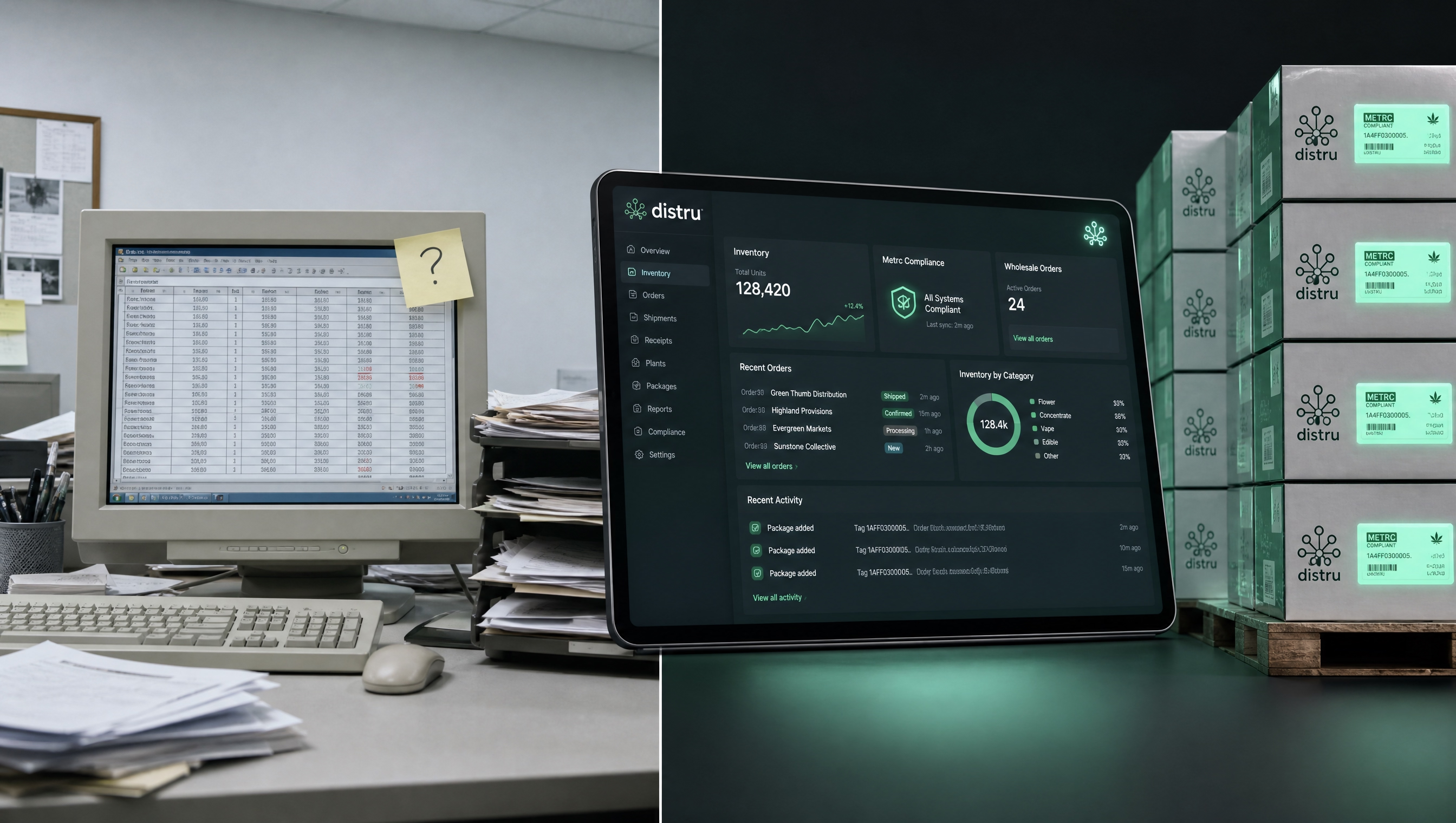
Here's how it usually starts. You're setting up your tech stack, you get a few demos in, and one system just feels safer. Maybe it's a big-name ERP your accountant already knows. Maybe it's a tool that handles traceability well enough. You sign, you onboard, and for the first year, it works. Fine, even.
Then you add a second license. Or a second state. Or your first Metrc audit shows up and someone asks why last month's package counts don't match what's on the shelf. That's usually when the questions start: why does every workaround take a support ticket and three weeks? Why did onboarding take almost a year? Why does the system that was supposed to "handle compliance" still leave your compliance manager doing manual reconciliation at 9 PM?
If this sounds familiar, you're not alone. Most operators don't pick the wrong software on purpose. They pick a system that solves today's problem and quietly assume it'll grow with them. Here's the thing: generic and half-specialized platforms aren't built to grow with a cannabis operation. They're built to be broad, or they're built for a different industry, and cannabis compliance gets bolted on after the fact.
We talk to operators every week who are somewhere in the middle of this exact story. They're not unhappy with their software because it's badly made. They're unhappy because it was never built around the thing they actually do all day: move regulated product through a system that a state agency is watching in real time. Let's break down where that gap actually shows up, and why it matters more the bigger you get.
The Generic ERP Trap
Acumatica is a general-purpose cloud ERP. It doesn't think in cannabis workflows, because it wasn't built to. The cannabis-specific versions you'll see pitched to operators, like MaxQ, are built on top of the Acumatica framework by a third-party implementation partner, not designed cannabis-first from the ground up.
That distinction matters more than it sounds like on a sales call. It means your Metrc sync isn't native. It means transfer manifests, package tags, and reason codes get custom-built into a system that wasn't designed around them, usually by a team that knows ERP architecture but has never run a cannabis license. And it means every state-specific quirk (and there are a lot of them: Metrc requirements vary by jurisdiction even when the underlying platform is the same) gets solved through custom configuration instead of a feature that already exists.
That's where the 6-to-12-month implementation timelines come from. You're not just setting up software. You're paying someone to build cannabis compliance into a system that was never designed to have it.
Think about what that actually looks like month to month. Month one and two are discovery and scoping. Month three through six is custom development on the compliance layer. Month seven and eight is testing, and testing again, because a Metrc sync built from scratch on someone else's framework doesn't get it right the first time. By month ten or eleven you're finally training your team, on a system that's been in build mode for the better part of a year while your actual business kept running on whatever you had before. A lot of operators eat that cost twice: once for the implementation, and again in the manual work everyone kept doing in the meantime because the software wasn't ready yet.
Traceability Tools Solve One Problem, Not the Business
Wherefour tracks lots, bills of materials, and production data. It wasn't built around cannabis workflows, it was built for food and beverage manufacturers, and cannabis became one more vertical it expanded into after the fact. That history shows up in the product. Reporting exists after the fact, but the tools built specifically for how cannabis businesses actually sell, like wholesale ordering and a real buyer marketplace, don't think cannabis-first because the platform wasn't built cannabis-first.
That's fine if all you need is traceability. It's a problem the moment you need to run sales orders, wholesale commerce, and Metrc-level compliance out of the same system without stitching together a second or third tool to cover what the first one doesn't.
You see this most clearly with distributors and brands that sell wholesale. A traceability system can tell you exactly where a batch has been. It can't necessarily get that batch in front of a retailer, take the order, and sync the sale back into inventory without a separate menu tool, a separate spreadsheet, or a manual step somebody has to remember to do. Every one of those extra steps is a place where a number gets typed wrong, an order gets missed, or a retailer waits an extra day for a response. None of that shows up in a demo. All of it shows up six months into running the business at real volume.
New Software Isn't the Same as Cannabis-Native Software
Illumify reads like cannabis software on the surface, but it's a generic ERP framework, not a platform built cannabis-first. Cannabis is one vertical it serves alongside others, which means the underlying system was designed to be broadly applicable first and adapted for cannabis workflows second. That's a different starting point than a platform whose only reason to exist is running a cannabis operation.
That shows up in the smaller things that end up mattering a lot: how fast a Metrc sync actually pings back, how big the support team is when you call at 11 AM with an order stuck in fulfillment, how many other cannabis operators the vendor has actually onboarded in your state. A newer, generic platform can look polished in a demo and still be thin where it counts: real Metrc depth, a support team that's actually run cannabis operations, and a track record with operators facing the same audits and state rules you are. That's the gap between software adapted for cannabis and software built by people who've actually run a cannabis license.
What Actually Breaks in the Middle and Long Term
None of this shows up on day one. It shows up when:
- You expand to a second state. Every state layers its own rules on top of the base Metrc or BioTrack system. What worked in one state's implementation doesn't automatically work in the next, and a generic system built without cannabis-native logic means each new state is another custom build.
- Your wholesale side grows. A traceability tool with no real marketplace leaves you cobbling together menus, spreadsheets, and a separate ordering system.
- You get audited. Reason codes, reconciliation logs, and manifest history need to be right the first time. Retention and reporting requirements differ by state, and a bolt-on compliance layer makes reconstructing an audit trail slower than it needs to be.
- You need support fast. A smaller or split-focus vendor can't always match the response time of a team whose entire business is cannabis operators.
These aren't edge cases. They're what happens when a cannabis business actually grows, which is the whole point of buying software in the first place.
Why Onboarding Speed Is a Bigger Deal Than It Sounds
Six to twelve months isn't just a delay. It's six to twelve months of running your real operation on spreadsheets, side systems, and manual Metrc entry. A vendor is still building the thing you were told you were buying. That's real cost: slower fulfillment, more reconciliation errors, and a team that has to unlearn a workaround the moment the "real" system finally goes live.
Distru, a cannabis ERP platform built for licensed operators, runs onboarding in 3 to 4 weeks on average, with some operators live in as little as one week. Every operator gets a named implementation specialist, and a lot of them are former cannabis operators themselves. Product catalogs, BOMs, and customer lists get bulk-imported from whatever you're using now (CSV exports from Apex, LeafLink, or a spreadsheet all work), and products can be cloned with their bill of materials intact, so setting up your fortieth SKU doesn't take as long as your first.

What Cannabis-Native Actually Looks Like
The difference isn't a marketing line. It's operational.
Distru pings Metrc in real time, not on a delay, which means operators rarely have to go into Metrc directly except for three specific actions: accepting a package, transferring a package, and registering a manifest. Everything else, inventory adjustments, batch tracking, cost accounting through production, happens in one system that was built around cannabis workflows from day one, not adapted from something else.
DistruCommerce is a native wholesale marketplace, not a bolt-on menu tool, so brands, distributors, and retailers are working off the same live inventory as the ERP side. That's a structural difference from a traceability-first tool that treats commerce as an afterthought, or a generic ERP that doesn't have a wholesale marketplace at all.
And because cost accounting matters as much as compliance does, especially with Section 280E limiting what cannabis businesses can deduct, having live COGS tracking through every stage of production isn't a nice-to-have. It's the difference between knowing your real margins and finding out at tax time.
None of this is theoretical for cultivators and manufacturers who've already made the switch. It's the reason 450+ customers across 30+ states run over $10 billion in wholesale sales through the platform, supported by a customer service team with an average chat response time under 5 minutes.

The Cost Nobody Puts in the Proposal
None of this shows up in a pricing sheet, which is exactly why it's easy to miss when you're comparing options. A generic ERP or a half-specialized tool might quote a lower monthly number, but the real cost of ownership includes the implementation months you're paying an integrator for, the manual workarounds your team builds while waiting for the "real" system, and the second or third tool you end up buying anyway once you hit the gap the first one couldn't cover.
Run the math on your own operation. If a 10-month implementation means 10 months of a compliance manager doing manual reconciliation on top of their actual job, or a sales team re-typing wholesale orders that should've flowed straight from a menu, that's not a one-time cost. It's a recurring one, and it usually doesn't show up until you're already locked into a contract.
The Real Question to Ask Before You Sign
It's not "does this system do what I need today." It's "what happens when I add a license, a state, or a wholesale channel." Generic ERPs answer that question with a custom build and a long timeline. Half-specialized tools answer it by adding a second vendor to your stack. Cannabis-native software answers it because it was already built to handle that growth.
You don't have to guess which category a platform falls into. Ask how long onboarding actually takes, who's doing your implementation, and how many buttons you'll still need to touch in Metrc directly. The answers tell you everything.
Ready to see the difference for yourself? Schedule a demo with Distru and see how fast a cannabis-native platform actually gets you live, with a team that's run this business before.


