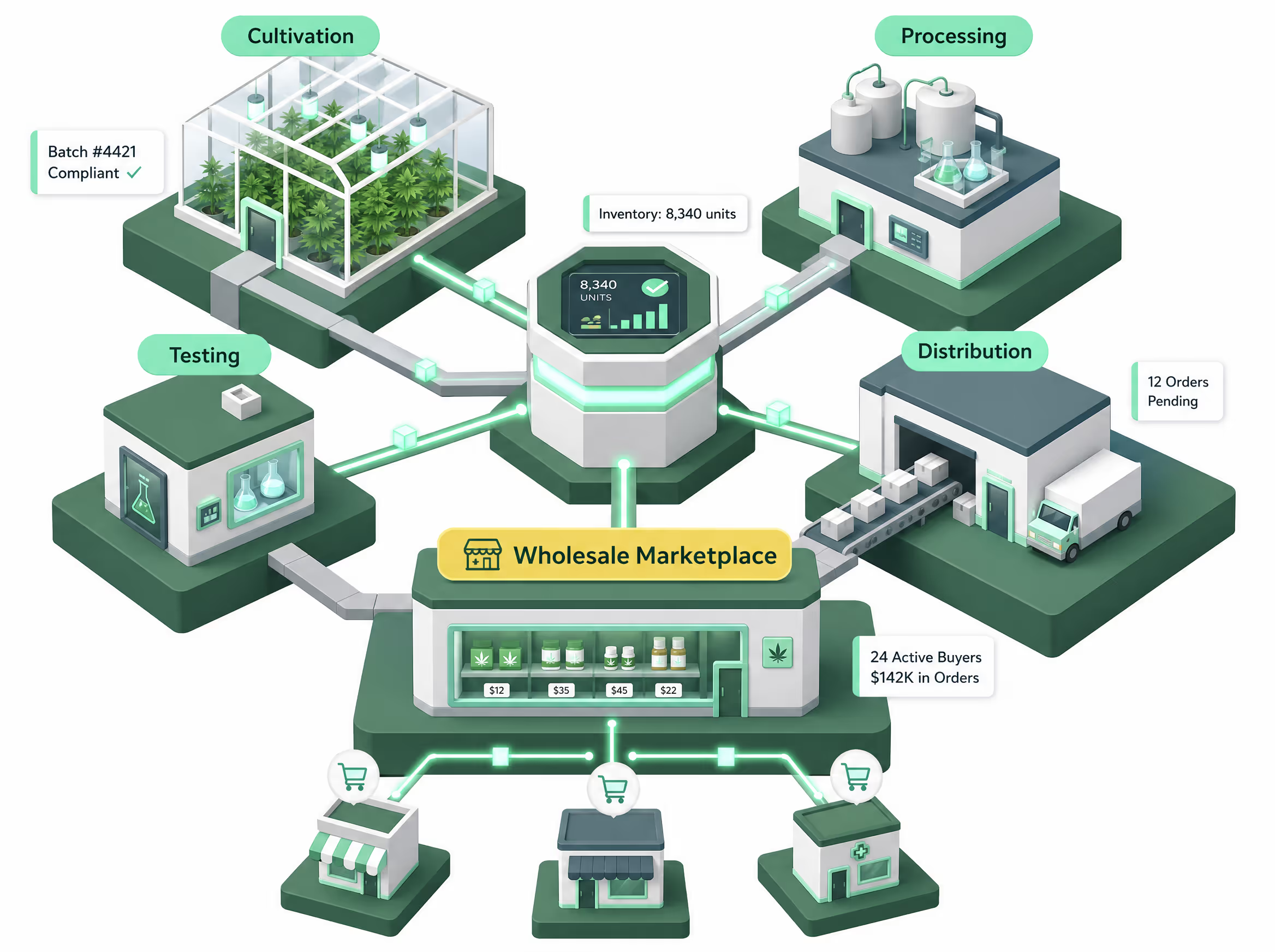
Distru brings together the ordering experience and the ERP behind it, helping operators manage everything in one connected workflow. Giving cannabis teams one platform to manage both.
In wholesale sales processed. Without a single commission dollar taken
4.8★
On G2. Rated #1 Easiest to Use Cannabis Software
Zero
Duplicate data entry. One order placed flows straight into fulfillment
99%
Customer support satisfaction. #1 Best Place to Work in Cannabis
why operators choose distru
Four reasons operators choose Distru over
Apex Trading
Both platforms handle B2B wholesale. Here is where Distru pulls ahead.
Platform scope
One platform for the whole operation, not two
Distru combines commerce functionality with a full ERP behind it, bringing compliance, inventory, production, fulfillment, and delivery tracking into one connected system.
AI Order Agent handles the data entry so you can focus on the relationships. Turn voice notes, text, and spreadsheets into ready-to-check-out orders. Instantly.
Metrc compliance
Two-way Metrc sync
Distru's two-way Metrc sync automatically updates inventory as packages move and creates transfers natively. This deep integration streamlines compliance workflows.
QUICKBOOKS INTEGRATION
Full sync
Distru syncs sales orders, invoices, and credit memos bidirectionally with QuickBooks: including inventory and production costs. This gives you complete financial visibility without manual reconciliation.
Apex handles the order. Distru handles the order and everything behind it.
Both give brands storefronts and B2B ordering. The difference is what happens after the order lands. Apex stops at commerce. Distru connects it to everything else.
Distru: MARKETPLACE + ERP
Your storefront and your operation in one system
Distru serves brands needing a comprehensive operational platform that combines wholesale ordering with production, inventory, financial, and delivery management.
✓
B2B Marketplace and brand-owned storefront
✓
Free retailer access and marketplace discovery
✓
AI order intake: text, email, image, CSV, PDF
✓
Metrc and BioTrack, no double entry
✓
Live ERP inventory sync
✓
Production management, assemblies, repackaging, BOMs
APEX TRADING MARKETPLACE
Apex Trading handles wholesale orders. Operations live somewhere else
Apex Trading is a capable B2B wholesale platform, but production management, warehouse ops, and cost accounting require a separate ERP.
•
B2B marketplace
•
METRC-linked fulfillment and COA attachment
•
QuickBooks integration for invoicing
•
Wholesale pricing insights and reporting
•
No production management natively
•
Separate ERP required for operations
Many operators use both.Apex's native integration lets you leverage their marketplace while managing operations in Distru.
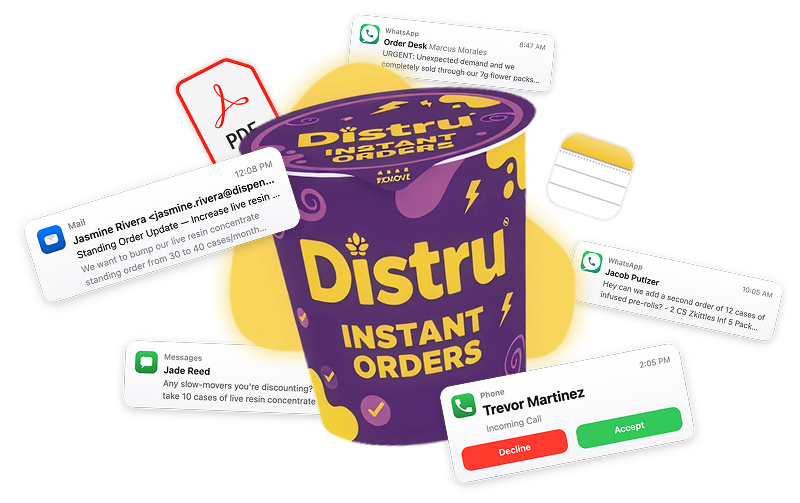
Turn Buyer Messages into DistruCommerce Orders, Automatically
The AI Order Agent turns typed messages, voice notes, and file uploads (CSV, XLSX, PDF, JPG, PNG, HEIC, DNG) into ready-to-approve orders inDistruCommerce. Live inventory, your pricing, your margins.


.avif)