

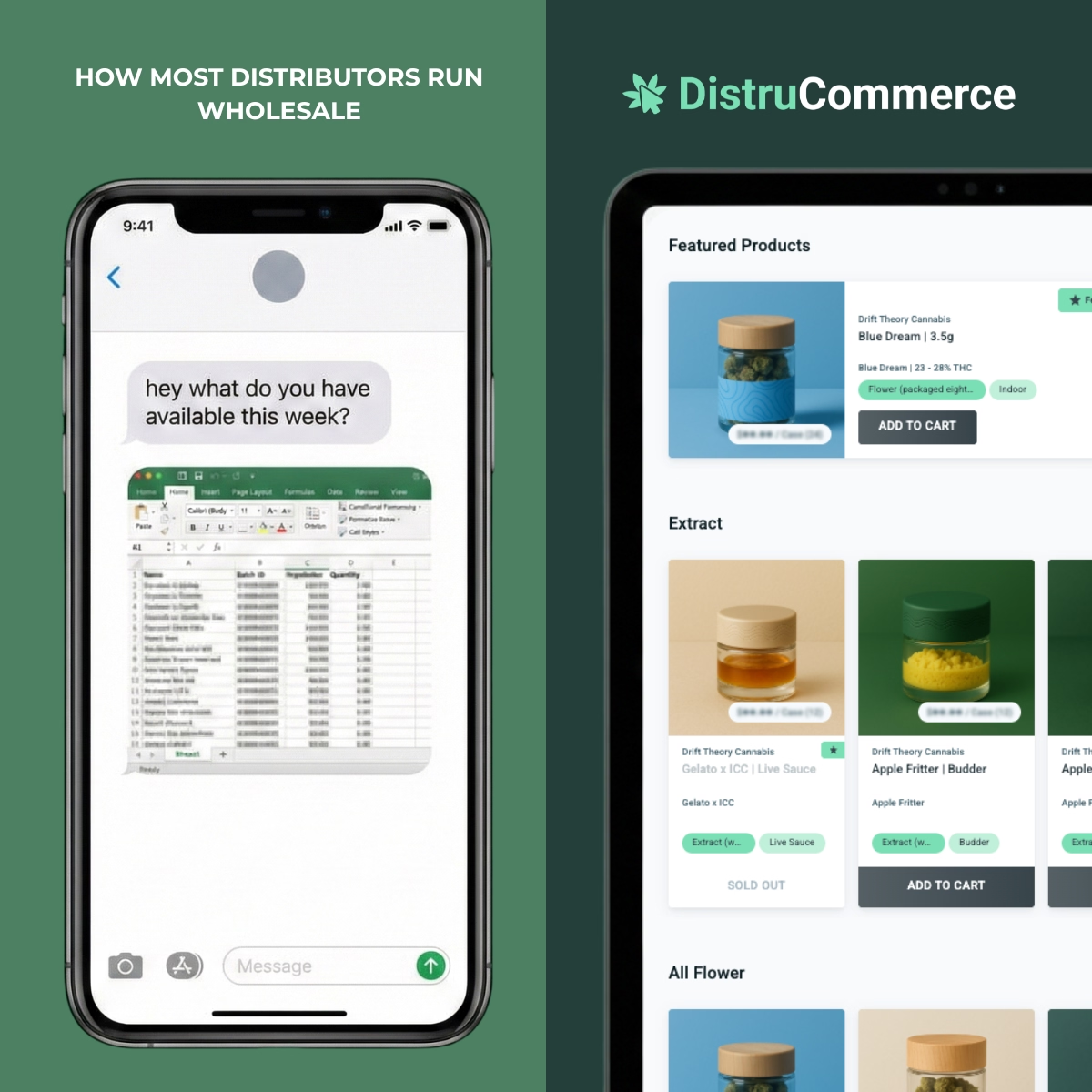
You used to move product the old way: phone calls, text messages, a spreadsheet you sort of trusted, and then a prayer that your retailer's buyer actually got the right COA before the transfer manifest was submitted.
If that still sounds familiar, you're not alone. Most cannabis brands and distributors were running their wholesale operations on vibes and hustle well into the legalization era. Then wholesale cannabis marketplaces showed up and promised to fix everything.
Some of them delivered. Some of them made things worse. And a lot of operators signed up without fully understanding what they were giving up.
This guide will deblur how wholesale cannabis marketplaces work, what to look for, and why more brands are choosing platforms that give them both discovery and control.
.avif)
What Is a Wholesale Cannabis Marketplace?
A wholesale cannabis marketplace is a digital platform that connects licensed cannabis brands, distributors, and retailers so they can conduct B2B transactions online. Think of it as an ordering portal for the licensed cannabis supply chain: sellers list their products and inventory, buyers browse and order, and the platform handles the mechanics of ordering, compliance documentation, and sometimes payments.
These platforms are B2B only. You won't find them in a Google search if you're a consumer looking to buy weed online. Access is restricted to verified, licensed businesses. That's actually one of their most important features: every buyer on the platform is supposed to be licensed, which keeps you out of illegal sale territory.
The reason they emerged is pretty simple. Cannabis distribution in licensed states involves a lot of moving parts: Metrc transfers, COAs, compliance documentation, pricing per buyer, and invoice management. Doing that over text and email doesn't scale. Marketplaces stepped in to digitize the buying and selling workflow.

How a Cannabis B2B Ordering Platform Works
Here's how it actually works for sellers and for buyers.
For Brands and Distributors (Sellers)
You build a product catalog: photos, descriptions, batch information, COAs, pricing tiers. Depending on the platform, you can publish a marketplace menu visible to all verified buyers in the network, set up a private menu for specific retail accounts, or run both at the same time.
When a retailer places an order, you receive it through the platform, confirm availability, and kick off the fulfillment process. If the platform integrates with your seed-to-sale system, that order should push directly into Metrc or BioTrack as a transfer. If it doesn't integrate, you're re-entering the same data manually. That's where a lot of operators feel the friction.
You can also track what's selling, identify which retailers are reordering, and pull reports on revenue by product or account.
For Retailers and Dispensaries (Buyers)
Retailers create an account and browse available supplier menus in one place. Instead of calling five different distributors to check availability, they can see live inventory, compare pricing, and place an order from a single cart. Some platforms let buyers order from multiple vendors in one session, similar to how Amazon lets you buy from multiple sellers in one checkout.
Orders are tracked through the platform, COAs and invoices are stored and accessible, and payments can often be made digitally via ACH or net terms. That last part matters a lot in cannabis, where cash payments are still way too common and slow down everybody's AR.

The Two Types of Cannabis Wholesale Platforms
Not all wholesale cannabis platforms are built the same way. There are two core models, and the best platforms give you both.
Open Marketplaces
Open marketplaces are networks where licensed brands and distributors list products and verified buyers can browse and purchase. The buyer discovers you on the platform, sometimes without a prior relationship.
LeafLink is the most well-known example. It's built one of the largest cannabis B2B networks in the U.S., with thousands of brands and retailers across dozens of legal markets. For a newer brand trying to get distribution, that kind of exposure is genuinely useful. You can get in front of buyers who've never heard of you.
The tradeoffs are real, though. We'll get into those shortly.
Private B2B Storefronts
Private storefronts let you run invite-only menus for specific accounts. Your VIP retailers, your key accounts, your customers with custom pricing agreements. They get their own portal with terms that aren't visible to anyone else.
Your brand is front and center. Your pricing, your products, your relationships. No competing with 500 other brands for shelf space on the same screen.
The smartest operators use both: a marketplace menu for discovery and new buyer relationships, and private menus for the accounts that already know them and deserve a different experience.
Key Features to Look for in a Cannabis Wholesale Platform
If you're evaluating a wholesale platform, here's what actually matters.
1. Real-time inventory sync
Your menu should reflect your actual available inventory at all times. If your wholesale platform doesn't connect directly to your ERP or seed-to-sale system, you're going to have stale listings and over-committed stock. That's a compliance problem, not just an ops problem. Metrc compliance depends on your transfer quantities being accurate before anything ships.
2. Compliance integration
The platform should work with Metrc or BioTrack natively, not as an afterthought. That means compliant transfer generation, COA management, and audit trail documentation. If you're manually reconciling between your marketplace and your compliance system, that's a gap that will cause you problems eventually.
3. Multiple menus
One size doesn't fit all. You need to be able to run a public marketplace menu for discovery alongside private menus for specific accounts. If the platform only lets you publish one menu, you're either exposing your best pricing to everyone or hiding from buyers who don't know you yet.
4. Pricing controls and a flexible discount engine
Not every retailer pays the same price. You need account-specific pricing, volume tiers, promotional pricing, and deal structures without workarounds. The best platforms let you run promotions, offer volume discounts, and set customer-specific pricing connected place, not cobbled together across spreadsheets and email threads.
5. Commission structure
Know exactly what you're paying per order. Some platforms charge a flat monthly subscription. Others take a percentage of revenue (GMV) on every transaction. At $1M in annual wholesale orders, even a 1% commission is $10,000 a year. At $5M, that's $50,000. Ask this question before you sign anything.
6. Brand control
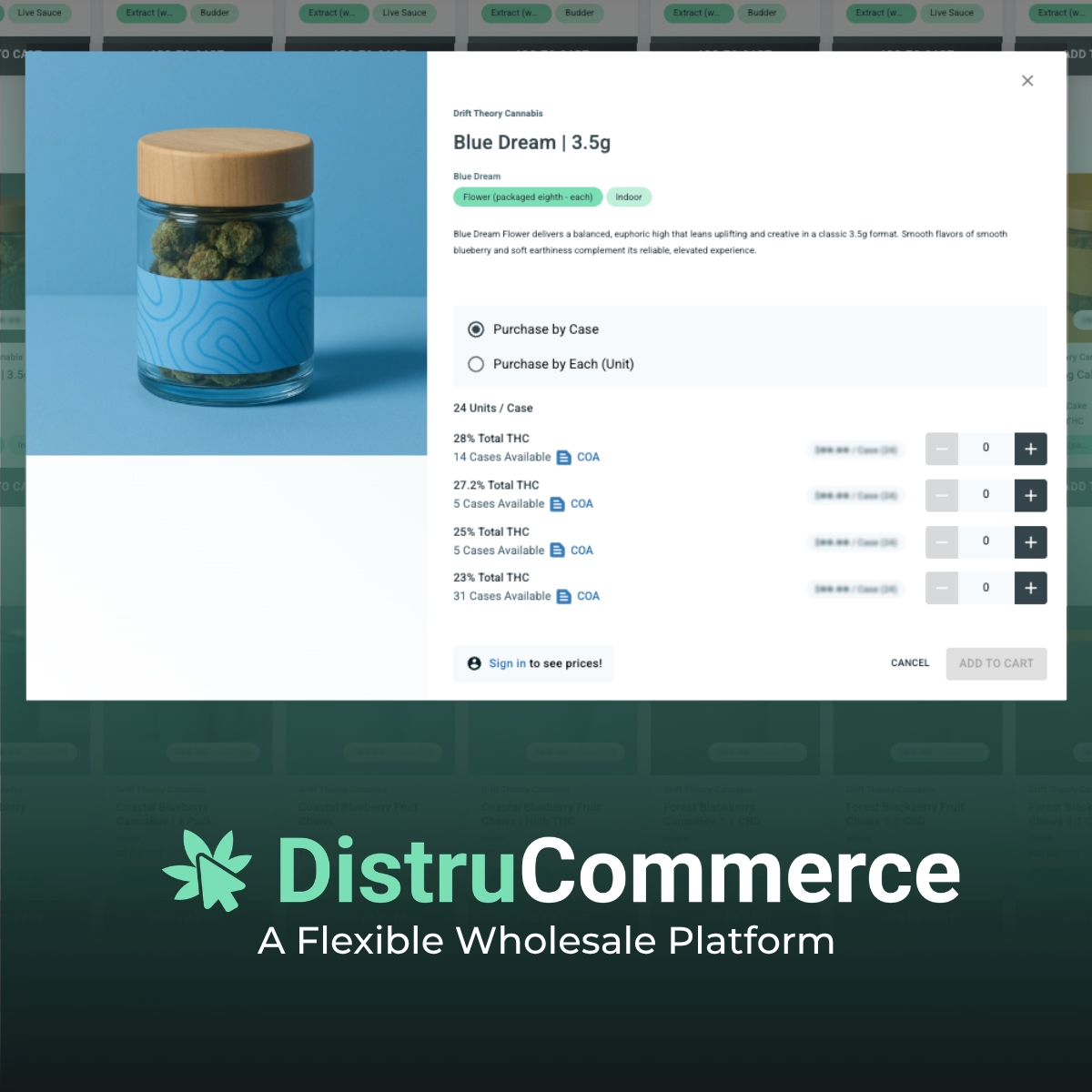
On a generic marketplace, your product listing looks like everyone else's. You get a logo, a few fields, and a photo. A good platform lets you show off your products your way: great photos, proper descriptions, and pricing tiers that actually reflect how you sell.
7. Retailer experience
Your retail buyers need to love using this tool or they won't use it. Look for free retailer login access, easy reordering, order tracking, and one-click access to invoices and COAs. The easier it is for buyers to reorder from you, the faster your reorder rate goes up.
8. Analytics and reporting
What's actually selling? Which retailers are your highest-volume accounts? What's your sell-through velocity by SKU? A wholesale platform that doesn't give you clean data on your own sales channel isn't doing its job.
The Real Cost of Third-Party Cannabis Marketplaces
Here's the part most platform comparison guides skip.
Third-party marketplaces come with benefits. The discovery and network access are real, especially for newer brands. But there are hidden costs that experienced operators feel deeply, and they're worth naming clearly.
Commission fees add up fast
Many open marketplace platforms charge a revenue share on every order processed through the platform. These fees are often presented as small percentages, but they compound at scale. Verify the fee model before you commit, especially if your wholesale volume is growing.
You don't own your buyer data
On a third-party marketplace, the platform has a relationship with your retailers. They see all the ordering patterns, buyer behaviors, and sales velocity data across every brand on the network. That data informs their roadmap, their pricing, and their business. It's not your data, even though you generated it.
Platform dependency is a real risk
What happens to your wholesale sales channel if the platform changes its pricing, gets acquired, or shuts down? Several cannabis tech companies have exited the market or significantly changed their models in the last few years. If your wholesale operation runs entirely through one third-party platform, that's a concentration risk worth thinking about.
ERP disconnection creates double work
If your marketplace doesn't sync with your ERP, every order requires manual entry in two systems. Every line item, every package tag, every COA attachment. That's where the hours go. A 700-order month at 10 minutes per order is 116 hours of manual data entry. That's real money.
You become one option among many
On a generic open marketplace, your brand is discoverable. It's also immediately comparable to every competitor in your category, sorted by price and availability. That's good for buyers and tough on brand differentiation,unless the platform lets you control how you show up.
How DistruCommerce Is Different
DistruCommerce is the wholesale ordering platform built directly into Distru, a cannabis ERP platform built for licensed operators. It's not just a marketplace, and it's not just a private storefront. It's both. And that's the point.
Distru has processed over $10B in wholesale sales through the platform. Unlike most marketplace platforms, DistruCommerce runs on a flat fee. No commissions, no revenue share, no percentage skimmed off every order. Your margin stays yours.
Here's what DistruCommerce actually looks like for your operation:
- A marketplace for verified retailers. Licensed retailers create an account and can browse all participating brands in the DistruCommerce network. Discovery happens inside a compliant, verified buyer pool. No public listings, no random browsers..
- Multiple menus, your rules. Run a marketplace menu for broad visibility and separate private menus for your key accounts. Your VIP retailers get pricing and terms that nobody else can see.
- A menu that looks like your brand. Show off your products your way: great photos, proper descriptions, and pricing tiers that reflect how you actually sell. Not just another row in a generic catalog.
- Inventory that updates itself. Your DistruCommerce menu pulls from your live Distru inventory. When you sell out of a batch, it disappears from your menu automatically. No overselling, no manual updates.
- A flexible discount engine. Run promotions, offer volume discounts, set customer-specific pricing, all from one place. The discount engine is built to handle the complexity of real cannabis distribution.
- Free retailer logins. Your buyers get their own portal to track orders, pull COAs, download invoices, and reorder when they're running low. Easier for them means faster reorders for you.
- Full ERP integration. Because DistruCommerce lives inside Distru, orders flow directly into your fulfillment workflow, your Metrc transfers, and your financial reporting. No double entry, no lag.
Distru customers processing wholesale orders through DistruCommerce save 40+ hours per week on order entry alone. That's based on actual usage data from operators who switched from manual workflows and standalone marketplace platforms.
If you're already running your operation on Distru ERP, DistruCommerce is the natural next move for your wholesale channel. If you're not on Distru yet, this is one of the strongest reasons to take a look.
DistruCommerce: Cannabis Wholesale Marketplace
Open marketplaces are good for discovery. Private storefronts are good for control. The best wholesale platform gives you both. And connects to everything else running your operation.
If you're a newer brand trying to get in front of buyers you don't know yet, a marketplace with a verified retailer network gets you there. If you've got established accounts that deserve custom pricing and a premium experience, private menus handle that too. You shouldn't have to choose between the two.
That's what DistruCommerce is built for.
If you want to see what a zero-commission, ERP-native wholesale setup looks like for your operation, book a DistruCommerce demo. We'll show you the real setup, not just the slides.


