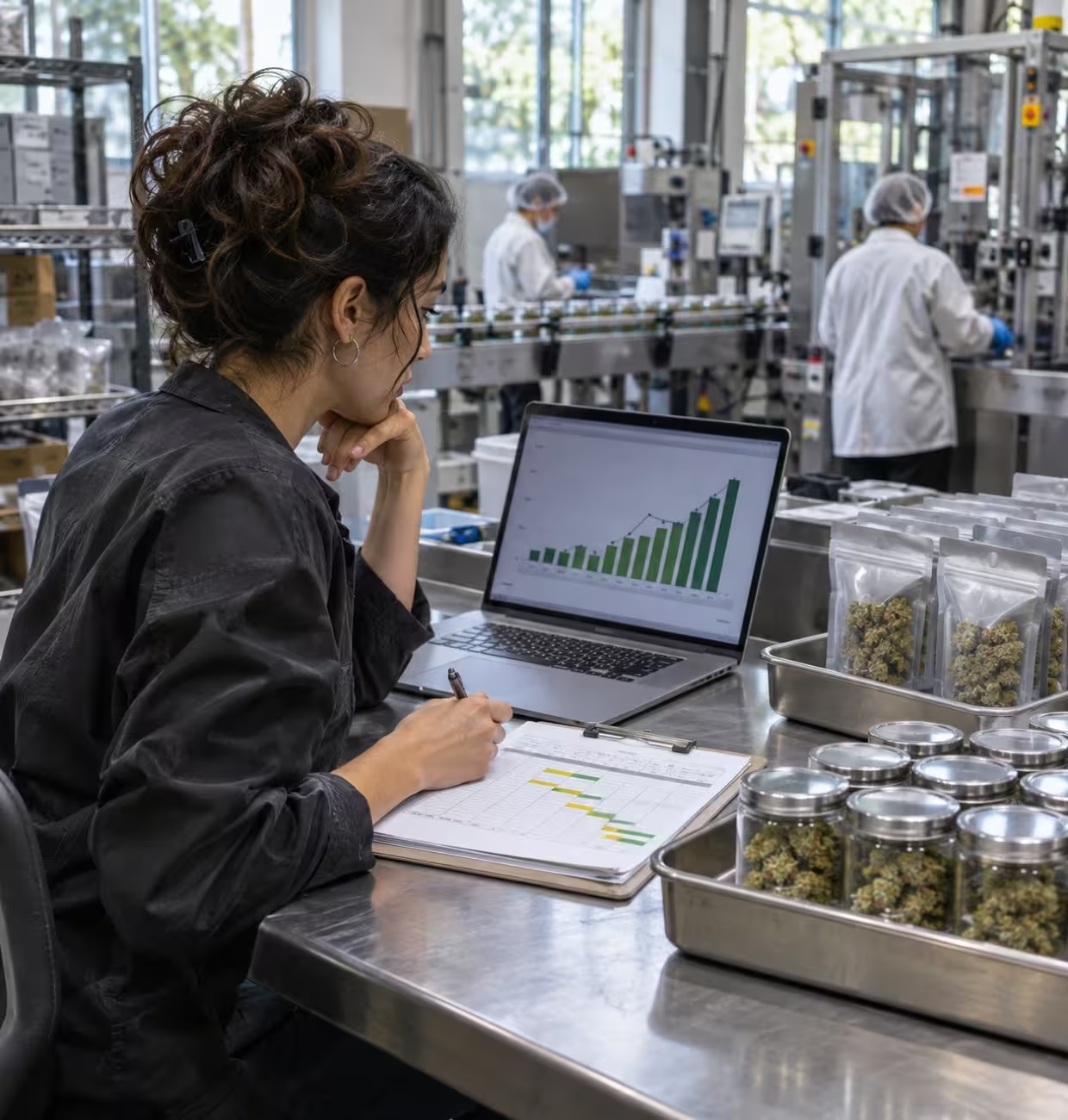
Your Metrc tags don't match your physical inventory. A transfer manifest is stuck because your distributor's system hasn't synced. Your buyer wants to reorder, but you don't know which batch is oldest. And your state regulator is asking for records you have to pull from three different spreadsheets.
This is what managing a cannabis supply chain actually looks like for most operators. Not a clean diagram with arrows. A daily scramble to keep product moving, compliance intact, and margins from evaporating.
The good news: the operators who figure out their supply chain end up with a real edge. Lower shrinkage, faster fulfillment, fewer compliance headaches. The ones who don't are spending 40-plus hours a week on manual work that software should handle.
This guide breaks down how the cannabis supply chain works, where it breaks down, and what you can do about it.
What the Cannabis Supply Chain Actually Covers
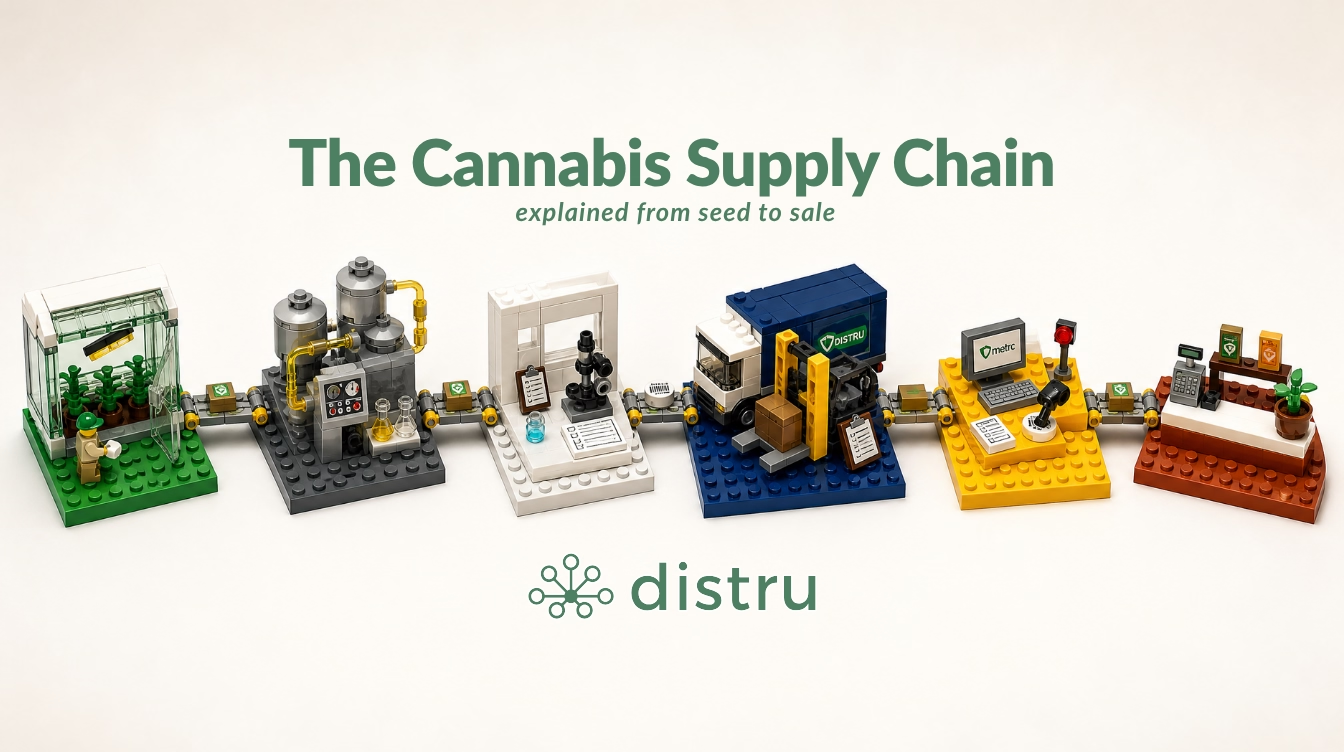
The cannabis supply chain spans every step a product takes from a live plant to a paying customer. That includes cultivation, processing, manufacturing, testing, distribution, and retail.
What makes it different from other industries isn't complexity. It's that every single transfer, transformation, and transaction has to be reported to a state track-and-trace system in near real-time. Miss a tag. Forget a manifest. Let your physical count drift from your digital count. Any of those can trigger an audit, a fine, or a license suspension.
The five core stages are:
- Cultivation: Growing and harvesting cannabis plants, tracking wet and dry weights, managing plant batches and mother plants
- Processing and manufacturing: Trimming, extraction, infusion, packaging; building finished SKUs from raw material using bills of materials (BOMs)
- Testing: Third-party lab analysis for potency, pesticides, heavy metals, and microbials; receiving certificates of analysis (COAs)
- Distribution: Moving licensed product between facilities using transfer manifests, managing routes, handling inbound and outbound receiving
- Retail: Point-of-sale, customer transactions, and final seed-to-sale reporting closure
Each of these stages is its own operational world. But your compliance record has to treat them as one continuous chain.

Where the Cannabis Supply Chain Breaks Down
Most supply chain problems aren't strategic. They're operational. Here's what actually causes operators to lose product, time, and money.
Metrc Discrepancies
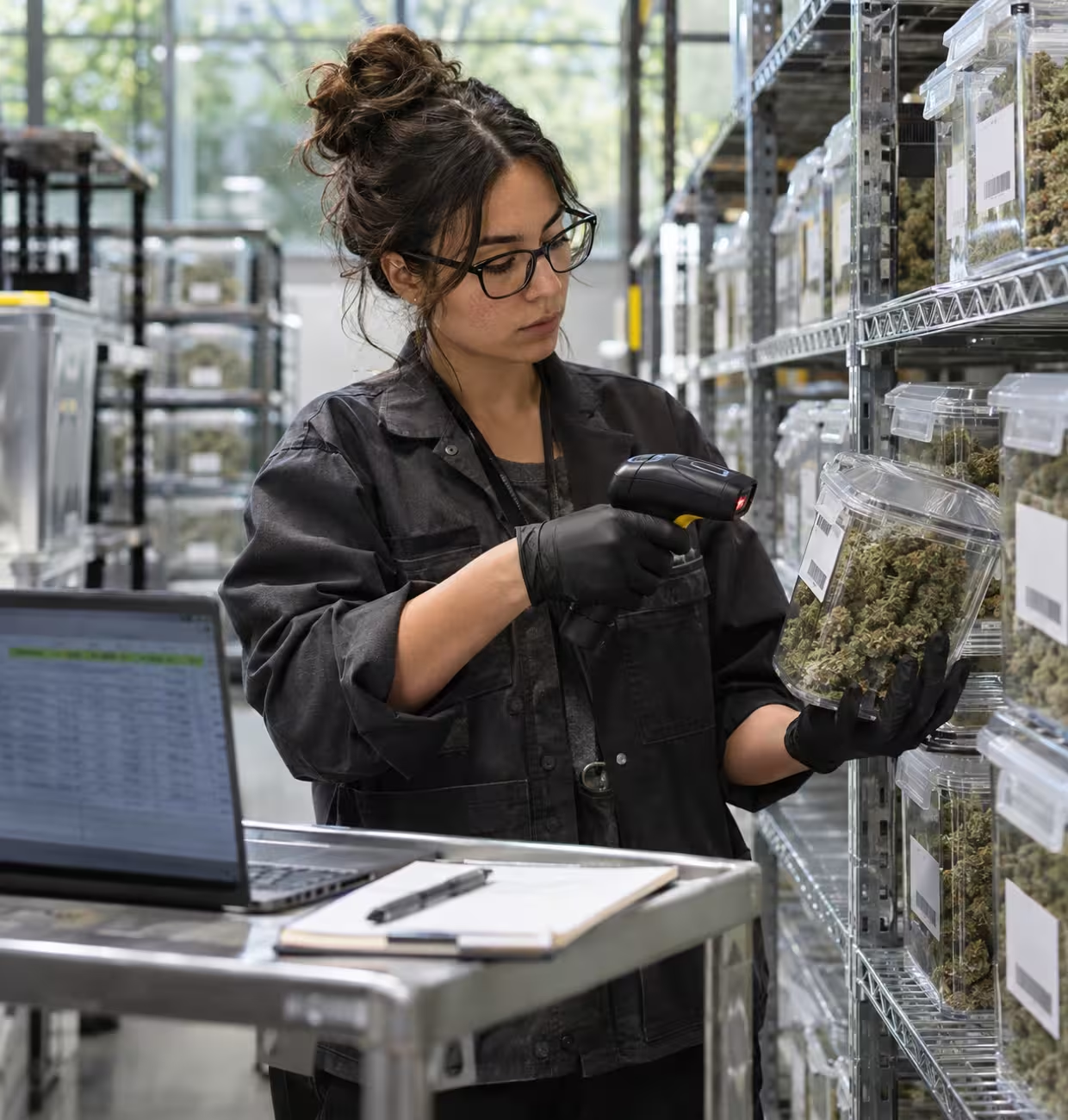
Metrc, the track-and-trace system used in roughly 20 U.S. states, requires your physical inventory to match your digital record at all times. If cultivators' physical inventory drifts more than 2% from their Metrc count, that triggers mandatory reporting and possibly an investigation.
The problem isn't operators being careless. It's that Metrc and internal inventory systems often aren't synced tightly enough. Someone adjusts a batch on the floor. Someone forgets to log a trim run. By the end of the week, you've got discrepancies you're hunting down manually.
Transfer Manifest Errors
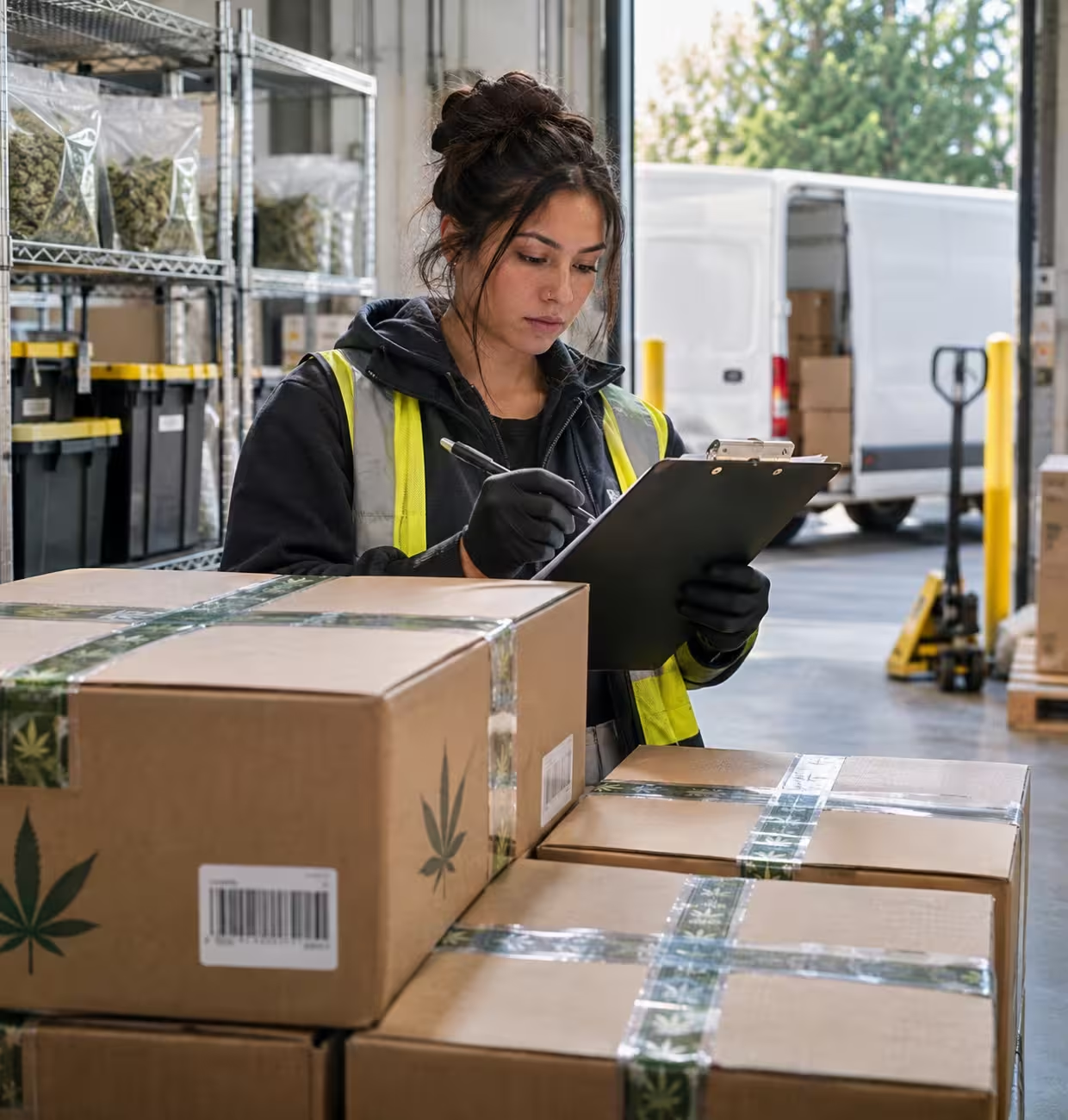
Every product transfer between licensed facilities requires a manifest created in the state system before the product leaves your building. The manifest has to include the sender, recipient, driver, vehicle, and every package in the shipment.
Get one field wrong and the receiving facility can't accept the product. The driver sits in a parking lot while someone back at your warehouse figures out what happened. That's not a hypothetical. It's a weekly occurrence at operations running on disconnected systems.
Inventory Visibility Gaps
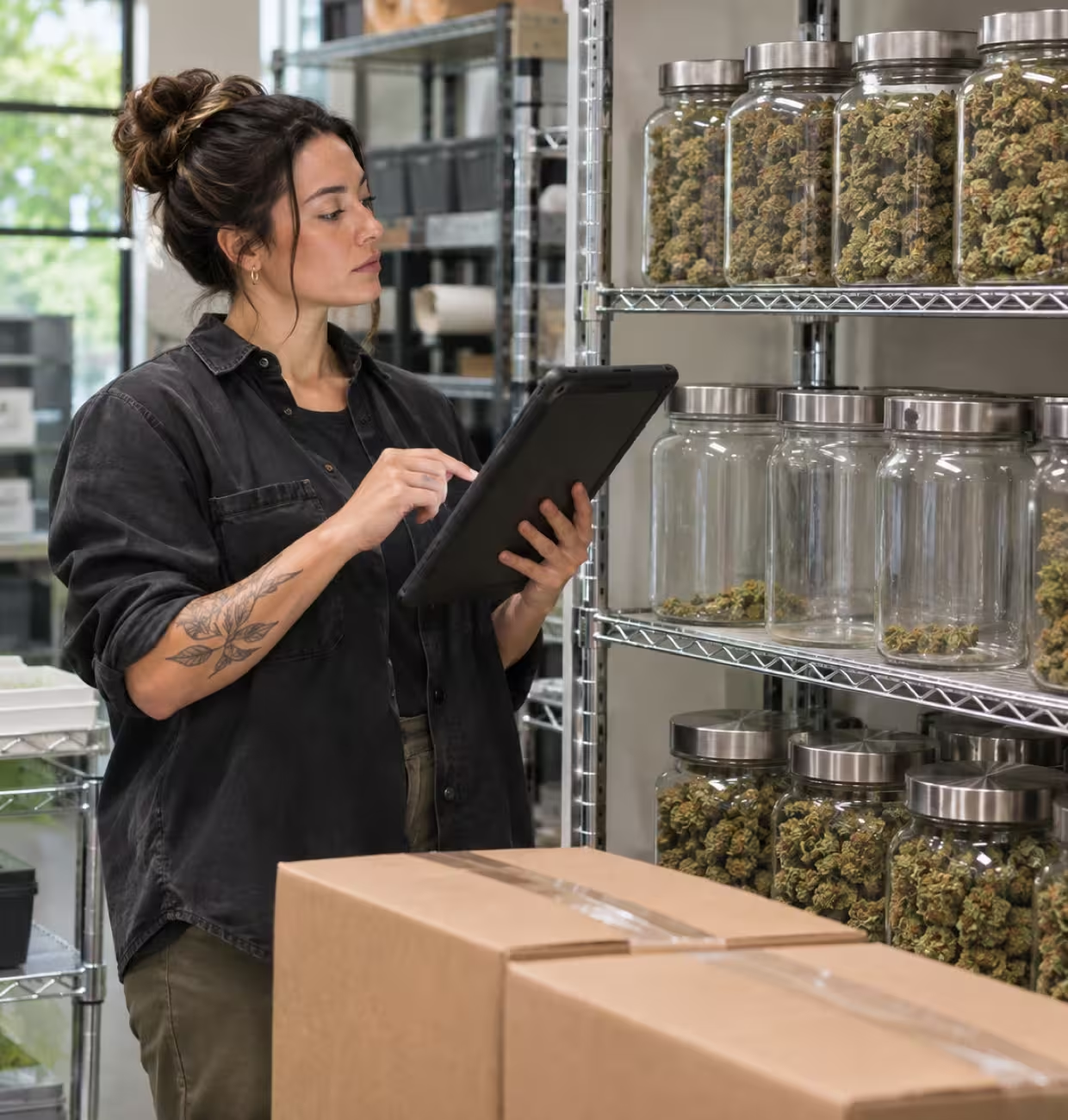
If you can't see your current inventory across all locations in real time, you're making fulfillment decisions on stale data. That means overselling what you don't have, missing FIFO rotation on batches that are aging, and losing track of which SKUs are actually moving.
FIFO (first in, first out) isn't optional in cannabis. Older batches carry more regulatory risk and product degradation risk. Operators who can't enforce FIFO automatically end up doing manual audits that take hours.
Wholesale Ordering Friction
On the distribution and sales side, the traditional wholesale process is painfully slow. A buyer calls or emails. You send a PDF menu. They send back an order. You manually enter it. You confirm availability. You go back and forth on pricing. By the time the order is confirmed, you've touched it four to six times.
Multiply that across dozens of accounts and you understand why sales teams at cannabis distributors are drowning in administrative work instead of selling.
How State Compliance Systems Shape Your Operations
You don't get to choose whether to integrate with seed-to-sale systems. If your state uses Metrc, BioTrack, or another mandated platform, you're required to report every movement of cannabis through it.
The challenge is that these systems aren't built to run your business. They're built to give regulators visibility. Your inventory management, order processing, and production planning all have to happen somewhere else, then sync back to the state system.
That gap, between what your state requires and what your business needs, is where most supply chain software lives.
Some operators manage this with spreadsheets and manual Metrc entry. That works until you're at a certain volume. A cultivator moving 20 pounds a month might get by. A distributor running 200 transfers a week can't.
The operators who scale without losing compliance integrity are the ones who've built systems where their business operations and their compliance reporting are the same action, not two separate workflows.
The Role of ERP in Cannabis Supply Chain Management
A cannabis ERP (enterprise resource planning) system ties your business operations to your compliance reporting in one place. When you fulfill an order, it generates the transfer manifest. When you log a harvest, it creates the Metrc plant batch. When you receive lab results, it attaches the COA to the package record.
Not all ERP systems are built for cannabis. Generic ERPs from other industries don't know what a transfer manifest is. They don't know that your package tags need to match a state system. They don't know that your BOM has compliance implications beyond just the cost of goods.
Distru, a cannabis ERP platform built for licensed operators, was built from the ground up for this specific problem. The platform handles the full supply chain from cultivation through wholesale and distribution, with compliance baked into every workflow rather than bolted on.
Distru currently serves 450+ customers across 30+ states, has processed over $10 billion in wholesale sales, and holds the #1 Metrc integration partner position by API call volume.
Real-Time Metrc Sync
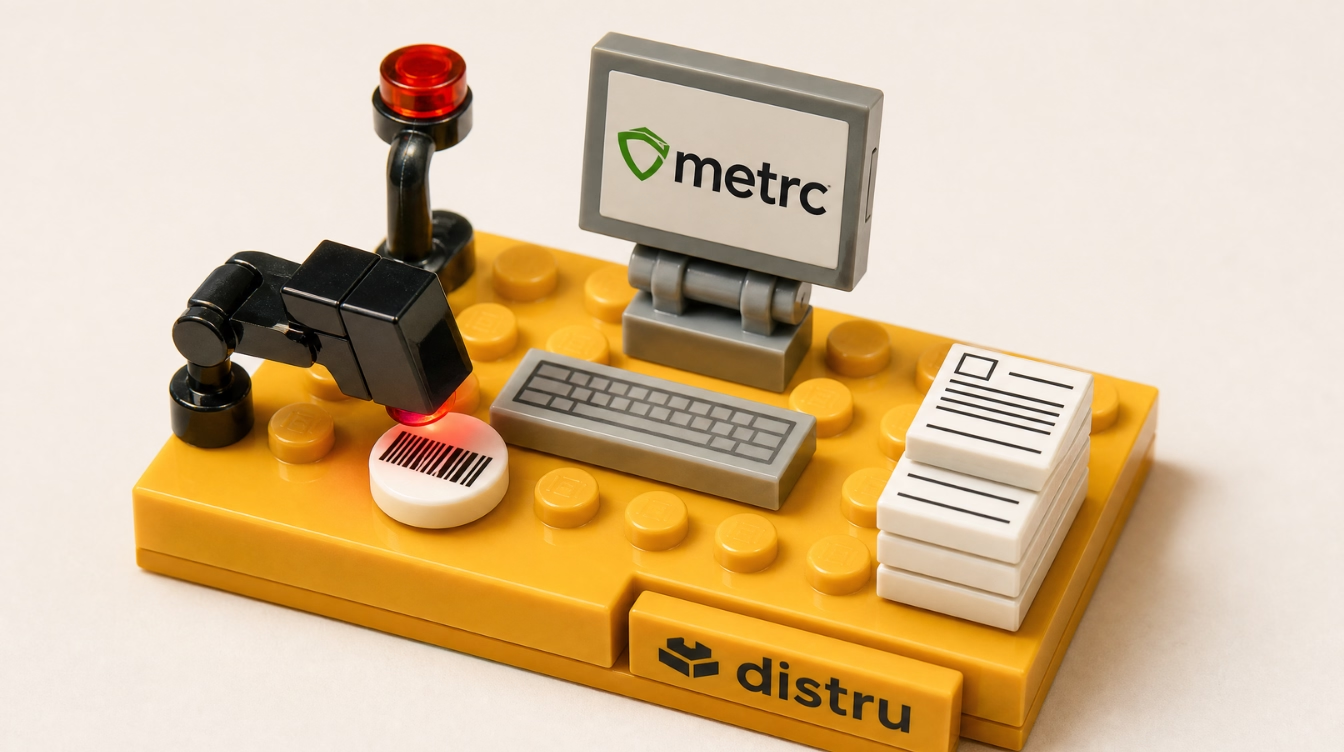
One of the biggest operational risks in cannabis is a lag between your internal system and Metrc. If you're batching your compliance updates, you're always a few hours behind. That creates exposure.
Distru pings Metrc 3 to 40 times per second depending on activity level. When a package moves in your system, Metrc knows about it within seconds, not hours.
Native Wholesale Marketplace
Most ERP systems stop at the operations layer. You still need a separate tool to handle wholesale ordering. That means double entry, sync errors, and manual reconciliation.
DistruCommerce, the native wholesale marketplace inside DistruERP, connects distributors and buyers on one platform. Buyers browse your live inventory, place orders directly, and those orders flow into your fulfillment workflow without anyone retyping them.
Cannabis Supply Chain by Stage: What Good Looks Like
Cultivation

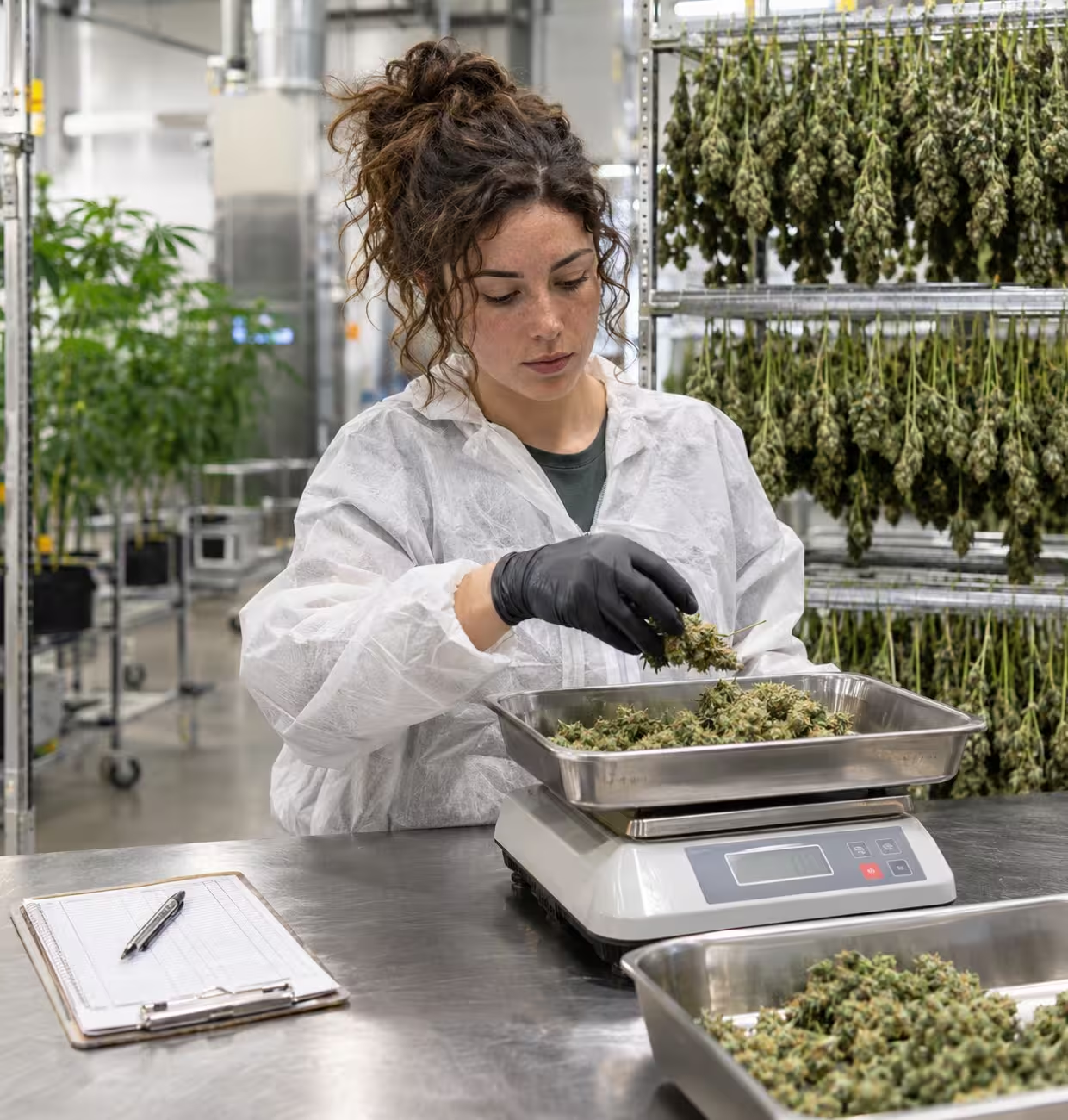
At the cultivation stage, supply chain management means tracking every plant from clone or seed through harvest. You're managing mother plants, tracking plant counts by zone, logging wet weight at harvest, and recording dry weights after cure.
State systems want to see all of this. Your business wants to see yield per batch, cost per gram, and production variance against your plan.
Good cultivation tracking means your harvest data flows directly into your inventory without manual entry. Your Metrc plant tags auto-generate. Your dry weight updates your available inventory the moment it's recorded.
Manufacturing and Processing
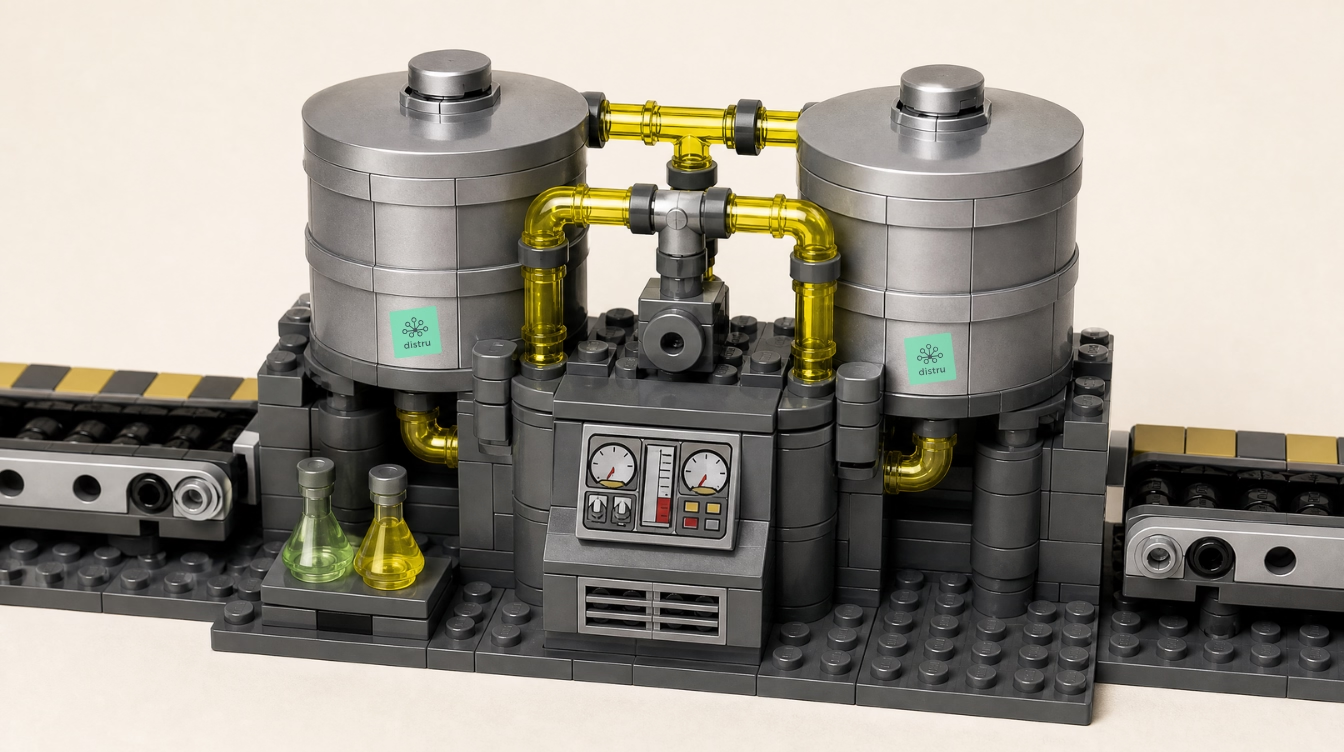
When raw flower becomes an extract or an infused product, your BOMs drive your compliance reporting. Every assembly run consumes inputs and produces outputs. The state system needs to know which input packages were consumed and which output packages were created.
If that's manual work, it's 20-30 minutes per production run. If it's automated through an ERP, it's a button click.
Distru's production management ties BOMs directly to Metrc assembly jobs. You select your recipe, log your actual inputs and outputs, and the compliance record writes itself.
Testing and COA Management
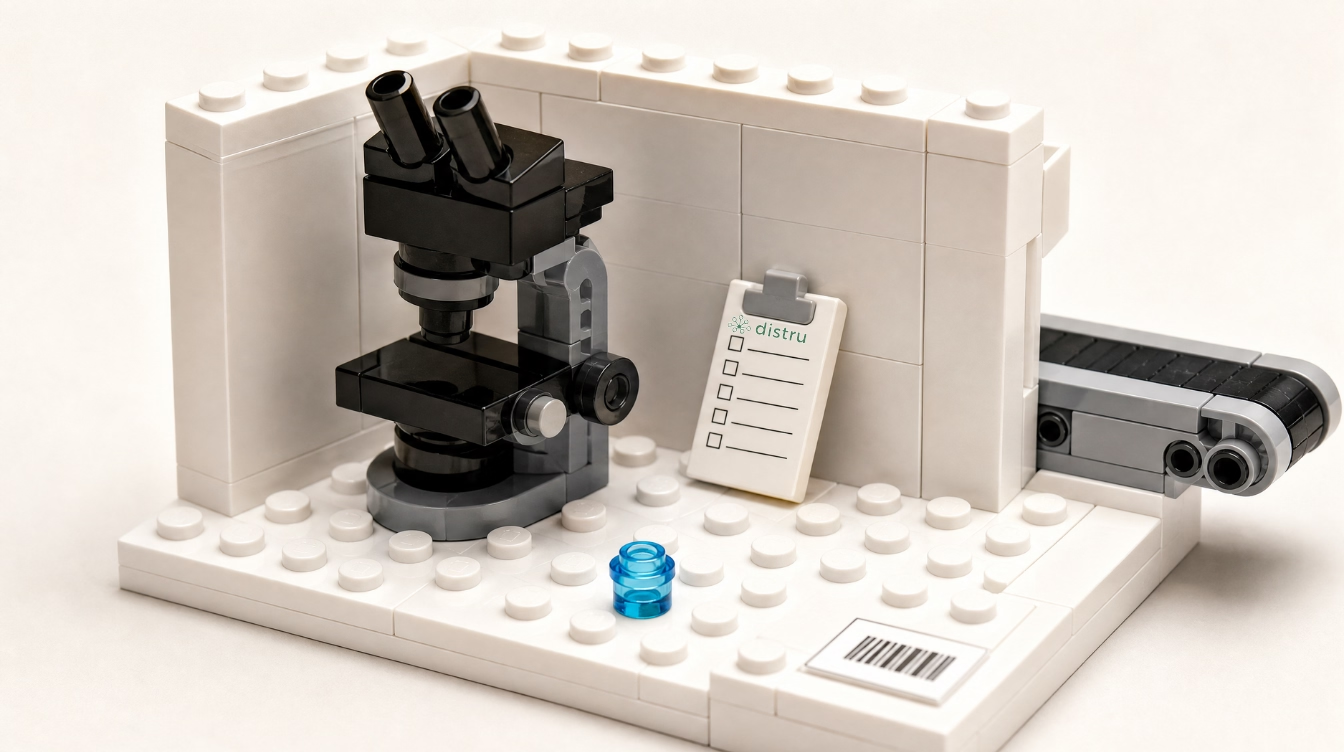
No cannabis product can move to distribution without passing lab testing. Your COA has to be attached to the package record. If you're manually uploading PDFs and cross-referencing batch numbers, that's time. It's also a source of errors.
COA management should be automated. When your lab sends results, the COA attaches to the right package and updates its status to "tested and passing." Your team shouldn't have to touch it.
Distribution
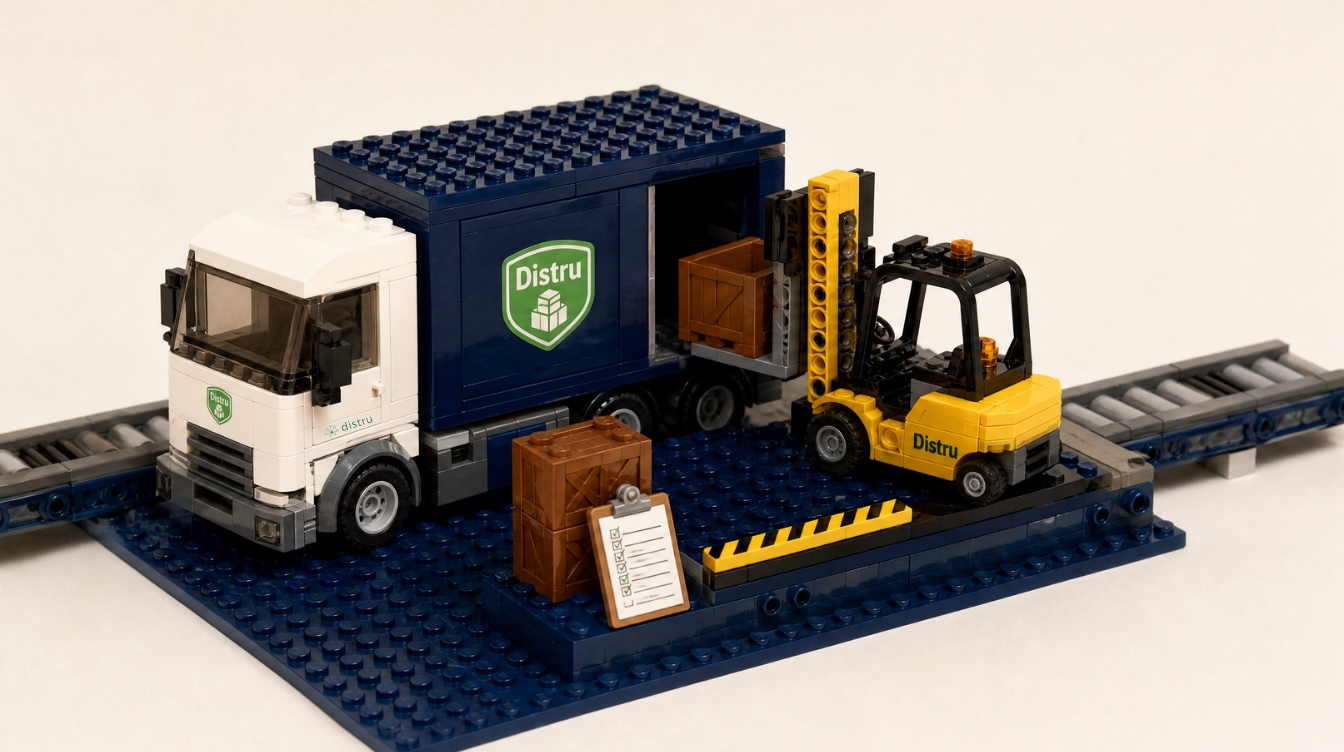
Distribution is where supply chain mistakes become expensive. A manifest error means a rejected transfer. A Metrc sync failure means your driver can't complete the delivery. A receiving error means your inventory count is wrong before the day is done.
According to a 2025 compliance report, every state has its own rules for what goes on a manifest, how far in advance it needs to be created, and what happens when it needs to be amended. Multi-state operators face a different set of requirements in every market they operate in.
Good distribution management means your manifests auto-populate from your sales orders. Your driver has a mobile interface to confirm receipt. Your inventory updates the moment a transfer is accepted.
Retail and Final Reporting

Retail is where the chain closes. Your POS system records the sale. The state system gets the final transfer. The product's seed-to-sale record is complete.
The compliance risk at retail is usually in the gap between the POS and the state system. If they're not synced, your end-of-day reconciliation is a manual audit.
Vertical Integration and the Supply Chain
More cannabis operators are pursuing vertical integration, controlling multiple stages of the supply chain under one license or one entity. This makes sense in markets where wholesale margins have been squeezed.
In mature markets like Colorado and Oregon, wholesale flower prices have dropped 60-80% from their peaks due to oversupply. Operators who control cultivation through retail capture margins at every stage instead of paying them to intermediaries.
But vertical integration also multiplies supply chain complexity. You're not just managing one stage of compliance. You're managing all of them, often under different license types with different reporting requirements.
That's where an ERP that covers the full stack matters. You shouldn't need a cultivation tool, a separate manufacturing system, a distribution platform, and a retail integration. You need one system that handles all of it with one Metrc integration.
Technology Stack for a Modern Cannabis Supply Chain
The operators running efficient supply chains in 2025 are using connected technology stacks, not a collection of single-purpose tools that don't talk to each other.
A functional cannabis tech stack typically includes:
- ERP for core operations: Inventory, production, order management, financials, compliance
- Seed-to-sale compliance: Direct, real-time integration with your state system (not a once-a-day sync)
- Wholesale marketplace: A way for buyers to see your live inventory and place orders without calls and emails
- Analytics and reporting: Visibility into margins, batch performance, SKU velocity, and customer reorder rates
- Accounting integration: QuickBooks, Xero, or similar, pulling data directly from your ERP rather than requiring manual exports
The most common failure mode is using a tool for each of these that doesn't integrate with the others. When systems don't talk to each other, someone has to manually move data between them. That someone is usually whoever you can least afford to have doing manual data entry.
What Cannabis Supply Chain Compliance Actually Costs You
The hidden cost of supply chain problems isn't usually a fine. It's time.
A 2024 analysis of cannabis operator workflows found that teams managing compliance manually were spending 40-plus hours per week on tasks that software could handle. That's a full-time employee dedicated to moving data between systems.
At $25/hour, that's $52,000 a year in labor cost for one person doing work that should be automated. At scale, across multiple locations, it's significantly more.
Distru's AI Order Agent handles inbound order intake automatically, saving operators 40-plus hours per week on manual order processing alone. That's before you count the time saved on manifest creation, Metrc reconciliation, and inventory auditing.
The compliance cost is real, too. Cannabis compliance violations can result in fines ranging from a few hundred dollars to tens of thousands depending on the state and the severity. License suspensions or revocations, while less common, have ended businesses that couldn't maintain accurate records.
How to Evaluate Your Current Supply Chain
If you're trying to identify where your operation is losing time and money, start with these questions:
- How long does it take to reconcile your Metrc inventory against your physical count? If it's more than an hour, you have a sync problem.
- What percentage of your transfer manifests require corrections or resubmissions? If it's more than 5%, your manifest creation process has gaps.
- How do buyers place wholesale orders with you? If it's still phone calls, emails, and PDFs, you're leaving time and accuracy on the table.
- How long does it take to onboard a new batch from harvest to available-for-sale in your system? If it's a day or more, that's a workflow problem.
- Can you see your inventory across all locations right now, in real time? If not, you're making decisions on stale data.
The operators answering "we don't know" to most of these questions are the ones spending the most time on supply chain management and getting the least visibility out of it.
The Bottom Line
The cannabis supply chain is complicated by design. Regulators want full traceability. That means every product movement, every transformation, every sale has to be documented and reportable.
The operators who turn that compliance burden into a competitive advantage are the ones who've built systems where the work only happens once. You fulfill an order. The manifest writes itself. Metrc updates. The buyer gets a confirmation. Your inventory is accurate.
That's not a fantasy. It's what 450+ customers are running today on DistruERP.
If your supply chain feels like a second job, it's worth seeing how much of it you can hand to software.
Schedule a demo with Distru and see how fast you can close the gap between where your operation is and where it should be.
For more on cannabis supply chain compliance, see Metrc's official seed-to-sale tracking resources and Cannabis Business Times for ongoing industry coverage.