


Nobody got into the cannabis business to become an AI strategist. But ignoring the conversation entirely isn't a strategy either, it's just a decision by default, and defaults have a way of costing more than deliberate choices. Here's a practical way to think about it that doesn't require hiring a consultant or reading a single whitepaper.
What "AI Strategy" Actually Means at Your Size
For a multi-state operator or a single-license processor, an AI strategy isn't a five-year technology roadmap with a slide deck nobody reads twice. It's an answer to three questions: Where in your operation is time getting wasted on repetitive work? What are you willing to let software handle without a person checking every output? And what data are you comfortable letting an AI tool touch, given your compliance obligations?
Why Three Questions Is Enough
That's it. If you can answer those three questions honestly, you have a strategy. If you can't, you're reacting to whatever your most recent vendor call pitched you, which is how a lot of operators end up with three overlapping tools that all claim to do the same thing and none of them talk to each other.

Start With the Boring Stuff
The highest-value place to start is never the flashiest use case. It's the boring, repetitive task your team already hates. Reconciling numbers between systems. Turning a customer's text order into a clean sales record. Pulling the same report every Monday.
Why Boring Wins
These tasks are structured enough that AI tools handle them reliably, and low-stakes enough that a mistake doesn't put your license at risk. Resist the pressure to start with something ambitious just because it sounds impressive in a board meeting. Nobody's board deck ever led with "we automated the Monday spreadsheet," but that's usually where the actual hours get saved, week after week, quietly.
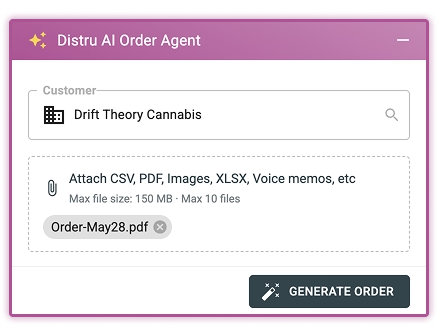
Distru's own AI Order Agent started in exactly this kind of unglamorous place: turning incoming wholesale orders, texts, emails, even a photo of a handwritten list, into clean sales orders and flagging anything that won't fill. A rep still reviews it before anything ships. Customers using it save 40+ hours a week they used to spend typing orders line by line. That's the pattern worth copying, not the specific tool.
Set Your Data Boundaries Before You Need Them
Before any AI tool touches your systems, know the answer to this: what happens if it makes a mistake, and what's the blast radius?
Low Stakes vs. High Stakes Mistakes
A tool that drafts a marketing email and gets it wrong is a minor annoyance, easily caught before it goes out. A tool with unrestricted access to your Metrc data and no guardrails is a different category of risk entirely, one that could put your license on the line if it goes wrong quietly enough that nobody catches it in time.
Write the Rules Down
This is where a real strategy earns its keep. Decide in advance what data is off-limits, what needs a person to review before anything ships, and what can run with minimal oversight. Write it down, even if it's just a shared doc with three bullet points. Revisit it as tools improve and as you get more comfortable with what they actually do in practice versus what the sales deck promised.
Don't Wait for "Ready," but Don't Rush Either
There's a version of this conversation that ends in paralysis: "we'll figure out AI once things settle down." Things aren't going to settle down. The tools you use today, including your cannabis ERP, are going to gain AI-driven features whether you have a strategy or not.
Deliberate vs. Accidental Adoption
The operators with a plan will adopt those features deliberately, one tested workflow at a time. The operators without one will adopt them by accident, one vendor pitch at a time, often without fully understanding what they just turned on. You don't need to be first. You need to not be last by default.
A Realistic First Step
Pick one repetitive task. Just one. Figure out what tool, if any, could take it off someone's plate. Run it for a month with a person checking the output. Decide from real results, not from a demo, whether it's worth expanding.
What This Looks Like in Practice
Maybe it's the weekly sell-through report. Maybe it's reconciling last month's Metrc packages against your physical count. Pick something small enough that a mistake is embarrassing, not dangerous, and let that be your test case. That's a strategy you can actually execute without hiring anyone new or buying anything you don't understand yet.
Common Mistakes Operators Make Here
Most missteps with AI adoption aren't about picking the wrong tool. They're about skipping the boring groundwork that makes any tool actually work.

Mistake One: Adopting Tools One Department at a Time With No Coordination
Sales picks one AI tool, compliance picks another, and finance picks a third, none of them talking to each other or to the ERP that's supposed to be the source of truth. Within six months you've rebuilt the disconnected-systems problem you were trying to escape, just with AI tools instead of spreadsheets.
Mistake Two: Treating the Pilot as the Final Decision
A rough first week with a new tool doesn't mean it's a bad fit forever. Give a pilot enough time to get past the setup friction before deciding it's not worth it, but also don't let a mediocre pilot drag on for six months out of sunk cost.
Mistake Three: No One Owns the Decision
If every AI tool purchase gets decided by whoever took the sales call that week, you end up with a patchwork with no coherent strategy behind it. Assign one person, even informally, to own the "should we adopt this" conversation across the business.
Not sure where to start looking? Talk to Distru, we work with operators across the country figuring out exactly this, and we'll tell you honestly where the easy wins are in your operation.