
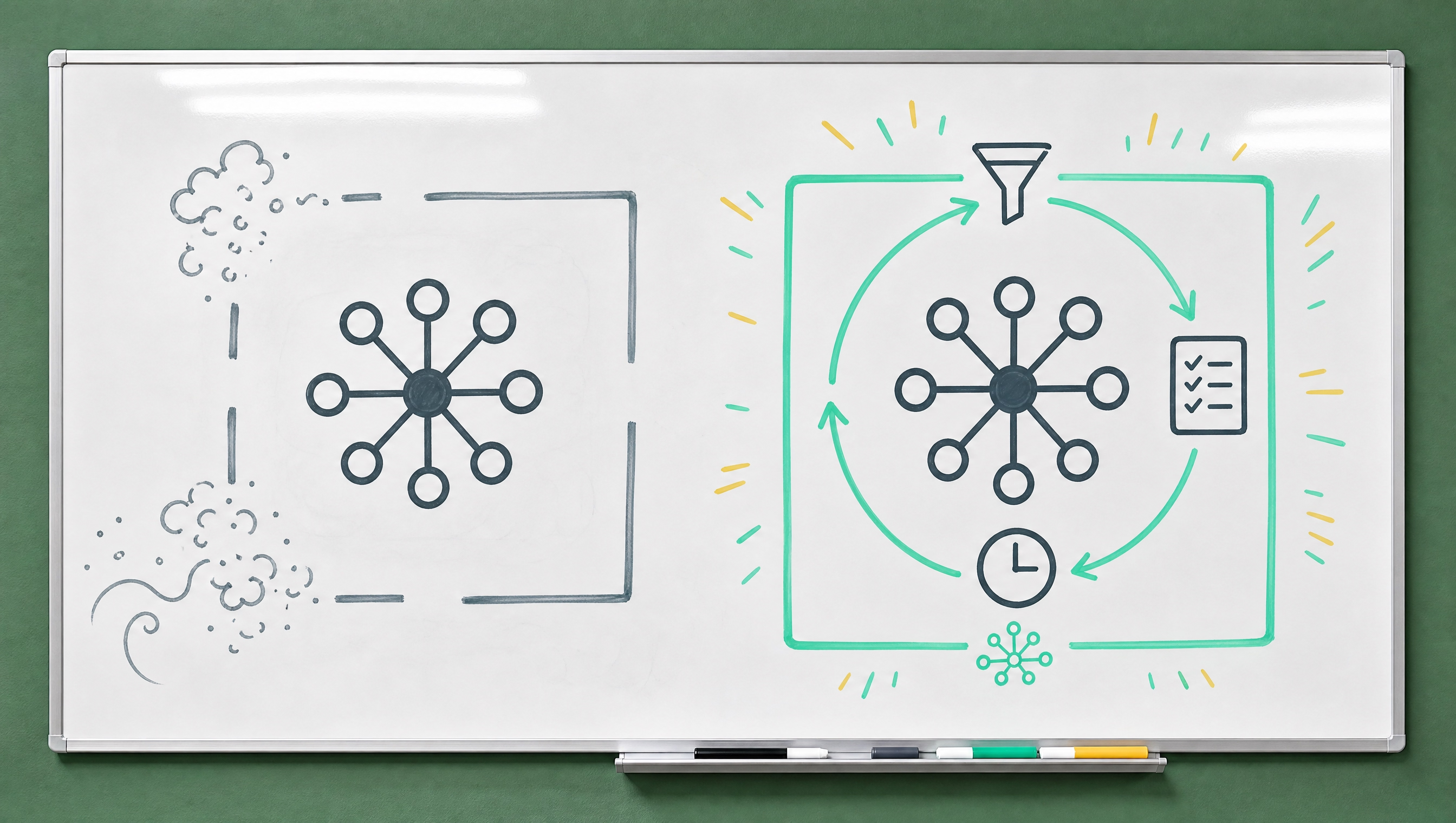
Two vendors can build on the exact same underlying AI model and end up with products that perform completely differently. If the model is identical, the difference has to be coming from somewhere else. It's coming from the harness, and most buyers aren't asking about it yet.
Why the Model Gets All the Credit
It's natural to give the model the credit when an AI feature works well. The model is the part with a name you recognize, the part vendors put in their marketing. But the model only ever sees what the harness gives it. If the surrounding system assembles a messy, incomplete context, or fails to handle an error gracefully, even a very capable model will produce a bad result, and it'll look like the model's fault when it isn't.
The Harness Decides What the Model Even Sees
Every decision a model makes is based on the context it's handed at that moment. The harness controls what's in that context, what got summarized, what got left out, what tool results were fed back in, and how. A model can only reason well about the information it's actually given.
Where This Shows Up in Practice
The gap between a good harness and a mediocre one shows up most clearly in the messy 20% of real-world cases, the edge cases, the malformed input, the situation nobody explicitly designed for.
Handling the Unexpected
A well-built harness knows what to do when a tool call fails, when the input doesn't match the expected format, or when it's genuinely uncertain. It can retry, ask for clarification, or flag the situation for a person instead of guessing confidently and getting it wrong. A poorly built harness either breaks or barrels ahead anyway, and from the outside, both failure modes look like "the AI got it wrong," when really it's the surrounding system that failed to catch it.
Knowing When to Stop and Ask
One of the most underrated jobs of a harness is deciding when a task genuinely needs a person, rather than letting the model push forward on something it's not equipped to resolve alone. That decision point is exactly where trust gets built or lost in a compliance-sensitive business.
What This Means When You're Evaluating Vendors
Asking "which AI model do you use" is a reasonable question, but it's the smaller half of the story. The bigger half is how the surrounding system handles your actual, messy business reality, not the clean example in a sales demo.
Better Questions to Ask
Ask what happens when the input doesn't match what the system expects. Ask how it decides something needs a person's review instead of proceeding on its own. Ask to see an example of it handling a genuinely messy case, not just the smooth, rehearsed one. Those answers tell you about the harness, and the harness is usually what determines whether the feature actually works for you.
A Concrete Example Worth Studying
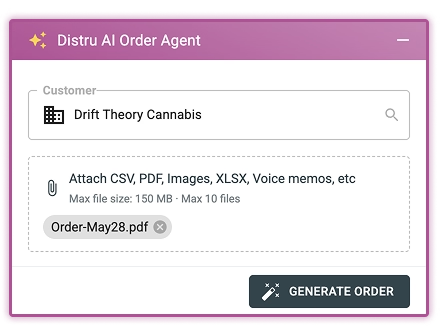
Distru's AI Order Agent is a useful case study specifically because of how it handles the parts that go wrong. Buyers send orders however they naturally do, messy formats included, and when something won't fill against inventory, the system flags it rather than guessing. A rep reviews everything before it ships. That handling of the unexpected case, not just the underlying model, is why customers save 40+ hours a week using it with real confidence instead of constantly double-checking it.
A Simple Way to Test This Yourself
You don't need technical expertise to probe this in a vendor demo.
Bring Your Own Messy Example
Don't just watch the vendor's rehearsed demo. Bring an actual messy order, an oddly formatted invoice, or a real edge case from your own operation and ask them to run it live. How gracefully the system handles that, not the polished example, tells you about the harness.
Ask What Happens on Failure, Specifically
Push past "it handles errors well." Ask for a specific example of an error it encountered and what happened next. A vendor who can walk you through a real failure and how the system responded has a harness worth trusting. A vendor who can only describe failure handling in the abstract probably hasn't tested it enough yet.
Want to see how this holds up against your own messy order data? Talk to Distru.


