AI Skill
Sales & Operations
Cannabis Staff Scheduling Planner
Build a shift schedule that matches demand and stays inside your labor budget.



This is a starting template. Change the questions, thresholds and output to fit how you work. AI can make mistakes, so check the output before you act on it. Report an issue
The problem it solves
You're overstaffed on slow weekdays, short on busy shifts, and overtime shows up after payroll.
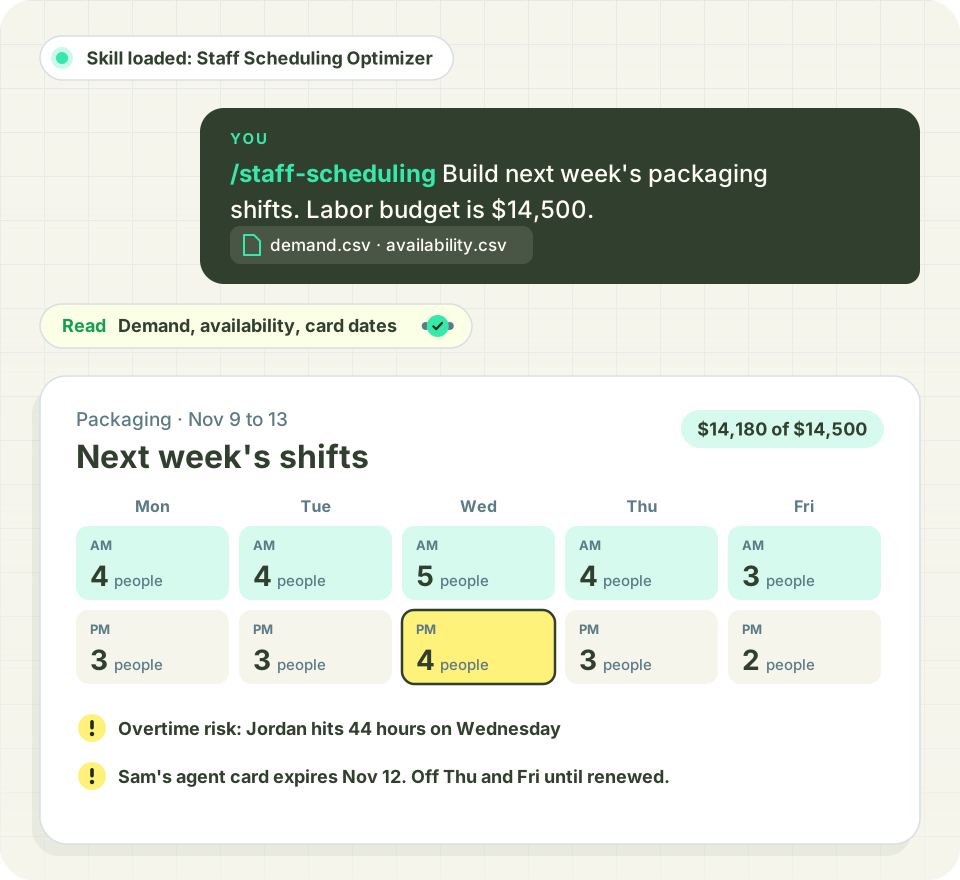
Give the skill your roster, availability, demand data and labor budget, and it builds a coverage-matched schedule for a cultivation site, manufacturing facility or dispensary. Before anything goes out, it flags coverage gaps, overtime risk and agent card expirations.
Time-off and shift swap requests are checked with the same rules.
What you'll need
Have these ready before you start.
- Staff roster with roles, rates and weekly hour caps
- Availability
- 8 to 12 weeks of demand: sales by hour and day, or production deadlines for harvest, trim and packaging
- Target labor percentage or labor budget
- Coverage rules per shift and hard constraints such as vault minimums
- Agent card expiration dates, state, and upcoming demand spikes. A CSV template is included.
What the AI does
- Sets the hour budget from projected sales or your production labor budget
- Maps demand by hour and day and builds a coverage grid
- Assigns staff by availability, certification, constraints, cost and fairness
- Flags under and overstaffing and labels overtime as likely justified or worth reviewing
- Catches expiring agent cards and broken hard constraints
What you get
A demand-matched schedule with flags. In a sample run for a fictional 7-person location with $18,200 in projected weekly sales and a 24% labor target, it moved weekday shifts from 3 people to 2, added a third person on Friday and Saturday evenings, and brought labor from 24.6% to 20.2% of sales. It also flagged a Saturday vault coverage gap, 2 hours of overtime to review and an agent card expiring the day before a shift.
Not legal or HR advice. Overtime, break and predictive scheduling rules are listed for HR or counsel to confirm.
Production deadlines in Distru, like assemblies and open orders due to ship, give the schedule real demand to plan against instead of last month's guess.
Frequently Asked Questions
Let’s answer the most commonly asked questions about Cannabis Software.
How does the scheduling planner build a schedule?
It sets an hour budget from projected sales and your labor target, or from a production labor budget. Then it maps demand by hour and day and assigns staff by availability, certification, hard constraints, cost and fairness. Time-off and shift swap requests go through the same checks.
Can it schedule cultivation and manufacturing teams?
Yes. Give it production data like harvest, trim and packaging deadlines plus a labor budget, and it builds coverage around those deadlines. Retail teams use sales by hour and day.
What does it flag before the schedule goes out?
Over and understaffed shifts, overtime risk labeled as likely justified or worth reviewing, agent card expirations and any broken hard constraint, like a vault minimum. In a sample run it caught an agent card expiring the day before a scheduled shift.
Does it handle labor law for me?
No. Overtime, break, predictive scheduling and agent card questions come back as items to confirm with HR or counsel. It's not legal or HR advice.

