
People talk about AI models like the model is the whole product. It isn't. There's a whole layer of infrastructure wrapped around a model that determines whether it's actually useful for a real task, and that layer has a name: the agent harness.
What a Harness Actually Is
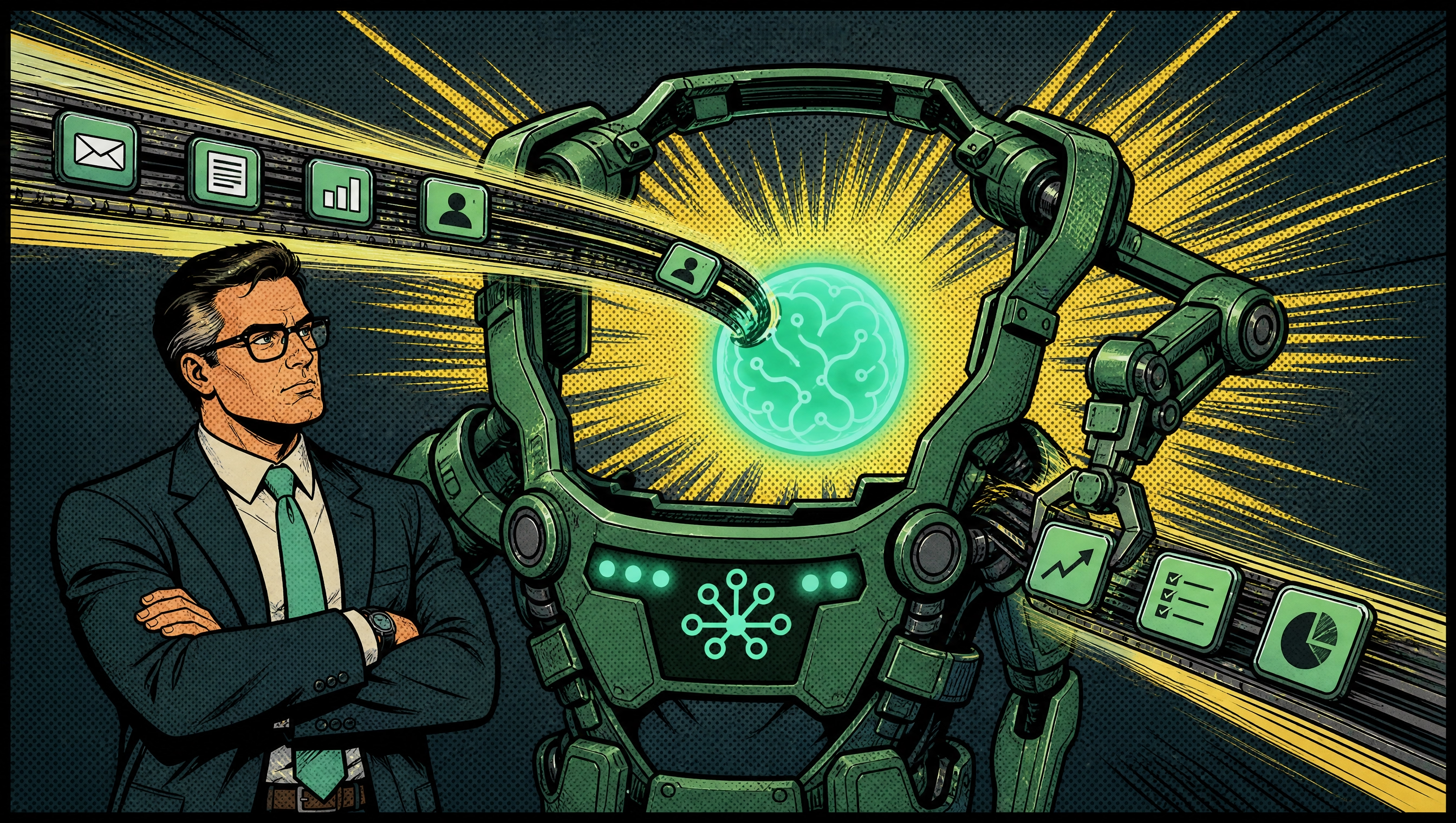
An agent harness is the scaffolding that wraps around an AI model and manages everything the model doesn't handle on its own: running a loop that calls the model repeatedly, executing the tools it decides to use, managing what context it has access to, handling errors when something goes wrong, and deciding when a task is actually finished.
The Car and Engine Analogy
A useful way to think about it: the model is the engine, the harness is the car. An engine on a workbench doesn't get you anywhere. It needs a transmission, wheels, a steering wheel, brakes, all the infrastructure that turns raw power into something you can actually drive. The harness is that infrastructure for an AI model.
Why the Harness Matters as Much as the Model
This isn't just a tidy metaphor. It has a measurable effect. Research on coding agents has shown the exact same underlying model scoring dramatically differently on identical tasks, in one widely discussed case, 46% versus 80%, purely depending on the harness wrapped around it. That's a bigger gap than you'd typically see between entirely different model tiers.

What the Harness Actually Controls
The harness decides what context the model sees when it makes a decision, how tool results get fed back in, how errors get handled and retried, and when the whole process stops. A brilliant model fed a poorly assembled context, or wrapped in a harness that doesn't handle errors gracefully, will produce worse results than a decent model wrapped in a well-built one.
A Real-World Example You've Probably Heard Of
Anthropic's own documentation describes Claude Code as the agentic harness around Claude, the model. That's a useful, concrete example: the same underlying model can be wrapped in different harnesses built for different purposes, coding tasks in one case, broader knowledge work in another, and the harness is what shapes which tasks it's actually good at in practice.
Why This Distinction Is Worth Knowing
When a vendor says their product "uses AI," the underlying model is only part of the story, and often not the most important part. The harness, how it manages context, how it handles the moment something goes wrong, whether it knows when to stop and ask for a human, determines whether that AI feature is actually reliable in practice.
What This Means for Evaluating Cannabis Software
The next time a vendor tells you which AI model their feature is built on, that's a smaller piece of information than it sounds like. The more useful question is how the harness around that model handles your specific, messy, real-world data, and what happens when something doesn't go according to plan.
A Grounded Example
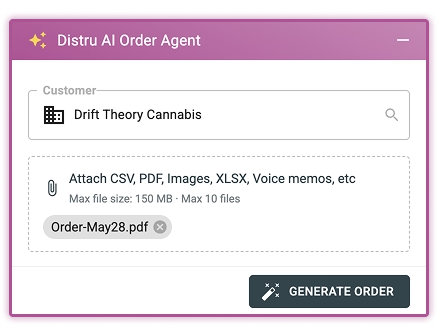
Distru's AI Order Agent is a useful illustration of harness thinking done well: it's not just a model loosely pointed at your orders. It's built around a defined task, a defined way of checking results against inventory, and a review step before anything ships. That structure, not just the underlying model, is why customers save 40+ hours a week using it reliably.
Why This Term Is Suddenly Everywhere
If "harness" feels like a word that showed up out of nowhere, that's roughly accurate. It's a recent shift in how the AI industry talks about what used to just be called "scaffolding" or "the wrapper."
A Naming Shift With a Real Reason Behind It
The newer framing treats the harness as a permanent part of the system, something you build and maintain deliberately, rather than temporary scaffolding you tear down once a model is "good enough." That shift matters practically: it changes whether a vendor treats this layer as a serious, ongoing engineering investment or an afterthought bolted on once.
Why It's Worth Knowing the Term
You don't need to use the word "harness" in a vendor conversation for it to be useful. Knowing it exists as a distinct concept from "the model" is what lets you ask sharper questions instead of accepting "we use a great AI model" as the whole answer.
Curious how this plays out with your own order data? Schedule a demo with Distru.


