

Every conversation about AI and jobs eventually lands on the same anxious question: what happens to the people doing the work today? For cannabis ops teams, the honest answer isn't "nothing to worry about" or "everyone gets replaced." It's that the job shifts, and the teams who prepare for that shift now will be in a much better position than the ones who wait.
What Actually Changes
AI agents are strongest at structured, repetitive tasks with a clear right answer: data entry, reconciliation, pattern matching. That's a real chunk of what an ops role involves today. As that work gets handled faster, the remaining, harder-to-automate parts of the job become the whole job, not a side responsibility squeezed in between typing tasks.
Less Typing, More Judgment
The tasks that stick around are the ones requiring context an AI tool doesn't have: knowing which customer relationship needs a phone call instead of an automated flag, understanding why a compliance exception happened instead of just noticing that it did, deciding what actually matters among ten flagged issues on a busy day.
The Skill Nobody's Naming Yet: Reviewing AI Output Critically
The most underrated skill in the next few years of cannabis ops isn't a technical one. It's the ability to look at what an AI tool proposes and evaluate it critically instead of defaulting to either extreme, blind trust or blanket dismissal.
Trusting Too Much Is a Real Risk
A team that stops double-checking AI-proposed sales orders or compliance flags because "it's usually right" is setting up for the one time it isn't, at the worst possible moment. The review step only works if people actually take it seriously instead of rubber-stamping it.
Dismissing It Entirely Wastes the Whole Point
The opposite failure mode is just as common: a team that doesn't trust any AI-flagged output and re-does everything manually anyway, which means you're paying for a tool and getting none of the time savings. Neither extreme works. The skill is calibrated trust, knowing when to take a flag at face value and when to dig in.
Concrete Ways to Build This Now
You don't need an AI tool in production to start building this muscle.
Practice on What You Already Have
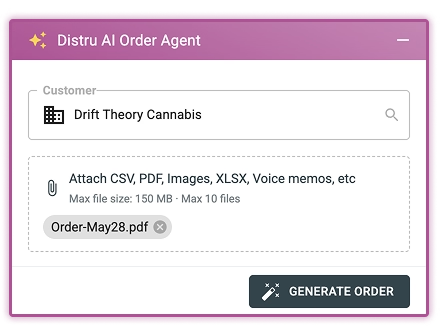
If you're running Distru's AI Order Agent today, use the review step deliberately. Don't just click approve. Actually look at what it flagged and why, even when it's usually right. That habit is exactly the skill that matters, and it's free to practice on a tool you're already using.
Document the Edge Cases
Every time an AI-assisted tool gets something wrong, or flags something ambiguous, write down what happened and why. That running list becomes training material for your team, and it's also exactly the kind of feedback that helps a vendor improve the tool.
Rotate Who Does the Reviewing
If one person always reviews AI-flagged output, they become a single point of failure and the only one building this judgment. Rotate it, so the skill spreads across your team instead of concentrating in one person who might not always be available.
What This Means for Hiring and Training
If you're hiring for an ops role today, weigh judgment and pattern recognition more heavily than raw data entry speed. The typing part of the job is shrinking. The part where someone catches the thing that doesn't fit the pattern is becoming the actual job.
What This Looks Like a Year From Now
It's worth picturing where this actually goes, so the changes you make now point in the right direction.
Fewer People Doing Pure Data Entry
Roles that were once entirely about typing and reconciling are going to shrink in raw headcount need, not because the work disappears, but because a person plus an AI tool can cover what used to take several people doing manual entry.
More Value Placed on Exception Handling
The person who's genuinely good at spotting the order that doesn't fit the pattern, or the compliance flag that needs real investigation instead of a quick fix, becomes proportionally more valuable as the routine work shrinks around them.
A Real Shift in What "Experience" Means
Years of experience doing manual data entry won't carry the same weight it used to. Years of experience catching the exceptions that data entry used to surface will matter more. That's a real shift in how to evaluate a resume, not just a talking point.
Curious how your team's current workflow could evolve? Talk to Distru about what's already changing for operators like you.