
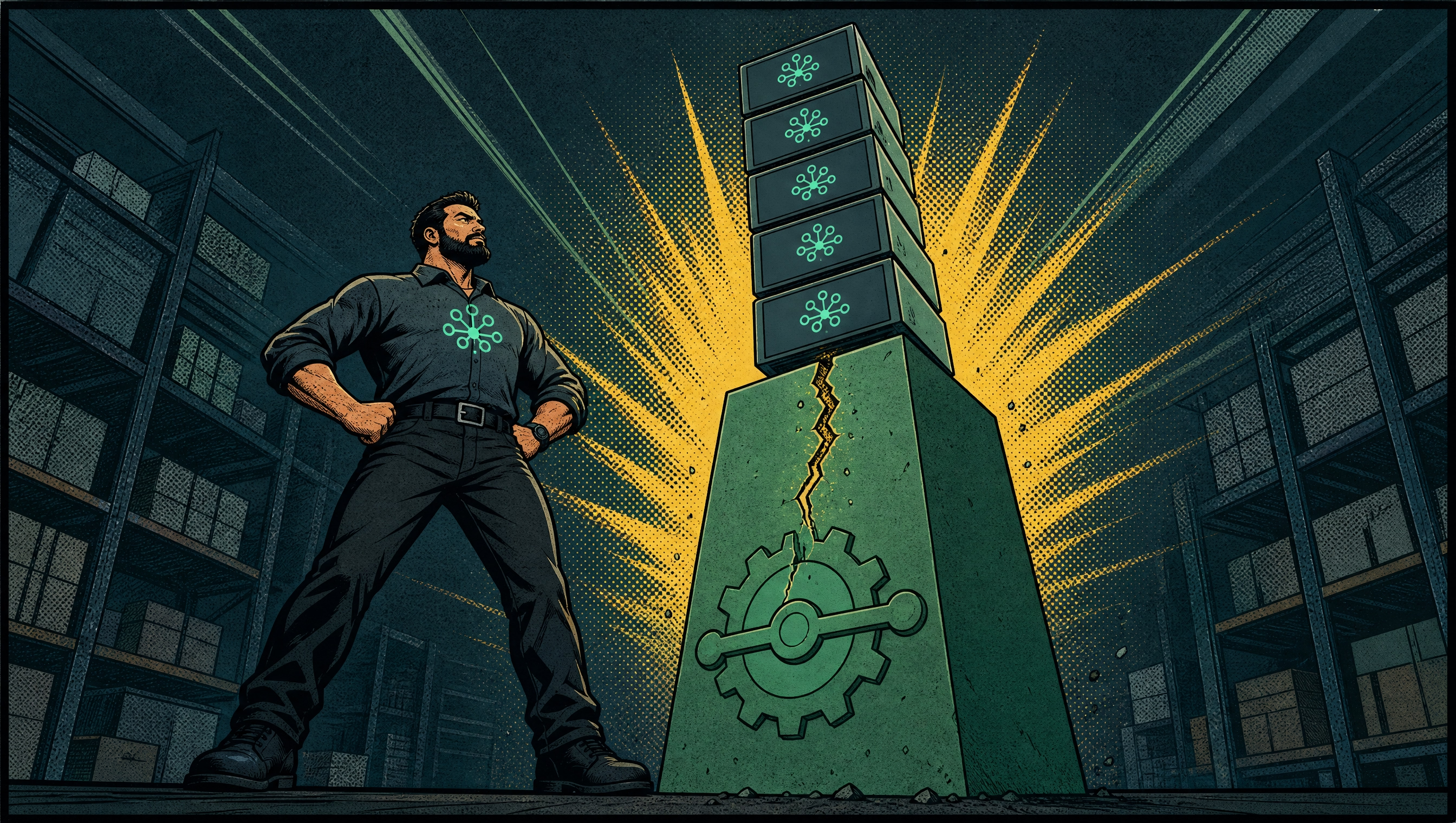
An MSO evaluating its next software purchase is usually looking at the wrong layer of the problem. The question isn't which point solution to add next. It's whether the foundation underneath all of it can actually support what's being layered on top.
Why Scale Changes the AI Conversation
A single-license operator adopting an AI tool that makes a mistake deals with one bad outcome in one place. An MSO running the same mistake across five states and a dozen brand SKUs deals with the same error multiplied by every location it touches. Scale amplifies both the upside and the risk of AI adoption, which is exactly why MSOs need to think about this more deliberately, not less.
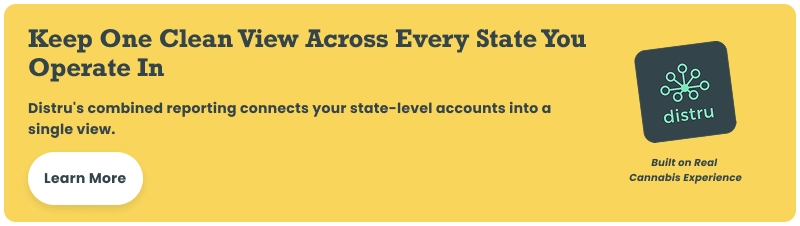
The Silo Problem Gets Worse at Scale
Every additional brand, license, or state an MSO adds tends to bring its own slightly different systems, slightly different data structures, and slightly different processes, unless there's active effort to prevent that. AI tools need clean, consistent data to work reliably, and fragmented data across brands is the exact opposite of that.
Why Adding Another Point Solution Makes This Worse, Not Better
The instinct when a specific pain point shows up, forecasting is bad in one brand, compliance tracking is inconsistent in another state, is often to buy a targeted tool for that specific problem. At MSO scale, that instinct compounds into a real liability.
Point Solutions Multiply the Silos
Adding a fourth or fifth disconnected tool to solve one brand's specific problem means AI features built into that tool only ever see that brand's slice of the picture. You end up with smarter silos instead of fewer silos, and the reconciliation problem you were trying to escape gets recreated at a higher level.
What Should Happen Instead
Before adding another tool, ask whether the underlying data, inventory, orders, compliance records, across your brands and licenses lives in one connected system or several disconnected ones. If it's the latter, that's the actual priority, not whichever AI feature looks most impressive in a demo this quarter.
What a Real AI Strategy Looks Like for an MSO
The MSOs getting real value from AI aren't the ones with the most AI tools. They're the ones who fixed their data foundation first.
One Connected System Across Brands
A platform that gives each brand its own portal and workflow while keeping data visible and consistent at the top, the model behind Distru's Brand Portal approach, means an AI feature built on top of that data actually sees the full picture instead of one brand's fragment of it.
Consistent Data Standards Across Locations
The same reason codes, the same cost tracking methodology, the same order structure across every license and state. This sounds unglamorous, and it is, but it's the actual prerequisite for any AI feature to work reliably at MSO scale.

A Concrete Example of Foundation Paying Off
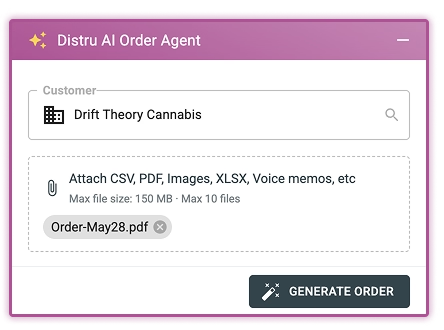
Distru's AI Order Agent only works reliably because it reads live, structured inventory and order data. For an MSO, that same principle applies at scale: the agent's value compounds when every brand's orders flow through the same connected cannabis ERP (Enterprise Resource Planning) foundation instead of five different systems that don't talk to each other. Customers using it save 40+ hours a week per operation, and that number only holds up because the underlying data was clean enough to act on.
A Realistic Next Step
Before your next software purchase, map out how consistently your brands and licenses actually share data today. If the answer is "not very," that's the project worth funding before any specific AI feature, however impressive the pitch.
A Common Trap Worth Naming
A lot of MSOs fall into the same sequence, and it's worth recognizing before you repeat it.
Acquiring a Brand Means Acquiring Its Systems Too
Every acquisition brings whatever software that brand was already running, and the instinct is often to leave it running rather than deal with a migration during an already busy integration period. That's understandable in the short term and expensive in the long term, since it's exactly how data fragmentation compounds across an MSO's portfolio.
The Cost Shows Up Later, Quietly
The bill for this doesn't arrive as one dramatic failure. It shows up as a slow accumulation of manual reconciliation work, inconsistent reporting across brands, and AI features that can't be adopted evenly because the underlying data isn't consistent enough to support them everywhere.
Want to talk through what a connected foundation looks like across your brands? Schedule a demo with Distru.


