

Most applicants pick their Minnesota cannabis license based on what's available, not what their operation actually needs. That's an expensive mistake to make after you've filed your paperwork.
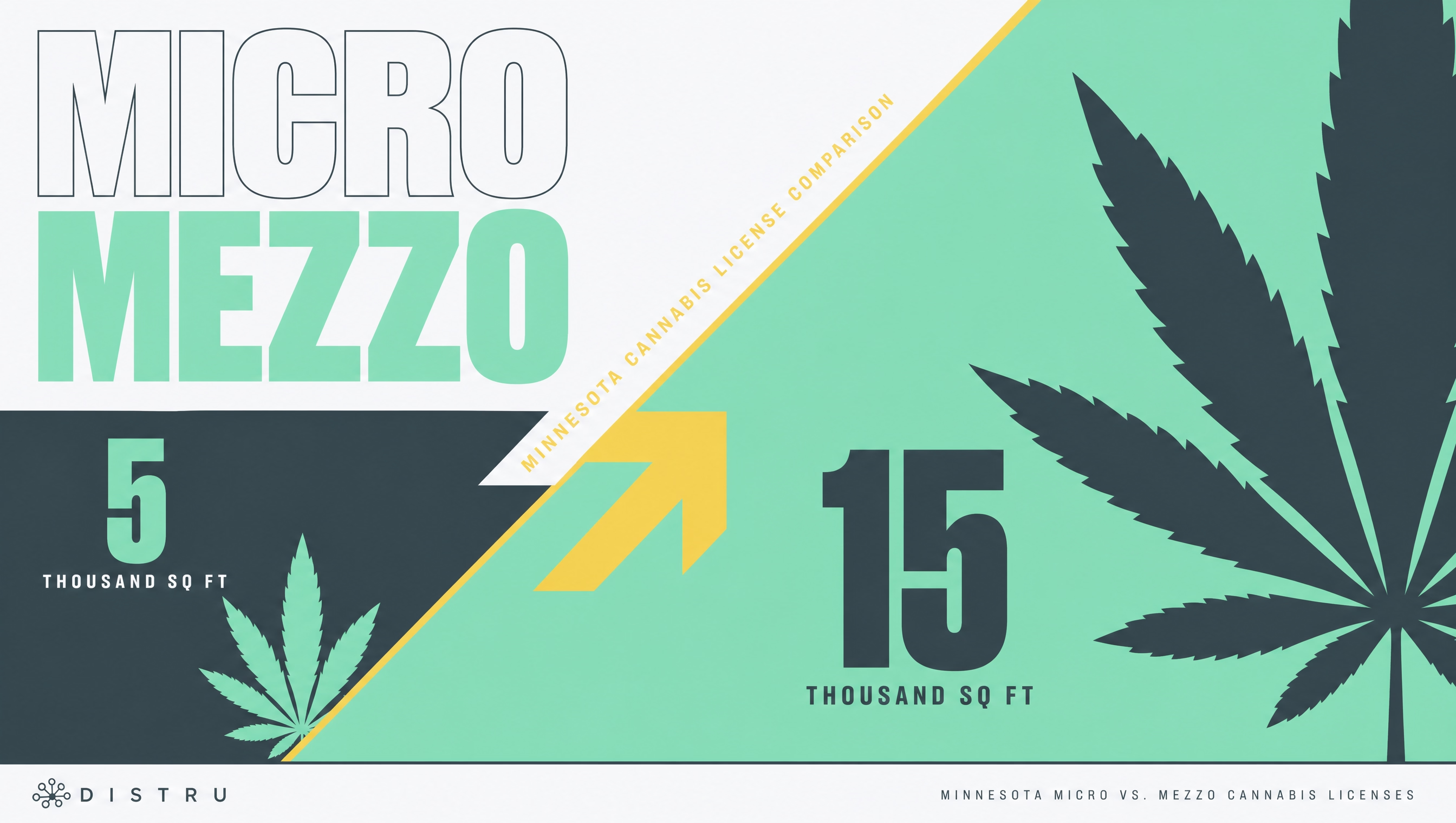
The difference between a microbusiness and a mezzobusiness isn't just canopy size. It's one retail location vs. three. It's $2,000/year in renewal fees vs. $10,000. It's an open application queue vs. a statewide cap of 50 licenses, with the next cap review now pushed to July 1, 2027.
Both license types let you grow, manufacture, and sell cannabis under one roof. But the operational reality of running each one looks very different. This guide gives you the side-by-side comparison: canopy limits, retail rights, license costs, compliance obligations, and the infrastructure you'll need from day one.
What Makes These Licenses Different from Everything Else in MN
Before comparing micro to mezzo, you need to understand what makes them different from every other license type in Minnesota's system.
What "Vertically Integrated" Actually Means
Most cannabis states require separate licenses for each activity: cultivate here, manufacture there, sell somewhere else, move product through a licensed distributor in between. Minnesota takes a different approach for two of its license types.
A vertically integrated license gives you cultivation, manufacturing, and retail rights in a single license. You grow the plant, process it into products, and sell directly to consumers. No external distributor required. That's a significant structural advantage, and it changes your compliance picture from day one.
Standard cultivator, manufacturer, and retailer licenses in Minnesota are not vertically integrated. A standalone cultivator license, for example, only gives you B2B rights. You can't sell direct to consumers without a retail license, and you can't manufacture without a separate manufacturer license.

Which License Types Allow Vertical Integration in Minnesota?
Three:
- Cannabis Microbusiness
- Cannabis Mezzobusiness
- Medical Cannabis Combination Business (for operators with existing medical cannabis roots)
If you're an adult-use applicant building from scratch, you're choosing between micro and mezzo. That's the decision this article is built around.
Microbusiness vs. Mezzobusiness: Side by Side
| Feature | Microbusiness | Mezzobusiness |
|---|---|---|
| Indoor canopy | Up to 5,000 sq ft |
Up to 15,000 sq ft |
| Outdoor canopy | ~0.5 acre |
Up to 1 acre |
| Retail locations | 1 |
Up to 3 |
| License availability | Uncapped |
Capped at 50 statewide |
| Next cap review | N/A |
July 1, 2027 |
| Wholesale rights |
Yes
|
Yes
|
| Metrc required |
Yes
|
Yes
|
| Application fee | $500 |
$5,000 |
| Initial license fee | $0 |
$5,000 |
| Annual renewal | $2,000 |
$10,000 |

Canopy Limits: What They Mean in Practice
Canopy determines your production ceiling. At 5,000 square feet, you've got a real grow operation, but it caps the total volume you can move through manufacturing and into your retail location.
At 15,000 square feet, you're running a commercial facility three times the canopy, which translates into meaningfully more finished product to sell across up to three storefronts.
Don't try to estimate yield per square foot without solid sourcing for your specific cultivar and method. What you can say with confidence: more canopy means more product to sell, and more product to track in Metrc.
One thing to keep in mind: OCM can and does inspect canopy compliance. Exceeding your limits isn't just a paperwork issue; it's a license risk.
Retail Location Limits: The Revenue Difference
One storefront vs. three is a big deal. Your retail locations determine how many customers you can reach, and each location is a separate Metrc location that needs its own inventory reconciliation, its own staff, and its own SOP documentation.
For a new operator, one production facility plus one retail location is already a full operational plate. Adding a second and third storefront means more compliance surface area, more Metrc records to keep clean, and a larger team to train.
If your business plan requires multiple locations from the start, microbusiness won't get you there. If you're building toward that goal but want to prove the model first, microbusiness gives you room to do that without competing for a capped license.

License Caps and Fees: The Access Question
This is where the two license types diverge most sharply for applicants right now.
The microbusiness is uncapped. Any qualified applicant can get one. The application fee is $500, there's no initial license fee, and renewal runs $2,000 per year. If you're starting lean, this is the accessible entry point into Minnesota's adult-use market.
The mezzobusiness is a different story. Minnesota set a statewide cap of 50 licenses. The initial application costs $5,000, the initial license fee is another $5,000, and renewal is $10,000 per year. More critically, the 2026 Minnesota legislative session extended the cap review date to July 1, 2027. That means no new mezzobusiness licenses are expected to be issued until OCM evaluates market conditions next year at the earliest.
If you're applying for a mezzobusiness, you need to know where you stand in the queue. Check OCM's licensing dashboard at mn.gov/ocm for current applicant data before making decisions based on availability.
What Both License Types Share: Compliance Obligations
Here's what doesn't change between micro and mezzo: the compliance requirements. Both license types are full Metrc participants from day one, and both carry the same OCM obligations for manufacturers and retailers.
Metrc Requirements for Both
Minnesota requires every licensed cannabis business to connect to Metrc, the state's seed-to-sale tracking system. Every inventory movement, from propagation through final sale, needs to be entered in real time.
Package-level tracking is the baseline. Every packaged unit gets a Metrc tag. If you're a mezzo operator moving product from production to a second or third retail location, those transfers require manifests, just like transfers between separate businesses.
OCM auditors pull your Metrc records on-site during inspections and compare them against your physical inventory. If the numbers don't match, you're explaining discrepancies. This is not optional, and it's not a gotcha. It's the game.
Batch Records and Stability Testing
If you're manufacturing, you're maintaining batch records. OCM requires complete traceability from every input material through to every finished packaged unit. An auditor can pull a finished goods package from your shelf and ask you to trace it all the way back to its source inputs. If you can't, that's a violation.
OCM also now requires stability testing for all manufactured products. You need evidence-based expiration dates entered into Metrc for every product you make. This isn't a future requirement. It's active, and it's an area of OCM audit focus. If you're planning to manufacture, build this into your workflow from the start.
What Changes When You Add Retail
Retail adds another compliance layer. Your point-of-sale records need to reconcile with Metrc inventory. Certificates of Analysis (COAs) must be available at point of sale for tested products. And every retail location is a separate Metrc location, meaning separate records and a separate reconciliation.
For a mezzo operator running three storefronts, that's three separate Metrc locations all tracking back to one production operation. The records management workload scales with the locations.

Which License Is Right for Your Business?
Choose a Microbusiness If:
You're starting lean and want to move fast. The microbusiness has no license cap. You're not competing for one of 50 spots statewide, and your upfront cost to apply is $500.
Your business plan is built around one storefront. One location plus one production facility is operationally manageable for a first-time licensed operator. You can prove the model, build your Metrc compliance track record, and grow from there.
You want to limit your initial compliance surface area. One retail location means one set of POS-to-Metrc reconciliations, one COA filing system, one staff training program. That's not a limitation, for a new operator, it's a feature.
You have limited startup capital. The difference between a $500 microbusiness application and a $10,000 mezzobusiness upfront cost matters when you're building infrastructure from zero.

Choose a Mezzobusiness If:
You're building a multi-location brand from day one. Three storefronts give you meaningfully more revenue potential. If your business plan requires that from the start, the microbusiness won't get you there.
You have the team and capital to manage a larger operation. 15,000 square feet of canopy, up to three retail locations, and $10,000/year in renewal fees require a different level of organizational readiness than a microbusiness. Make sure your plan matches your capacity.
You can secure a license before the cap is filled, or you're already in the queue. The mezzobusiness cap is 50 statewide, and the next review for potentially expanding that number is July 1, 2027. If you're not already in the application process, verify your position with OCM before planning around this license type.
Your production roadmap requires more than 5,000 square feet. If your growth model depends on production volume that a 5,000 sq ft canopy can't support, mezzo is the path. Just know you're committing to a larger compliance footprint alongside the larger canopy.
What You'll Need to Run Either License: Day One
Whichever license you choose, the operational infrastructure falls into the same categories. The scale is different; the systems aren't.
Here's what you need before you open:
Metrc integration. Both license types require real-time tracking from the moment your operation is active. You need a system that connects to Metrc and keeps your records current. Manual data entry in Metrc alone is a compliance risk at scale.
Inventory management across all locations. For micro, that's one production location and one retail location. For mezzo, it can be a production facility and up to three storefronts. You need to know what's in stock at each location in real time.
Production tracking. Bills of materials (BOMs), work orders, and batch records are not optional for manufacturers. OCM expects complete traceability from input material to packaged good. You need a system that generates and stores these records automatically as you work.
SOP documentation. OCM inspectors ask to see your SOPs on-site. Waste disposal, inventory management, packaging, labeling, quality assurance. All of it needs to be written down and current.
COA management. Every tested product needs a COA attached to the right Metrc package and accessible at point of sale. If you can't produce the right COA for the right lot during an inspection, you have a problem.
The License Sets the Scale. The Infrastructure Makes It Work.
You've done the research. You know which license fits your plan. Now comes the part most applicants underestimate: building the operational infrastructure that actually runs it.
Every Minnesota microbusiness and mezzobusiness starts with the same foundational requirements: real-time Metrc compliance, batch record tracking, retail reconciliation, and COA management. The difference is scale, not complexity category.
Distru is the cannabis ERP platform built for licensed operators like you. We handle Metrc integration with real-time two-way sync, production tracking through BOMs and batch records, and retail compliance from inventory to point of sale. Connected system, from your first day of operation.
Book a demo and see how Distru works for Minnesota


