

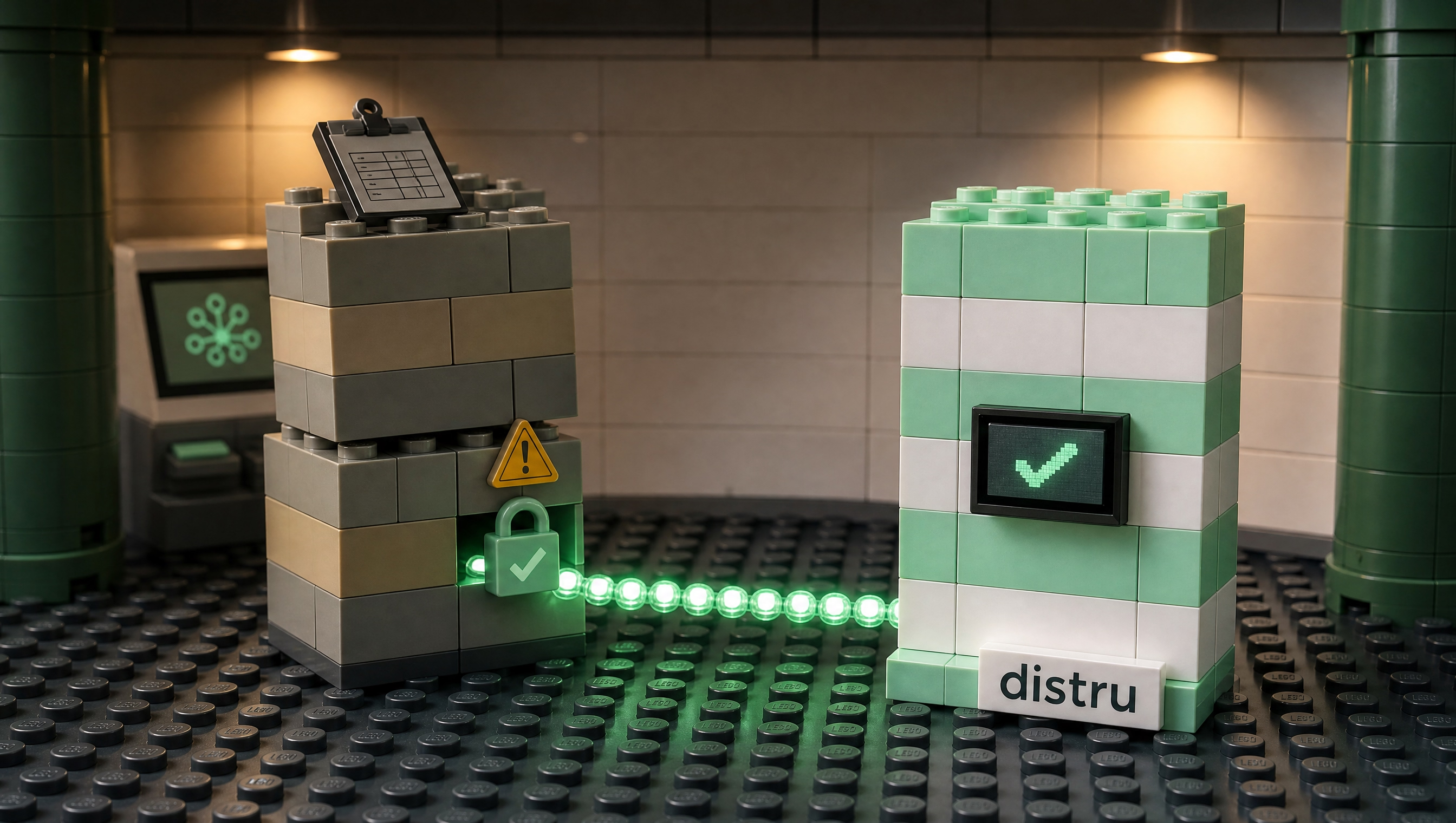
You do a physical count on a Friday afternoon. The spreadsheet says one number. Metrc says another. Now you're digging through three weeks of transfers, harvests, and sales trying to find where the two records split, and you're doing it with a state audit clock running whether you notice it or not.
If that sounds familiar, you're not alone. Cannabis inventory isn't like inventory in any other industry. Every gram has to be tracked from seed to sale, matched against a state track-and-trace system, and accounted for down to the batch and package level. Get it wrong and you're not just short a few units, you're looking at fines, a suspended license, or worse. Let's break down what's actually going wrong when inventory is manual, and what automated actually needs to mean to fix it.

What manual inventory tracking actually costs you
Most operators don't start with a spreadsheet because they think it's a good idea. They start there because it's what's in front of them, and it works until it doesn't.
Here's where it breaks. Your team doesn't update the count after a transfer, and you oversell an item to a buyer who's now unhappy and less likely to reorder. A batch runs low and nobody notices until a manufacturing run needs it that day. Multiply that across cultivation, processing, and sales, and you've got a business that's flying on stale numbers instead of real ones.
The compliance side is less forgiving. States that run on Metrc require plant and package events, harvests, transfers, and sales, to get logged within specific windows, and physical inventory has to match what's on record or it can trigger warning letters, fines, or license suspension. The more that data lives in spreadsheets and gets typed into Metrc by hand later, the more chances there are for those two records to drift apart, and the harder it is to explain the gap when a regulator asks.

What "automated" inventory tracking actually has to mean
A lot of software claims a Metrc integration. Not all of them mean the same thing by it. A real integration is a two-way, continuous sync: every inventory movement in your system gets reflected in Metrc automatically, and the system checks its own records against Metrc's to catch mismatches before they turn into a compliance problem, not after.
That's a different thing than exporting a report at the end of the day, or logging into Metrc once a week to true things up. If your software still requires someone to manually push updates, you don't have automated compliance. You have a nicer spreadsheet.
Where this shows up across a cannabis operation
Automated inventory isn't one feature, it's a chain that has to hold at every stage:
- Cultivation. Plant counts, room moves, and harvest weights sync the moment they happen instead of getting keyed into Metrc separately from wherever the grow data lives.
- Processing and manufacturing. Raw materials draw down automatically as a production batch converts flower into a finished product, so the system always knows what went in, what came out, and what got wasted.
- Distribution. A transfer manifest builds from sales order data that's already in the system, instead of someone re-typing product names, quantities, and license numbers by hand.
- Retail. A point-of-sale system decrements inventory and reports the sale to Metrc in real time, so the shelf count and the state record never have a chance to disagree.
Break the chain at any one of those points and you're back to reconciling two systems by hand, which is exactly the problem automation was supposed to solve.
The real payoff: time, accuracy, and fewer late-night Metrc sessions
The difference shows up in numbers you can actually feel. Manually building a transfer manifest across disconnected systems typically takes 15 to 20 minutes and carries a 5 to 10 percent error rate on things like quantities or license numbers, errors that get manifests rejected and sent back. With a live, two-way Metrc sync, that same manifest takes 60 to 90 seconds, with well under a 1 percent error rate, because most of the fields are already validated and populated before anyone touches it.
Zoom out and that time savings adds up fast. Operators running a properly connected system report saving 100 or more hours per week that used to go to compliance busywork, hours that go back into growing, selling, and running the business instead of chasing down reconciliation errors.

One platform, connected to Metrc, no double entry
This is exactly what Distru was built to do. Distru is a cannabis ERP platform built for licensed operators, and it was designed from day one around real cannabis standard operating procedures, licensing rules, and compliance requirements, not retrofitted from generic inventory software after the fact.
Every unit of inventory, cannabis and non-cannabis alike (packaging, ingredients, supplies), gets tracked as it moves through cultivation, processing, packaging, and sale, all inside one system of record. Nothing sits in a spreadsheet waiting to get out of sync. Distru maintains a live, two-way integration with Metrc, and BioTrack in the states that still run it, so every inventory movement gets reflected in the state system automatically, and Distru continuously checks its own data against Metrc to flag mismatches before they become a problem you find out about during an audit.
Inventory tracking goes down to the batch, lot, and even bin or shelf location across multiple warehouses, so you can trace any package back through every step of production and answer exactly where it came from and where it went, instantly, not after digging through three systems. For processors and manufacturers, Distru handles bills of materials for multi-input, multi-output production runs, tracking what went in, what came out, what was wasted, and what it cost, so cost of goods sold gets calculated automatically using FIFO, LIFO, or average costing instead of a spreadsheet formula someone built two years ago.
Every adjustment, transfer, reservation, and sale gets logged with who did it, when, and why, which builds a real audit trail operators can use to spot patterns and fix problems, not just something to pull out if a regulator asks. Low-stock alerts and live quantities help avoid both classic inventory failure modes: stockouts that kill a sale, and overstock that ties up cash sitting on a shelf.
None of this lives bolted onto five different tools. Inventory, production, sales orders, invoicing, B2B ordering, and accounting all run in the same platform, so data entered once shows up everywhere it needs to. And it scales the same way whether you're a single cultivator or a multi-state, multi-warehouse distributor moving product across locations. Distru also holds a 99% customer support satisfaction score, and operators consistently point to the support team and the time saved over spreadsheets or older legacy systems as the reason they stick around.
Cannabis inventory doesn't forgive mistakes. A gram that goes unaccounted for costs more than it would anywhere else. Distru turns that liability into a real-time, auditable, automated system operators can actually trust.
See your inventory connected to Metrc
Every operation's inventory chain looks a little different depending on your license type and how many locations you're running. Book a demo and we'll walk through your specific workflow: where your data's breaking down today, and what it looks like once it's all connected to Metrc in real time.


