
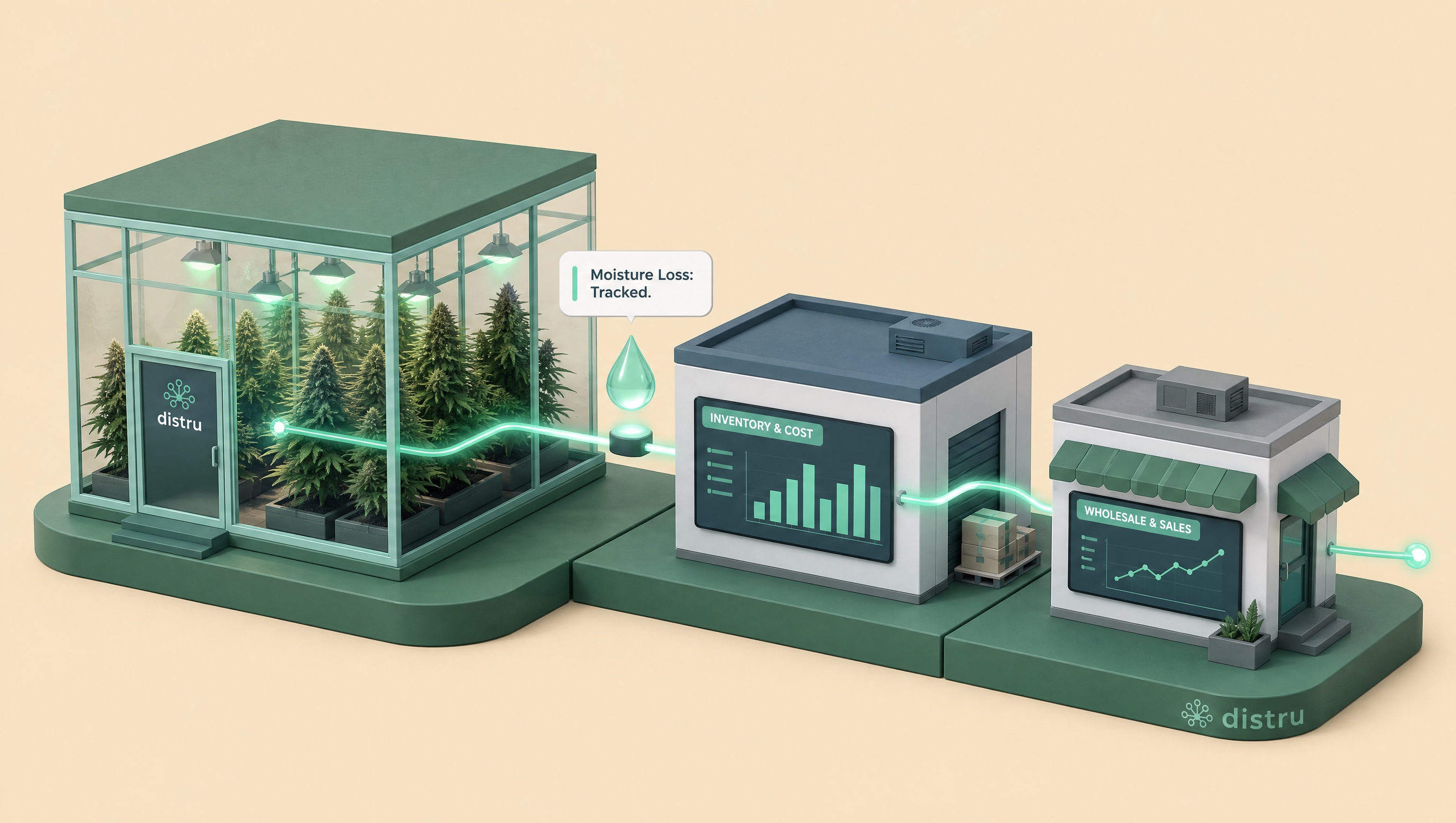
Here's a scene that plays out in grow rooms every week: a harvest wraps, someone weighs the wet plants, and that number gets typed into a cultivation app. Then it gets typed again into Metrc. Then, once the flower's dried, cured, and ready to sell, it gets typed a third time into whatever inventory or accounting system handles the actual sale. Same harvest, three logins, three chances to get it wrong.
If that sounds familiar, you're not alone. Most cultivators start with a plant tracking tool because that's the problem right in front of them: keep the grow compliant, keep the rooms organized, keep Metrc happy. But somewhere between your first harvest and your first wholesale order, the question stops being "what software tracks my plants" and starts being "why do I have three systems that don't talk to each other."
That's the real difference between cultivation software and a cannabis ERP. Let's dig in.
Cultivation software tracks the plant. ERP tracks the business.
Cannabis cultivation software is built to manage what happens in the grow: clone or seed intake, room moves, growth phase changes from veg to flower, environmental logging, and the plant tag scanning that keeps you square with Metrc, the track-and-trace system most legal cannabis states run on. It's good at one job, and for a lot of operators, that job is the whole job.
An Enterprise Resource Planning (ERP) platform, like Distru, does that too, but it doesn't stop at harvest. A cannabis ERP connects plant tracking to what comes after: inventory, production, purchasing, sales orders, and the accounting that ties it all together. Same seed-to-sale idea, just a longer runway.
Neither one is automatically the "better" choice. It depends on what your license actually requires you to do next.
Why even a single cultivation license outgrows point tools fast
Plenty of cultivators tell themselves the story that a dedicated grow tool is enough because they're single-license, they sell their harvest to someone else, and they're not manufacturing or distributing anything themselves. On paper, that sounds like a job a narrow cultivation app can handle: track plants from clone to harvest, log room and batch data, stay synced with Metrc, hand off finished product.
Here's what that story leaves out. Even a cultivation-only license still has to prove its cost of goods sold for tax purposes, still has to keep Metrc records airtight without a second system to blame if they drift, and still sells that harvest to someone eventually, whether that's a single buyer or a growing list of wholesale accounts. A point tool tracks the plant and stops. It doesn't touch the accounting, the compliance reconciliation, or the sale on the other end, so those pieces get bolted on with spreadsheets or a second app regardless of how many licenses you hold.
Nurseries and the smallest microbusinesses might genuinely never need more than a plant tracker. But most cultivation-only operators grow into needing wholesale, cost tracking, or airtight compliance long before they add a second license type, and swapping platforms after your operation depends on one is a lot more expensive than starting on a system that already covers it.
Where cultivation-only tools hit a wall
The wall usually shows up at harvest handoff. Your cultivation tool tracked the plant beautifully. Now the harvest weight, the moisture loss, the post-harvest batches all need to land somewhere else, usually a separate inventory system, sometimes a spreadsheet standing in for one. That handoff is where manual re-entry creeps back in, even after you paid for software specifically to get rid of it.
It gets sharper once you add wholesale accounts or a second license type. Cultivators who manufacture, or who sell to more than one buyer, need their harvest to flow into production costing and sales orders. A cultivation-only tool was never built to do that, so you end up stitching together two or three platforms and hoping the numbers match at the end of the month.
And the stakes aren't just operational annoyance. Every handoff is a place where compliance can slip. Massachusetts, for example, requires plants and packages to be logged with RFID-tagged, serialized identifiers as they move from seed to point of sale, and end-of-day physical inventory has to match what's on record. The more systems your harvest data passes through before it's reconciled, the more chances there are for those numbers to drift apart.
Colorado goes further still: every licensed medical and retail marijuana business is required to use Metrc as its primary inventory tracking system, and a business without an active, functional Metrc account can't legally operate. That's not a suggestion, and it applies whether you hold one license or five. Whatever software you run upstream of Metrc has to feed it clean, accurate data every time, not most of the time.
What Distru cannabis ERP adds on top
Distru ERP takes everything cultivation software does and connects it downstream. A few things change once you're running Distru:
- One source of truth. Plant data, harvest weights, inventory, production, and sales orders live in the same system instead of three logins that need to be reconciled by hand.
- Real-time Metrc sync. Instead of batching updates or re-keying data, a two-way sync pushes and pulls Metrc events as they happen, so your compliance records match your physical inventory without someone manually checking.
- Cost visibility that actually follows the plant. Distru applies additive and production costs to plant batches from clone through harvest, then calculates moisture loss at finalization. That gives you a real cost of goods sold number instead of a guess based on square footage and utility bills.
- No re-platforming later. Whether you're single-license today or already running cultivation plus manufacturing, an ERP means you build the workflow once instead of migrating everything when you outgrow a point tool.
One cannabis operator, described in MJBizDaily's reporting on ERP adoption, started their ERP rollout with accounting, finance, and inventory before expanding into cultivation, post-harvest, and manufacturing, so that any movement or process around a product gets entered once and synced to Metrc when the team confirms it. That's the whole pitch for an ERP in one sentence: enter it once, and it goes everywhere it needs to go.
Why Distru ERP makes sense no matter how many licenses you hold
Ask yourself a few honest questions:
- Do you need to prove your cost of goods sold? Every cultivator does, license count aside, and a point tool was never built to track cost per plant.
- Are you already patching gaps with spreadsheets? If Metrc, your cultivation tool, and your accounting system all disagree slightly and someone's job is reconciling them, you've outgrown cultivation-only software.
- Do you sell to more than one buyer, or plan to? Wholesale orders, invoicing, and buyer relationships live outside what any cultivation tool tracks.
- Would adding a second license type mean starting over on software? If the answer's yes, you're already paying for that switch, you just haven't made it yet.
If you answered yes to any of those, and most cultivators will, the case for a dedicated point tool gets thin fast. That's true even if cultivation is the only license you hold today.
You don't have to pick one or the other
That framing, cultivation software versus ERP, assumes you're stuck choosing between a tool that's good at the grow and a system that's good at the business. With Distru ERP, that's not the tradeoff, and it's not a tradeoff you have to grow into either. Cultivators get cultivation management, compliance, cost tracking, and wholesale in one system from day one, whether they're running a single license or several.
Compliance. Distru's Metrc sync is built to match each state's specific requirements, so plant moves, harvests, and package creation get reported the moment they happen instead of sitting in a queue until someone remembers to update Metrc by hand. Your physical inventory and your compliance records stay in agreement, because they're pulling from the same data.
Cost. Costs and additives get applied directly to plant batches and individual plants as they move through veg and flower, and moisture loss gets calculated automatically at harvest finalization. That gives you a real cost of goods sold number tied to the actual plant, not a rough estimate based on square footage and utility bills.
Wholesale. Once that harvest is dried, cured, and ready, it doesn't need to be exported into a separate sales system. The same platform that tracked the plant also runs your sales orders, buyer relationships, and wholesale distribution through DistruCommerce, so finished inventory is sellable the moment it's packaged, even if you're selling to just one buyer today.

As the #1 Metrc integration partner by API call volume, Distru replaces the standalone cultivation tracking app, the spreadsheet standing in for cost accounting, and the separate wholesale ordering tool that most cultivators are stitching together right now. All of it runs through one system that's connected directly to Metrc, so plant and package data moves automatically instead of getting typed in twice, from the clone to the sale, no matter how many licenses are on the wall.
See it mapped to your grow
Every grow is different, and a generic demo doesn't tell you much. Whether you're running a single cultivation license or several, book a demo and we'll show you what Distru ERP looks like running your specific workflow: your harvest cadence, your license type, and where compliance, cost, or wholesale is breaking down today.


