


Great product gets you a first order. Reliability gets you the second, third, and fiftieth. Retail buyers talk to each other, and a supplier's reputation for actually delivering what they promised travels fast in either direction.
What "Reliable" Actually Means to a Buyer
Reliability isn't one thing. It's a combination of a few specific, checkable behaviors that a buyer notices over repeated orders.
Order Accuracy
Did the order match what was confirmed, in quantity, product, and price? A supplier who occasionally ships the wrong count or bills a different price than quoted erodes trust even if the mistake gets corrected quickly.
On-Time Fulfillment
Retailers plan shelf space and staffing around expected delivery windows. A supplier who's consistently late, even by a day, creates real operational friction on the buyer's side, not just an inconvenience.
Proactive Communication
When something is going to be late or out of stock, does the supplier say so before the buyer has to ask? Buyers remember suppliers who flag problems early far more favorably than ones who let them find out the hard way.
Where Reliability Actually Breaks Down
Most reliability failures don't come from bad intentions. They come from a gap between what a sales rep quoted and what inventory can actually support.
The Root Cause Is Usually a Data Gap
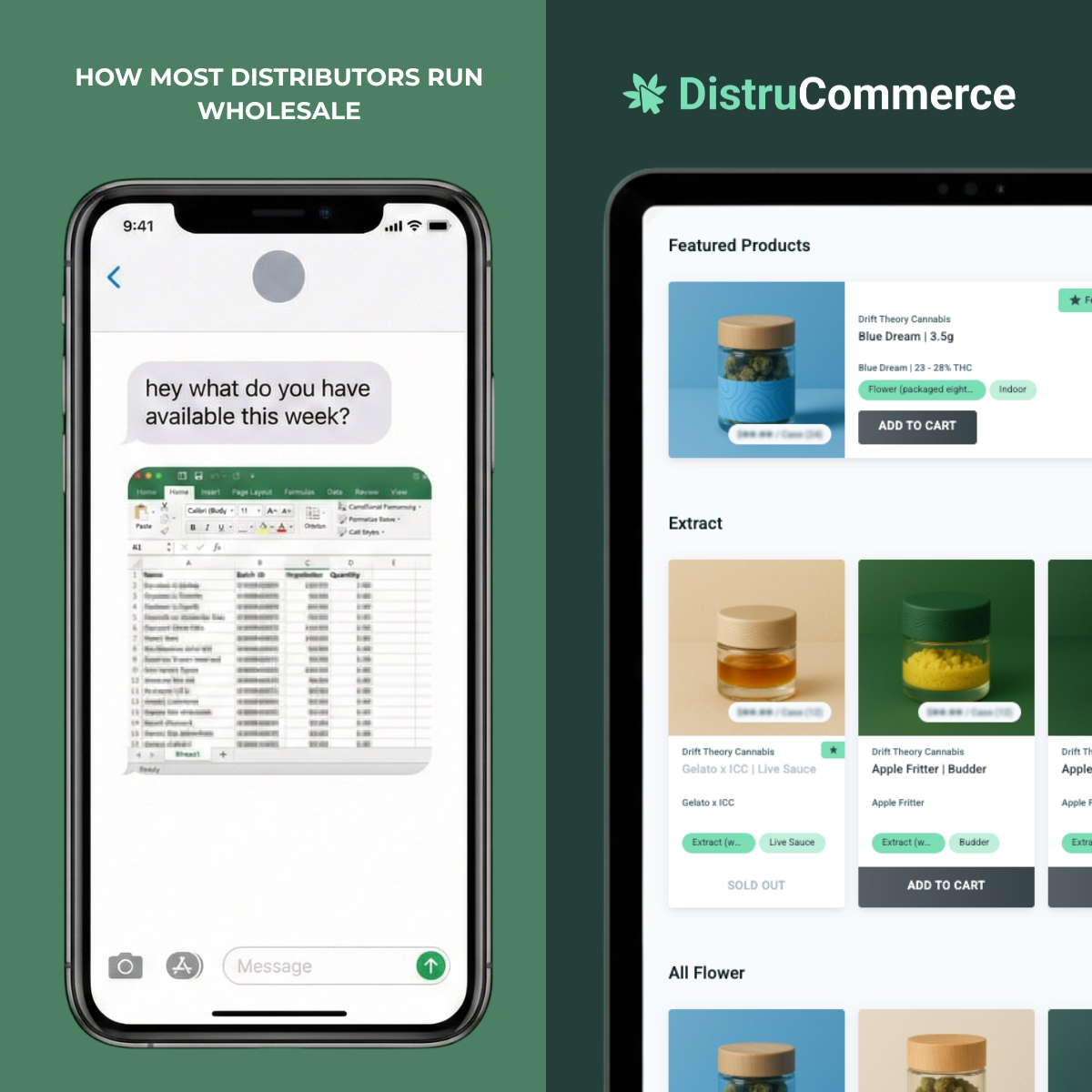
If a rep is working from a spreadsheet that's a few days stale, or texting back and forth with a buyer without checking real inventory, the order that gets confirmed and the inventory that actually exists can drift apart. That drift is where most reliability problems start, quietly, before anyone notices.

How a Connected Ordering System Prevents This
The fix isn't asking your team to be more careful. It's removing the gap between what gets quoted and what's actually available.
Live Inventory at the Point of Order
DistruCommerce menus pull from live inventory, so whether a buyer is ordering themselves or a rep is placing the order on their behalf, the available quantity reflects reality at that exact moment, not a stale export from earlier in the week.
Catching Problems Before They Ship, Not After
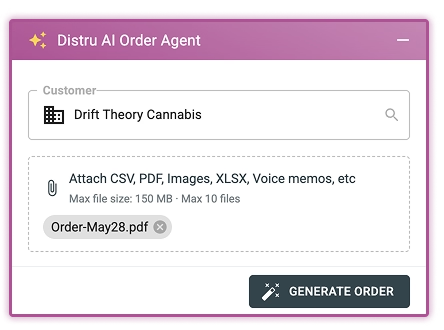
When a rep uses the AI Order Agent to turn a buyer's order, sent as a text, email, spreadsheet, or even a photo of a handwritten note, into a checkout cart, out-of-stock items get caught on the spot instead of discovered after the order's already confirmed. The rep reviews and sends, but the underlying check against real inventory happens automatically, catching the exact kind of mismatch that damages a buyer's trust.
Reliability Is Also About What Happens After the Order
Buyers judge reliability partly on whether they can see what's happening without having to ask.
Giving Buyers Visibility Instead of Making Them Wait
Buyers with a DistruCommerce account can track their own order status, invoices, and shipping manifests through their Order Tracker as fulfillment happens. That visibility itself is a reliability signal, since a buyer who can check on an order themselves trusts the process more than one who has to call and ask.
What to Actually Measure
Track your own order accuracy and on-time rate honestly, the same way a buyer experiences them, not the way your internal reporting might round favorably. That number is the real predictor of whether a buyer reorders.
What Reliability Looks Like Over a Full Year
A single good order doesn't build reliability. A track record does, and that track record is built from patterns that show up over months, not one transaction.
Consistency Beats Occasional Rightion
A supplier who's reliably good, even if not flawless every single time, tends to earn more trust than one who's occasionally right but unpredictable. Buyers plan around consistency, and unpredictability, even in a positive direction, still creates planning friction.
What to Actually Review Periodically
Set a recurring time, monthly or quarterly, to look at your own accuracy and on-time numbers as a trend, not just react to individual complaints as they come in. Patterns you can see over time are what let you fix a systemic issue before it costs you a specific account.
Want to see how live inventory and order tracking work together? Explore DistruCommerce or schedule a demo.


