
Ever passed a Metrc audit clean and still couldn't tell your ops manager where a batch actually ended up? Yeah, we've all been there. Compliance tracking and operational tracking end up living in two different tools, so you can prove you followed the rules without actually knowing what happened on the floor.
That gap is the real cost of treating Metrc as a box to check instead of a system your operation actually runs on. Let's deblur what cultivators are genuinely required to track, where the rules get state-specific, and what it looks like when compliance and operations are finally the same workflow instead of two.

The Cultivation Compliance Basics
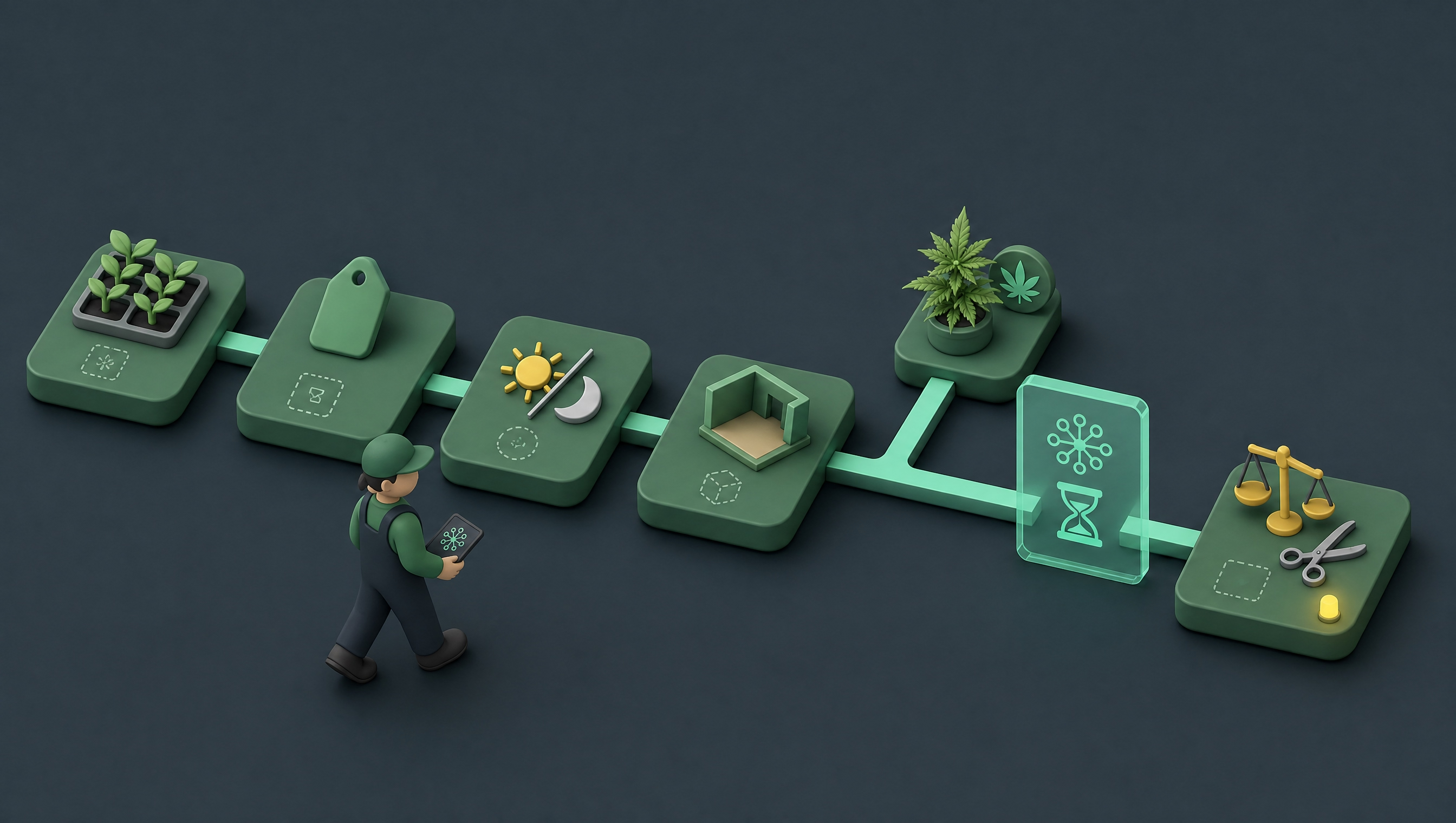
Every state with a regulated cannabis market requires some form of seed-to-sale tracking, and Metrc is the dominant track-and-trace system, used across more than 30 regulated markets. For cultivators specifically, that means a handful of events have to get logged, in order, from the moment a clone or seed shows up:
- Plant Batches get created for groups of immature clones or seedlings, tracked under a shared batch record rather than individually
- Plant Tags get applied to individual plants once they mature enough to require individual tracking
- Growth Phase changes get logged as plants move from Veg to Flower
- Room movements get recorded any time plants change physical location
- Mother plants get flagged separately, since they're tracked differently than plants destined for harvest
- Teardown and Harvest events close out the plant's lifecycle and open up the drying and curing record
New York's cannabis regulations spell this out directly. Cultivators are required to maintain records covering "all seeds, plant tissue, seedlings, clones, plants, lots of useable cannabis or trim," and to keep an on-premises tracking system capable of following cannabis "back to the licensee and specific cultivation site" and forward through the rest of the supply chain, according to New York's Office of Cannabis Management. Every state's exact language differs, but the shape of the requirement is the same everywhere: a continuous, unbroken record from plant to package.
Where Compliance Gets State-Specific
Here's what trips up multi-state cultivators the most: Metrc isn't one uniform experience. Each state configures its own fields, and what's required in one state might not even be visible in another.
Additives are a good example. In New York, additives applied to plants have to be recorded in Metrc to stay compliant. In most other states, additive fields exist in the Metrc API but aren't required by regulation, and sometimes aren't even exposed in the Metrc UI at all. A cultivator building their internal process around "how additives work in Metrc" in one state can get burned moving into another.
Plant tagging works the same way. In some states, a Plant Batch needs an actual Metrc-issued Plant Tag assigned to it. In others, a custom text-entry name is used instead, with no physical tag required at the batch level. Neither approach is wrong. They're just different regulatory choices, and your workflow needs to bend to match the state you're operating in, not the other way around.
This is exactly the kind of complexity that turns into a 2 AM Metrc panic if your team is guessing state to state instead of working from a system that already knows the difference.
Teardown and Harvest: The Compliance Moment That Matters Most
If there's one point in the cultivation lifecycle where compliance and operations collide hardest, it's teardown. This is where wet plants get weighed, waste gets recorded, and the whole batch officially becomes a Metrc-synced Harvest.
Get this step wrong and the consequences show up fast. Weights that don't reconcile, waste that isn't documented, or a harvest that gets finalized before it should all create the kind of gap an auditor notices immediately. Teardown data also has to be reviewed before it's locked in as a Harvest, which matters because Metrc syncing is largely a one-way door. Once information is pushed, undoing it is a lot harder than getting it right the first time.
That review step, the ability to stage a teardown and check it before it becomes an official Metrc-synced Harvest, is one of the more overlooked pieces of cultivation compliance. It's the difference between catching a mistake on your own terms and explaining it to a regulator on theirs.
.avif)
Why "Synced to Metrc" and "Tracked for Your Operation" Aren't the Same Thing
Here's a distinction that trips people up: syncing data to Metrc satisfies the state. It doesn't automatically give you anything useful for running your business. A lot of cultivation tools treat these as the same problem and only solve the first one.
Real operational tracking means your team can answer questions Metrc was never built to answer. Which room is this batch in right now? Who applied additives to it and when? What did it cost to get from clone to harvest? Metrc doesn't care about any of that. Your operation absolutely does.
The fix isn't choosing between compliance and operations. It's using a platform where the same event, a growth phase change, a room move, an additive application, gets logged once and does both jobs at the same time. No double entry, no separate spreadsheet running parallel to your Metrc record.
What True Seed-to-Sale Looks Like
This is where the "seed-to-sale" phrase actually earns its keep, instead of being a slide in a sales deck. True seed-to-sale means the compliance record and the operational record are the same record, and that record doesn't stop at harvest.
Distru, a cannabis ERP platform built for licensed operators, handles cultivation this way. Plant Batches, Plant Tags, growth phase changes, additive tracking, and Teardown-to-Harvest workflows all run through the same system that already manages a cultivator's production, distribution, and wholesale sales. Metrc sync happens automatically when a field is required and gets skipped when it isn't, which matters given how much that requirement shifts state to state.
Because harvest inventory lives inside that same ERP, it flows straight into whatever gets produced or sold next. No export, no re-entry, no separate system to reconcile against. For a cultivator who also manufactures or distributes, that means the plant you tagged in Veg and the finished product on a wholesale order are connected by the same continuous record, not stitched together after the fact.
Talk to Someone Who's Actually Run a Grow
Compliance shouldn't require a midnight prayer session before an audit. If you're a cultivator trying to figure out whether your current setup is actually built for how Metrc works state to state, set up a discovery call with our team. We'll tell you straight away if we're not the right fit, and point you somewhere better if that's the honest answer.


