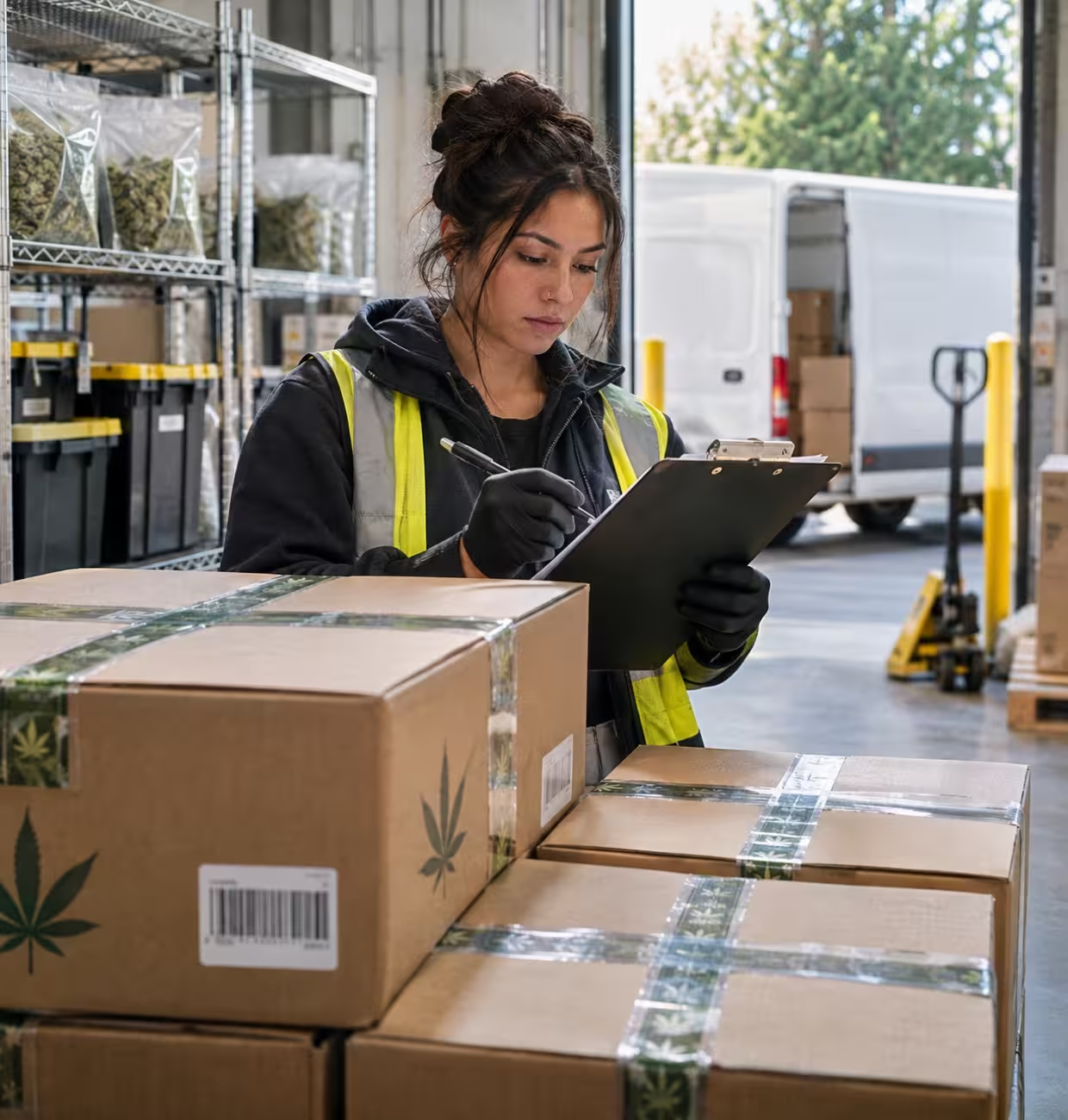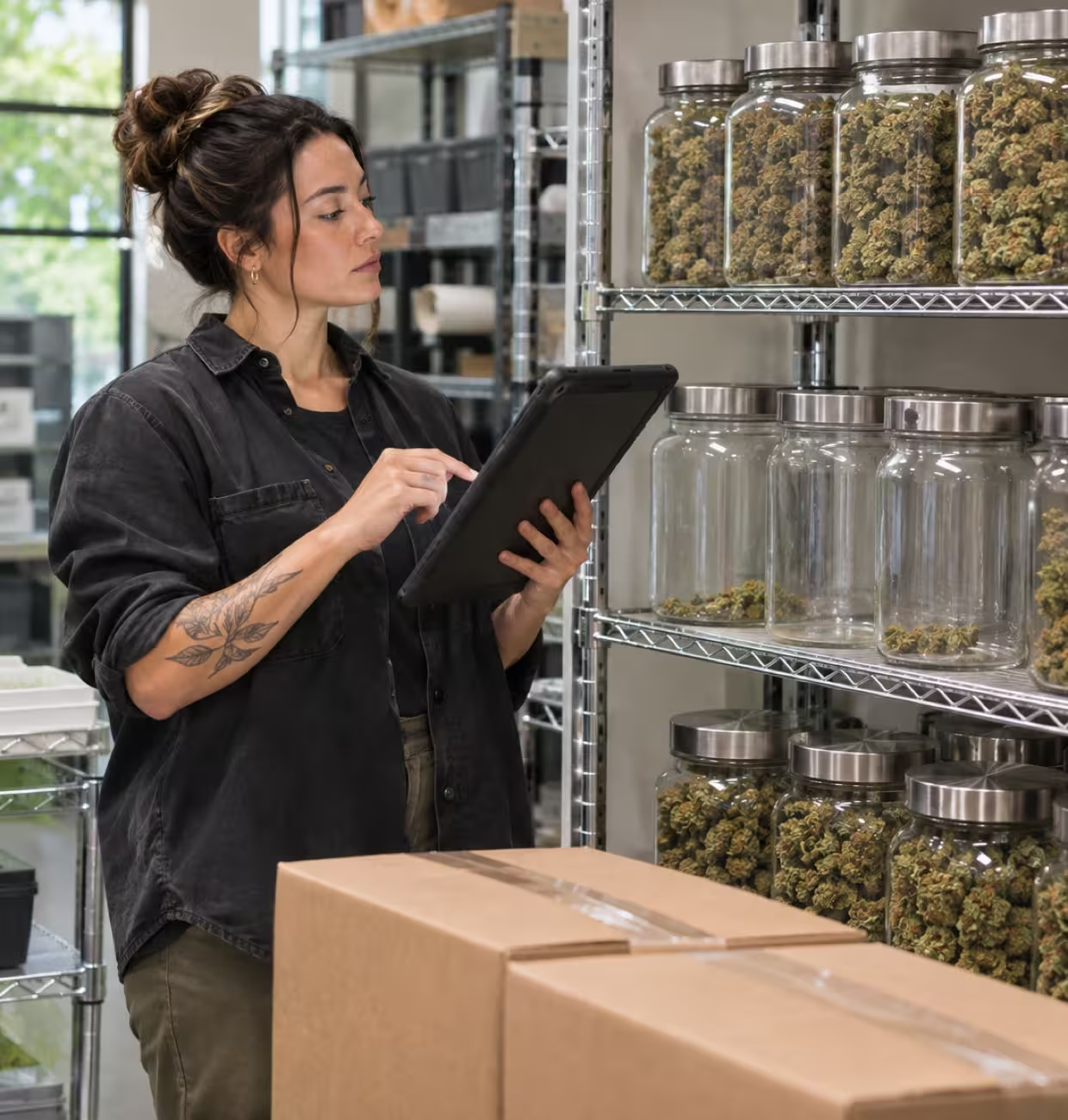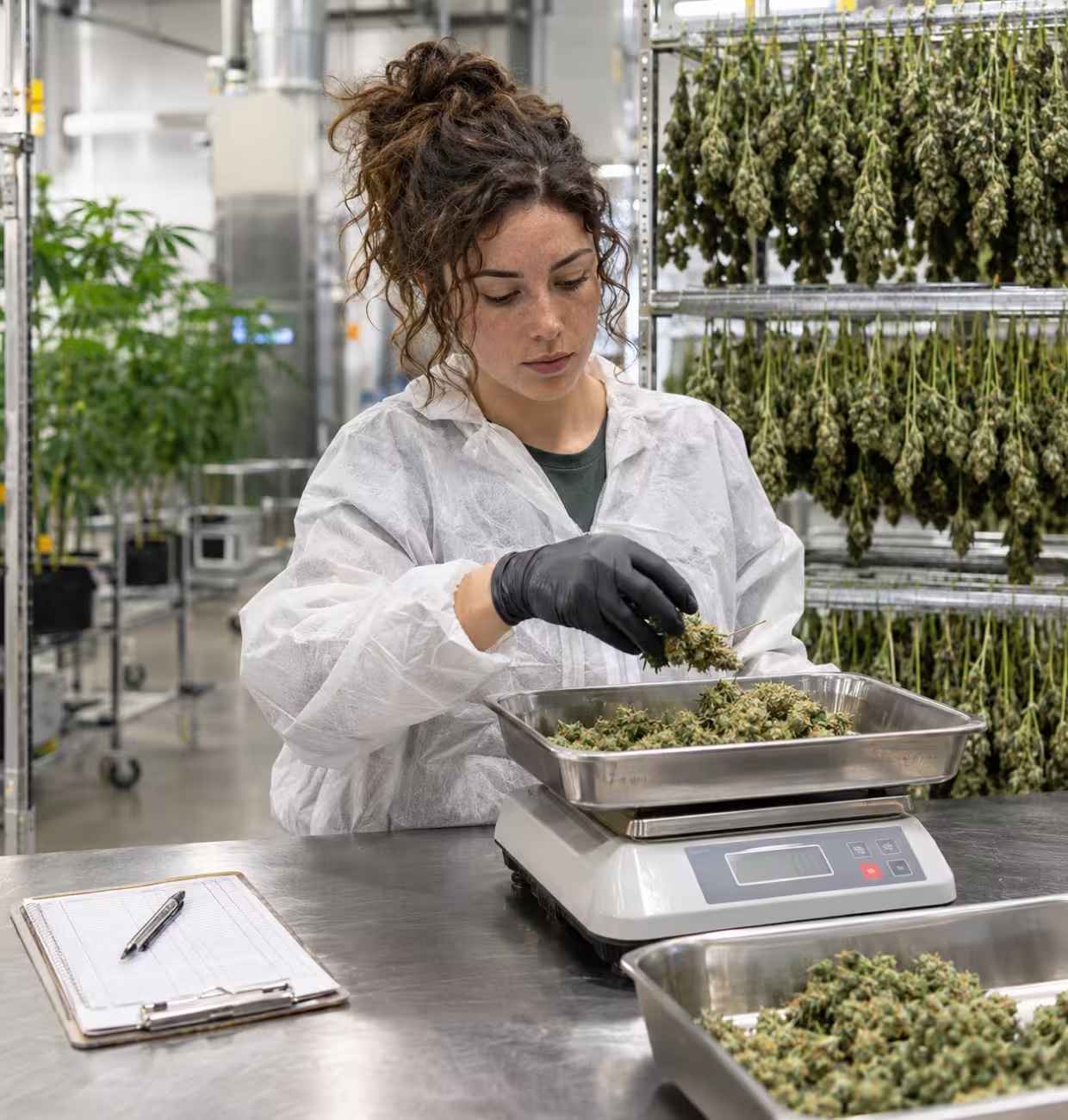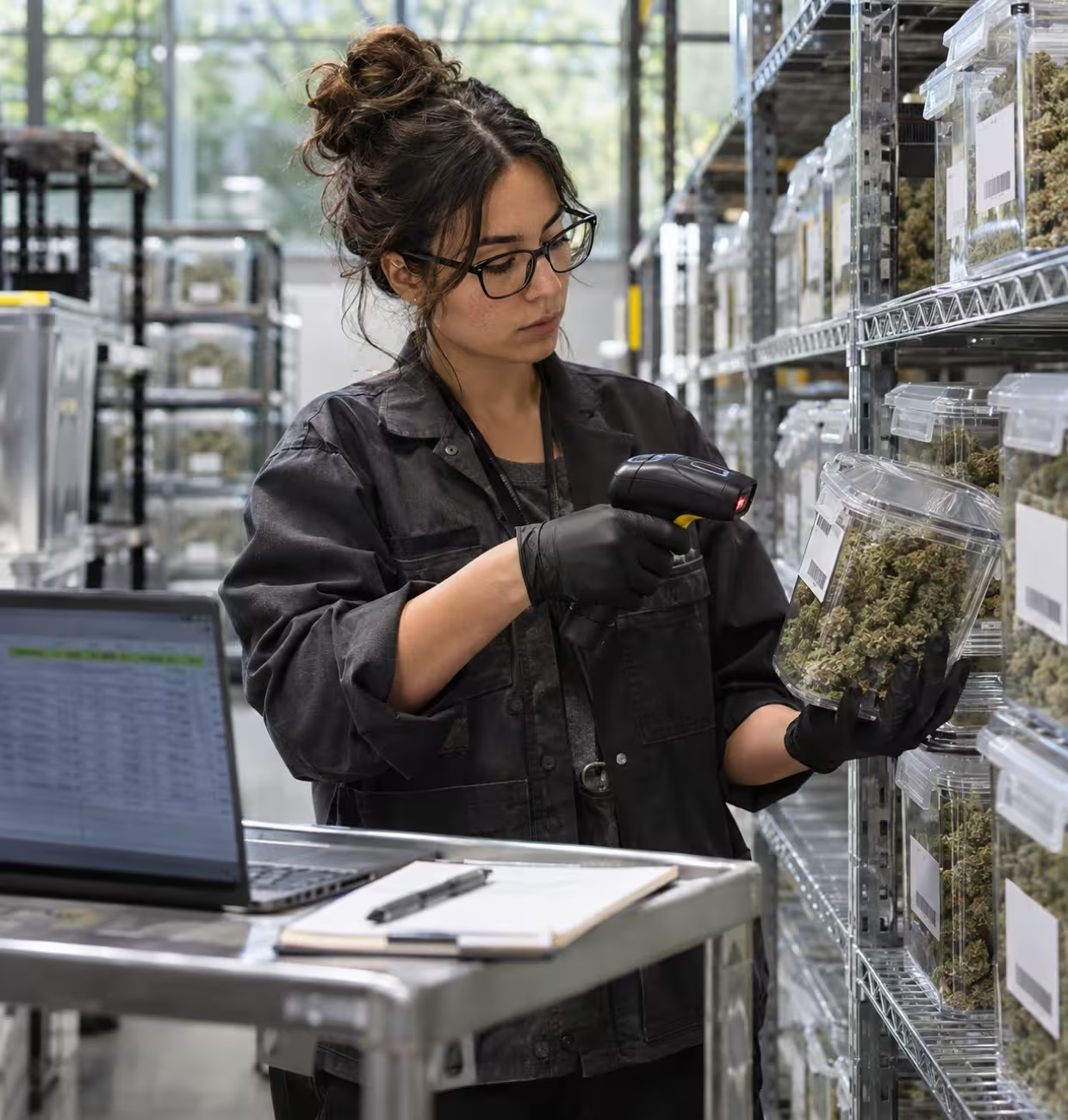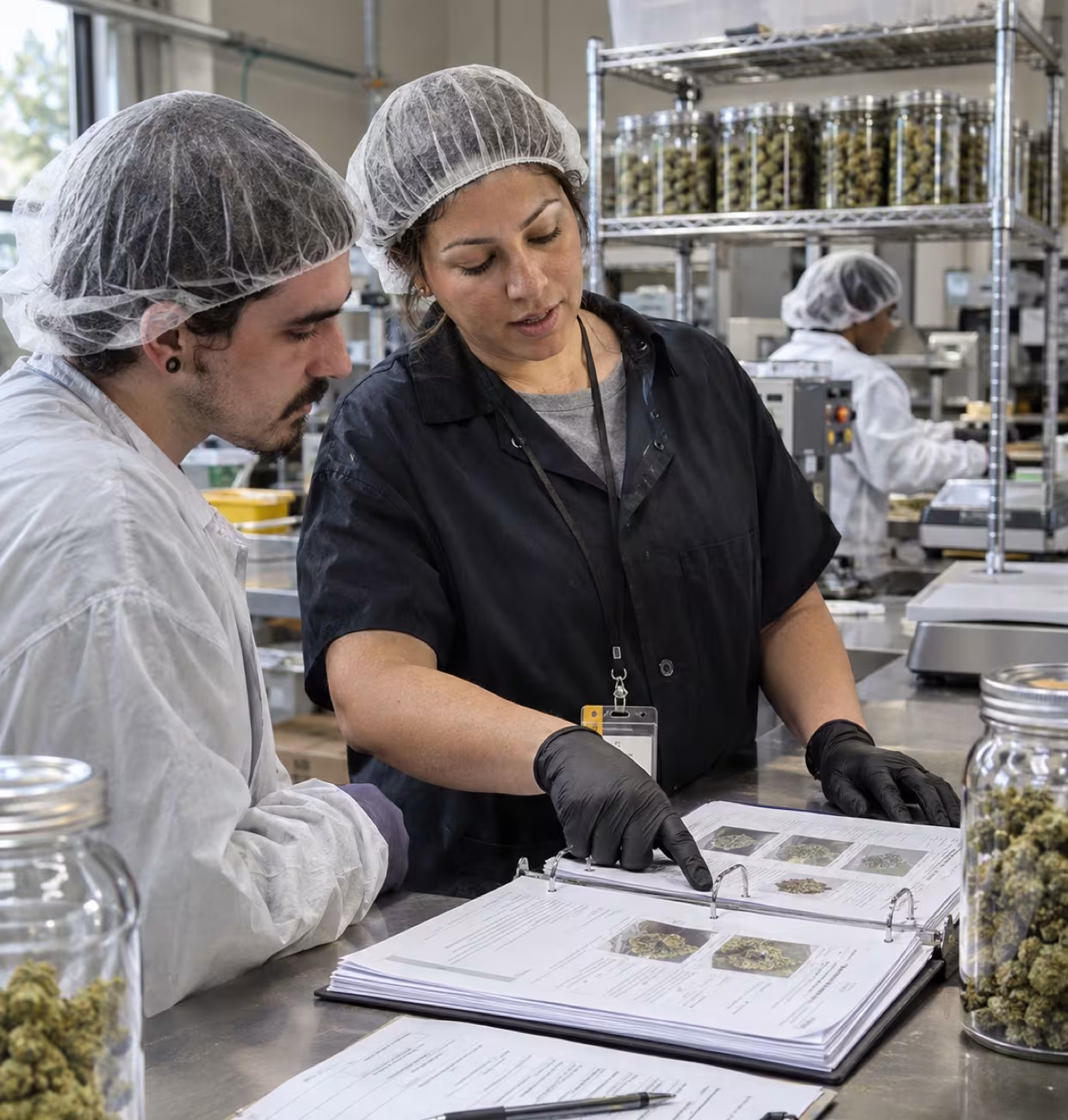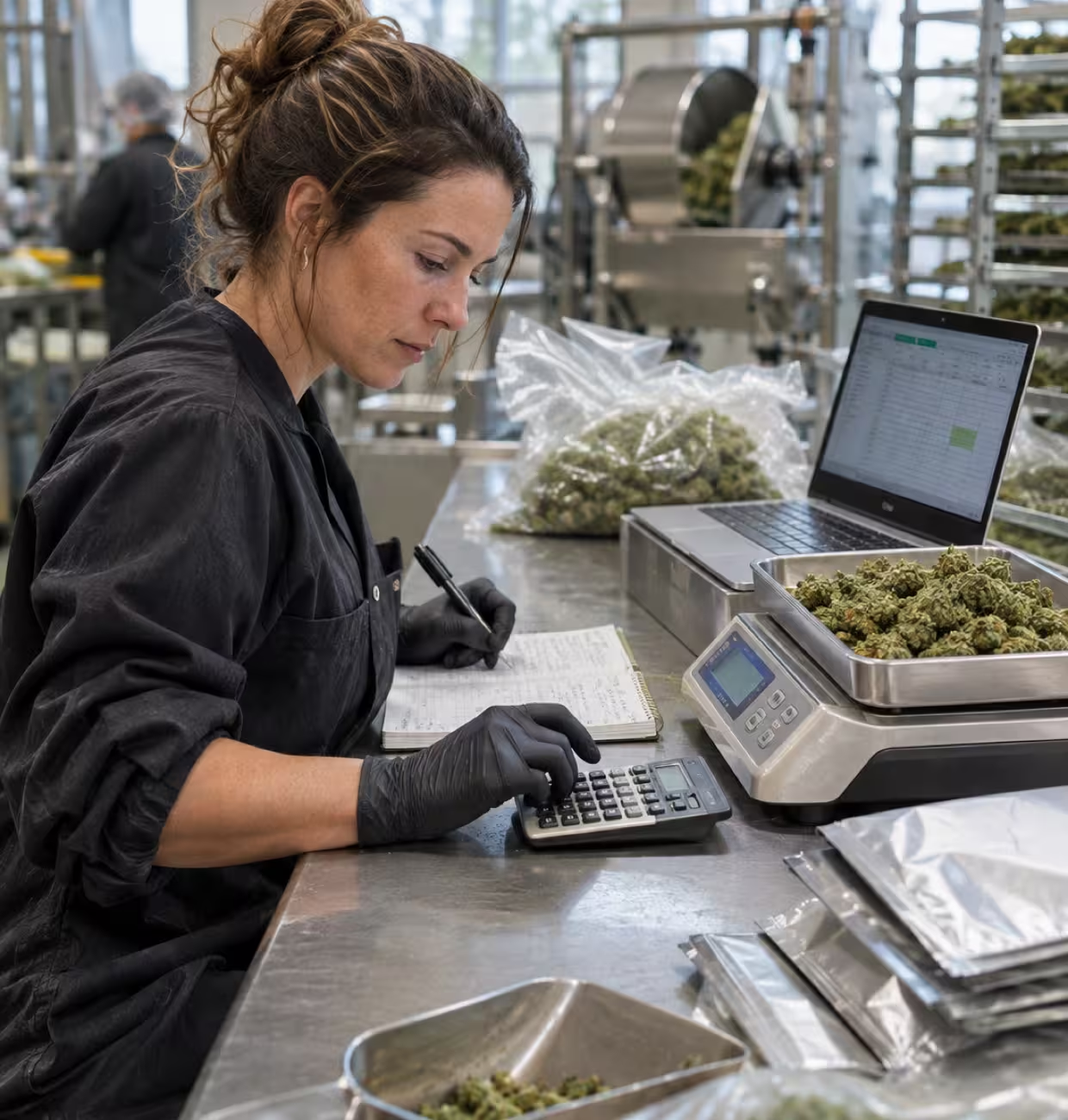

A dispensary buyer texts you at 4:45 on a Friday: 10 pounds of your best indoor, net 30, delivered Tuesday. Before you say yes, you need three answers. Is that inventory actually sellable in Metrc? Is the price right when national flower is averaging $1,104 a pound? And will this buyer pay on day 30 or day 90?
That's cannabis wholesale in one text message. Cannabis wholesale is the licensed business-to-business (B2B) side of our industry: cultivators, manufacturers, and distributors selling flower, concentrates, and packaged goods to other licensees, usually dispensaries, in the same state. Consumers never touch it, and every sale moves on a state transfer manifest.
This guide deblurs how B2B cannabis wholesale works in 2026: who can buy and sell, what prices look like right now, how to vet suppliers, how to set payment terms without eating bad debt, and what a good wholesale menu needs. Let's dig in.
What is cannabis wholesale?
Cannabis wholesale is the sale of cannabis products in bulk or by the case between licensed businesses, priced below retail and tracked under state seed-to-sale rules. It's where most of the money in the cannabis supply chain changes hands before a product ever hits a shelf.
The main players:
- Cultivators selling bulk flower, trim, and biomass
- Manufacturers and processors buying biomass and selling concentrates, vapes, edibles, and pre-rolls
- Distributors buying, warehousing, and delivering product to retailers, depending on the state
- Dispensaries buying finished, tested, packaged goods for their shelves
- Brands selling white label or co-packed products through a licensed partner
Wholesale and retail run on different rules. Wholesale buyers care about batch consistency, CoAs, case pricing, and terms. Retail shoppers care about the shelf. For the full side-by-side, read our breakdown of wholesale weed vs. retail cannabis.
How does licensed B2B cannabis wholesale work?
Licensed B2B cannabis wholesale runs on three rules: only licensed businesses can buy and sell, product can't leave the state it was grown in, and every transfer gets recorded on a manifest in the state's tracking system. That's Metrc in most legal states and BioTrack in a few others. Break any one of the three and the sale isn't legal.
Only licensees can buy wholesale
You need an active state cannabis license to buy or sell THC cannabis wholesale. Cultivation, manufacturing, distribution, and retail licenses each come with different rights. In some states a cultivator can sell straight to a dispensary. In others, like California, product has to move through a licensed distributor. Confirm the other party's license on your regulator's public lookup before the first order.
Wholesale is same-state only
Cannabis can't cross state lines, even between two states where it's legal. Federal rescheduling didn't change that. DEA's final rule published April 28, 2026 moved state-licensed medical marijuana to Schedule III, but adult-use marijuana stays in Schedule I and interstate commerce still isn't allowed. A hearing on broader rescheduling ended in July 2026, with no final decision when we checked in October 2026. So when a supplier calls itself "national," it means it holds licenses in several states and sells inside each one.
Every sale moves on a transfer manifest
In Metrc states, the seller creates a transfer manifest listing each package, the destination license, and the transporter. Metrc's own wholesale transfer guidance calls out the usual mistakes: a wrong wholesale price on a package, a manifest edited after it's created, and received quantities that don't match what shipped. The buyer should inspect, weigh, and count before accepting, because once a package is accepted in Metrc, there's no undo.
Hemp-derived THC is on a different clock
If you've been buying "wholesale THC" products made from hemp, the rules are about to change. A federal law signed November 12, 2025 bans consumable hemp products with more than 0.4 milligrams of total THC per container. The start date was pushed to December 11, 2026 by a funding bill signed September 2, 2026 (checked October 2026). Our hemp reclassification guide covers what it means for licensed wholesale.
What are cannabis wholesale prices in 2026?
National wholesale flower is trading around $1,100 a pound in fall 2026. The Cannabis Benchmarks U.S. Cannabis Spot Index came in at $1,104 per pound in its October 16, 2026 report, up from $1,044 in early June. That's a national average. Your state, grow type, and grade can put you hundreds of dollars above or below it.
What moves bulk cannabis prices:
- Supply and demand: new license waves and big harvests push prices down. Store openings and shortages push them up.
- Grade and grow type: top-shelf indoor sells at a premium to greenhouse and outdoor. Smalls and trim sell at a discount.
- Market maturity: new markets swing hard. Mature, oversupplied markets grind lower and stay there.
- Testing and compliance costs: failed batches, retests, and remediation all land in the price.
- Seasonality: outdoor harvest lands in early fall, which usually adds supply and softens flower prices heading into winter.
Watch your own numbers more than the index. If you sell, know your cost per pound or per unit down to packaging and testing, so you know your floor before a buyer asks for 10% off. If you buy, track what you paid per batch against what it sold for. A clear cost of goods (COGS) view answers those questions.
How to find and vet cannabis wholesale suppliers
Find cannabis wholesale suppliers through B2B marketplaces, trade events, referrals, and your state's license list, then vet each one on license status, CoAs, consistency, capacity, and terms before the first order. A cheap pound from a supplier who can't deliver twice is the most expensive pound you'll buy.
Where to find bulk cannabis suppliers
- B2B wholesale marketplaces: browse licensed sellers' menus by category, brand, and potency. DistruCommerce for retailers lets dispensary buyers order from multiple brands and distributors in one place.
- Trade shows and regional events: meet growers and brands face to face. Our cannabis events calendar lists what's coming up near you.
- Referrals: ask other buyers who they trust. Reputations travel fast in this industry.
- Your state's license list: many regulators publish searchable licensee databases you can filter by license type and county.
Supplier vetting checklist
- Active license: confirm it on the state lookup, and confirm the license type allows the sale.
- CoAs that match Metrc: the results on the CoA should match the lab test batch attached to the package in Metrc.
- Batch consistency: sample two or three batches, not one.
- Capacity: ask how many pounds or units they can commit per month, and what happens when they run short.
- Fulfillment record: ask how often orders ship complete and on time, then check with references.
- Packaging and storage: flower should arrive sealed and stored away from heat and light. Edibles and beverages may need temperature control.
- Terms: pricing tiers, minimum orders, delivery fees, and payment terms in writing.

Regional vs. multi-state suppliers
Regional suppliers usually mean fresher product, lower delivery costs, and someone who picks up the phone. Multi-state operators usually mean wider catalogs, steadier supply, and sharper pricing on volume. Either way, the product you buy was grown and made in your state. If you're a brand without your own manufacturing, there's a third route: here's how white label cannabis works.

Payment terms and credit risk in cannabis wholesale
Most cannabis wholesale runs on cash on delivery (COD), prepay, or short net terms like net 15 or net 30, and slow-paying retailers are one of the biggest threats to a seller's margin. Set terms per account based on payment history, not order size.
Here's how sellers usually handle it:
- COD or prepay for new accounts: they earn terms after a few clean orders.
- Net 15 to net 30 for good accounts: with a written credit limit per store.
- Credit holds: stop new orders when an account passes its limit or goes past due.
- Days sales outstanding (DSO): if your average collection time creeps from 30 to 60 days, your cash is funding your customers.
- State rules: some states regulate credit between licensees, so confirm what's allowed before you offer terms.
For the full playbook, read our guide to net terms in cannabis wholesale.
Negotiating better wholesale deals
Four levers move a wholesale price: volume tiers, longer commitments, faster payment, and bundling categories. Offer to pay in 7 days instead of 30 and plenty of sellers will knock a few points off. Commit to a steady monthly volume and you'll get first call on the best batches. Know your walk-away number before the call.
What should a B2B cannabis wholesale menu include?
A B2B cannabis wholesale menu should show live, sellable inventory with case pricing, potency, batch-level CoAs, minimum orders, and photos, so buyers can order without an email thread. If your menu is a PDF that's stale by Wednesday, buyers will order product you sold on Tuesday.
- Live availability pulled from the same inventory your warehouse picks from
- Pricing tiers by volume or customer group
- CoAs attached to each batch
- Filters for category, brand, strain, and potency
- Minimum order quantities and case sizes
- Order tracking from placement to delivery, plus downloadable invoices
Common types of bulk cannabis products
Bulk flower is still the backbone of cannabis wholesale, followed by concentrates, pre-rolls, vapes, and edibles. Each one buys and sells a little differently.
Bulk flower: sold by the pound and graded by size (tops, mids, smalls) and quality. Check bud density, trichome coverage, moisture, and the CoA's cannabinoid and terpene results.
Concentrates and extracts: live resin, rosin, distillate, diamonds, and hash, priced by the gram or kilo. Solventless usually sells at a premium.
Pre-rolls: lower price per unit, high volume. Ask what's inside: flower, smalls, or trim.
Vapes: higher shelf price, but cartridge hardware adds to the wholesale cost.
Edibles and beverages: sold by the case, often with minimums in the hundreds of units. Some need temperature-controlled storage.

How Distru runs cannabis wholesale
Distru, a Cannabis AI ERP with a built-in B2B wholesale marketplace, runs the whole wholesale order on one system of record: inventory, Metrc manifests, invoicing, and payments, with DistruCommerce as the B2B ordering front end on top.
Here's what that looks like in practice:
- Live inventory: cannabis inventory management by location, batch, and package, so what you sell is what you have.
- Metrc two-way sync: Distru's Metrc integration lets you build packages and transfer manifests in Distru and push them to Metrc when you're ready, so nobody retypes tags. Distru is the #1 Metrc integration partner by API call volume.
- Invoicing and AR: invoices, payment tracking, and accounts receivable dashboards, synced with QuickBooks.
- DistruCommerce: wholesale menus that pull from live ERP inventory, with CoAs, pricing tiers, and retailer self-serve ordering.
If your buyers still order by text and email, DistruCommerce's AI Order Agent turns those messages into draft sales orders against live inventory and flags anything out of stock. A sales rep reviews each draft before it's confirmed. Teams using it save 40+ hours a week on order entry.
Distru has processed $10B+ in wholesale sales for 440+ customers across 30+ states, with 99% support satisfaction and onboarding in 3 to 4 weeks.
Ready to simplify cannabis wholesale? See how DistruCommerce and DistruERP work together and put your wholesale menu on real inventory. Your buyers will notice by the second order.