

Ask a cannabis brand founder what business they're in, and "CPG" isn't usually the first word out of their mouth. It should be closer to the first word, because it changes what you should expect from your own tech stack.
What Makes a Business a CPG Company
Consumer packaged goods companies produce a physical product, manage inventory and cost of goods through production, sell wholesale to retail partners, and manage those retailer relationships at scale. That's a beverage brand. That's a snack company. That's also, structurally, a cannabis brand or distributor running wholesale.

The Piece That's Actually Different
The real difference for cannabis is the compliance layer: Metrc, state-specific packaging rules, testing requirements, license-type restrictions. That's a genuinely significant difference, and it does require specialized handling. But it's an addition to the CPG foundation, not a replacement for it.
Why This Framing Matters for Your Software Decisions
If you think of your business as "cannabis software's customer," you tend to accept whatever cannabis-specific vendors offer, even when it lags years behind what mainstream CPG companies expect from their systems. If you think of your business as "a CPG company that happens to need compliance handling," you hold your vendors to a higher, more accurate bar.
Where the Bar Actually Sits in Mainstream CPG
Established CPG companies expect live cost accounting through production, not a monthly reconciliation project. They expect wholesale ordering that flows directly from inventory without manual re-entry. They expect forecasting built on real historical data, not a spreadsheet with a growth percentage typed into a cell. None of that is exotic in CPG generally. Some of it is still aspirational in cannabis-specific software.
What "CPG-Grade, Cannabis-Native" Actually Looks Like
The right answer isn't generic CPG software with compliance bolted on badly, and it isn't cannabis-only software that accepts a lower technical bar because the industry is younger. It's CPG-grade infrastructure built by people who understand the compliance layer natively.
Live Costing as the CPG Standard
Tracking cost accounting live as product moves through production, the way mainstream CPG companies do, matters just as much for a cannabis brand's margins. The compliance layer doesn't change the need for real-time COGS visibility, it just adds Metrc and 280E considerations on top of it.
Wholesale That Flows From Operations
A wholesale ordering system connected directly to your cannabis ERP (Enterprise Resource Planning) system's live inventory, the way DistruCommerce works, is the CPG standard applied with cannabis's compliance needs built in natively, not stitched on afterward.

AI Features Held to the Same Bar
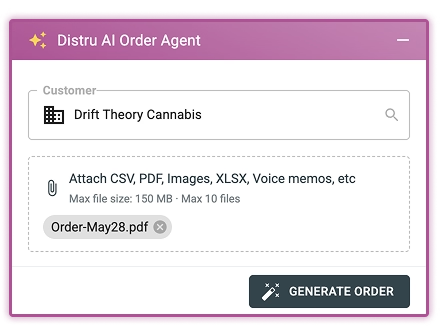
When AI features show up in your tools, they should be held to the same standard mainstream CPG AI adoption has already proven out: structured, reviewed, and tied to a real number. Distru's AI Order Agent is built to that bar, turning incoming orders into clean sales orders and flagging fulfillment issues, with a rep reviewing before anything ships. Customers save 40+ hours a week, a result that stands up next to what mainstream CPG procurement automation has delivered for years.
The Question Worth Asking Your Own Team
Would this tool be good enough if we were a snack brand instead of a cannabis brand? If the honest answer is no, that's the gap worth closing, not accepting as the cost of being in a regulated industry.
What This Means for How You Talk to Investors and Partners
This framing matters beyond just software decisions.
CPG Benchmarks Travel Better Than Cannabis-Only Ones
An investor or retail partner familiar with mainstream CPG will understand "live COGS visibility" and "connected wholesale ordering" immediately. Cannabis-specific jargon about compliance workarounds is a harder sell outside the industry, even when the underlying capability is just as real.
It Changes What You Ask For in a Partnership
A retail partner used to working with CPG brands will expect the same operational maturity from a cannabis brand that's positioning itself as CPG-grade. Meeting that expectation, rather than asking for cannabis-specific leniency, tends to open doors faster.

Want to see what CPG-grade infrastructure looks like with cannabis compliance built in? Schedule a demo with Distru.


