
If you searched "NY BioTrack delay," you probably still have an old deadline on a calendar somewhere. August 1, 2025. September 1. October 1. Only the first one ever arrived, and it was paused four days later. New York's BioTrack rollout was stopped, then replaced by Metrc, and the tag rules changed with it.
This is the full dated timeline, from the 2022 BioTrack pick to New York's current Metrc rules, plus exactly what changed for tags. We checked every date against OCM and Metrc bulletins in October 2026.
Was the NY BioTrack Rollout Delayed or Cancelled?
Both, in that order. OCM paused BioTrack integration on August 5, 2025, then replaced BioTrack with Metrc. BioTrack NY never reached full go-live. Metrc credentialing was due December 17, 2025, and Metrc is New York's seed-to-sale system today.
The pause was at least the third time New York pushed back seed-to-sale tracking, by MJBizDaily's count. The state opened adult-use sales in December 2022 without a working tracking system and ran on paper manifests and weekly portal reports until Metrc. For the backstory and what it means for your setup, read what happened to BioTrack in New York.
NY BioTrack Timeline: Every Deadline and Delay
BioTrack spent about 32 months as New York's chosen vendor. Here's how it played out.
- December 20, 2022: New York selects BioTrack as its cannabis track-and-trace system.
- November 18, 2024: OCM launches the BioTrack NY API and gives licensees until January 17, 2025 to report which inventory software vendor they'll use.
- December 2024 to January 2025: OCM runs BioTrack API training sessions for licensees and integrators. The final webinar notice goes out January 21, 2025.
- May 15, 2025: OCM publishes deadlines by license type and the free starting tag allocations.
- June 9, 2025: OCM sends integrators a BioTrack API update notice.
- June 15, 2025: All licensees must use an electronic inventory tracking system that integrates with BioTrack NY.
- August 1, 2025: Integration deadline for cultivators, microbusinesses, registered organizations, and permitted labs.
- August 5, 2025: Metrc and BioTrack announce a partnership. That night, OCM pauses the integration deadline and tells integrated licensees to log out of the API.
- September 1 and October 1, 2025: The processor, distributor, and dispensary deadlines never take effect.
During the pause, OCM's pause FAQ kept the basics in place. You still needed real-time electronic inventory tracking under 9 NYCRR § 125.8(a), paper manifests for transfers, and weekly inventory and sales reports through the OCM portal.
When Did New York Announce the Switch to Metrc?
OCM said in early September 2025 that New York would move to Metrc, and trade press reported it on September 8, 2025. The formal plan came on September 22, 2025, when an OCM memo named Metrc New York's official seed-to-sale system and targeted full integration by the end of December 2025.
OCM's stated reason was short: after a full assessment of what the Metrc and BioTrack deal meant for its systems, moving to Metrc was in the best interest of the state's regulated market.
Metrc NY Timeline: Rollout Phases and Go-Live
New York's Metrc rollout ran in two stages: credentialing and beginning inventory in late 2025, then Retail Item ID and transfer rules in 2026.
Stage 1: Credentialing and beginning inventory
- September 23 to October 7, 2025: Each licensee names an STS administrator through a mandatory Metrc survey. That person buys your tags.
- October 22, 2025: The Metrc Connect API and test endpoints open for integrators.
- November 3 to 7, 2025: In-person Metrc roadshows across the state.
- November 7, 2025: Credentialing opens and UID ordering starts.
- December 10, 2025: OCM pushes the dispensary inventory deadline to January 12, 2026.
- December 15, 2025: OCM and Metrc announce 20 million free Retail Item UIDs for processors, available through 2026.
- December 17, 2025: All active licensees credentialed. Cultivators, processors, distributors, and labs have all existing inventory in Metrc. Retail Item IDs are required on processor-to-distributor transfers, and every package headed to a dispensary needs its own Package UID.
- January 12, 2026: Dispensaries have all existing inventory in Metrc, tied to Package UIDs, and start reporting sales there.
Stage 2: Retail Item IDs and transfer rules
- February 1, 2026: Distributors can designate Finished Goods and apply Retail Item IDs in Metrc.
- February 28, 2026: Last day to send distributor-to-dispensary transfers without a Retail Item ID on each unit, per OCM's February 24 bulletin.
- April 1, 2026: Every finished unit sent to a dispensary needs a Retail Item ID QR code and a TestPassed or RetestPassed status in Metrc, per OCM's March 23 reminder. Product dispensaries received before that date can sell through until its labeled expiration.
- May 5, 2026: Manual retail inventory and sales reporting through the OCM portal ends.
- September 1, 2026: State-paid Metrc tags begin.
- September 15 and 16, 2026: Delinquent payment (C.O.D.) reporting moves into Metrc, and opening balance plant batches are deactivated.
BioTrack Tags vs Metrc Tags in New York
The biggest change: BioTrack NY used 16-digit digital identifiers, and Metrc uses physical RFID tags plus QR-code Retail Item IDs. None of the BioTrack IDs carry over.
BioTrack NY tags (retired): Unique 16-digit IDs issued in the state system and assigned through your integrated software. You could print them, but they weren't RFID. OCM planned free starting allocations after integration: 2,500 for cultivators, 750 each for processors, microbusinesses, and distributors, and 3,250 for registered organizations. Most licensees never got that far.
Metrc NY tags (current): Per Metrc's New York implementation guide, every tracked item gets a unique identifier (UID) that doesn't expire.
- Plant UID: An RFID-inlay tag strapped to each plant from the vegetative stage until harvest. Cultivators order these.
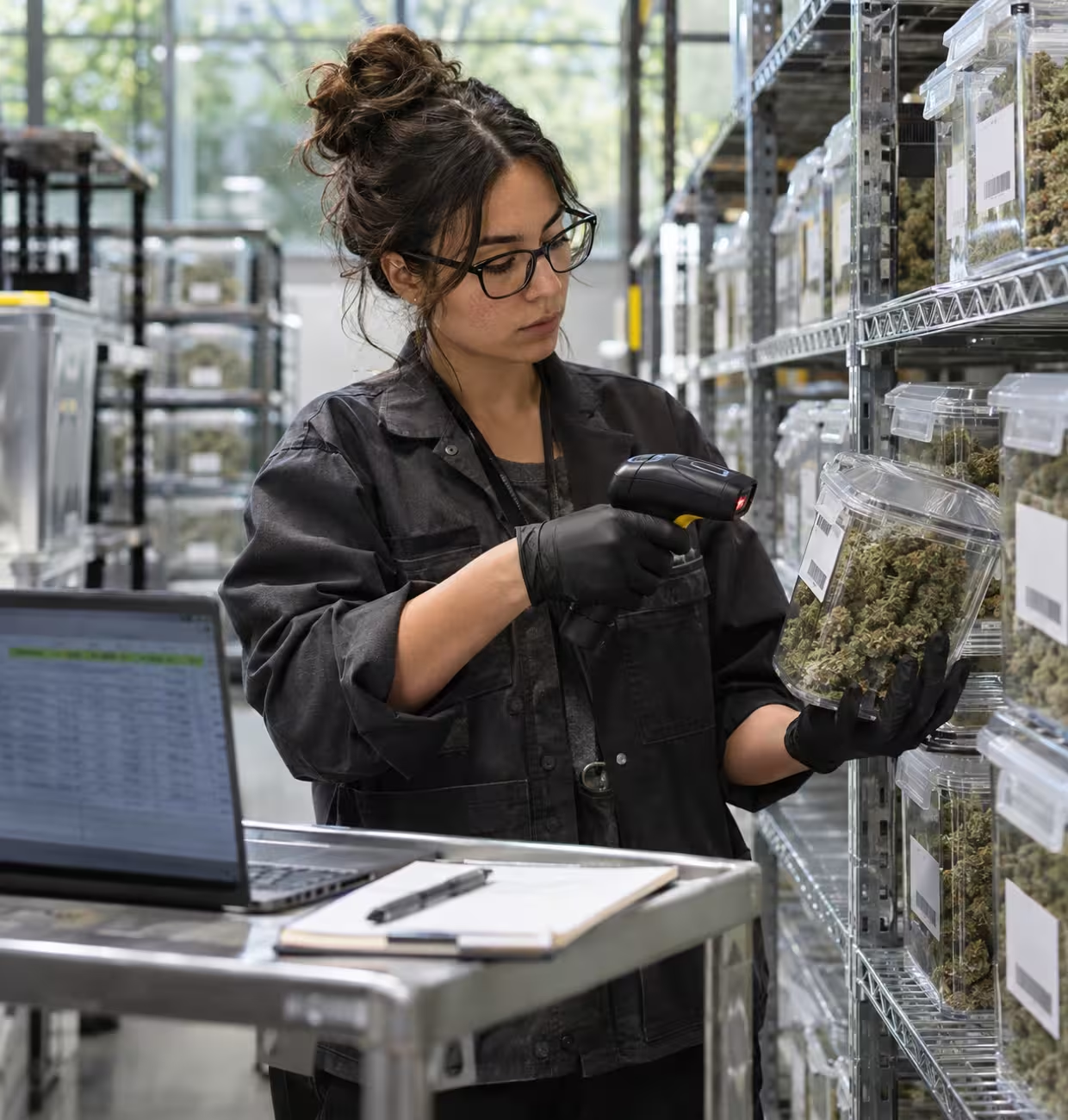
- Package UID: An RFID-inlay sticker for bulk, work-in-progress, sample, and finished-goods packages. Every license type orders these. One UID per package, and no more than 100 pounds in one container.
- Retail Item ID: A QR code printed on each finished unit that links to its CoA. Processors and distributors order these. Dispensaries don't have to buy them.
Metrc lists all three at $0.10 per UID in New York. That sounds small until it isn't. The president of the Cannabis Association of New York told Spectrum News that Retail ID rules push some operators "from 10 cents to over 40 cents per unit" when a product gets tagged more than once.
How Do You Order Metrc Tags in New York?
You order tags inside your Metrc account, and your STS administrator places the order. Since September 1, 2026, OCM's state-paid Metrc tag program covers most of the cost.
- Who orders what: Cultivators order Plant and Package UIDs. Processors order Package UIDs and Retail Item IDs. Distributors, dispensaries, and labs order Package UIDs, and distributors can also buy Retail Item IDs.
- State-paid on-hand limits: Cultivation gets up to 24,000 Plant UIDs and 6,000 Package UIDs. Processing, distribution, and dispensary locations get up to 10,000 Package UIDs each. Labs get 1,000.
- Retail Item IDs: Processors get 125,000 state-paid Retail Item IDs a month.
- What you still pay: Shipping on every order, plus anything over your allotment. Past tag purchases aren't reimbursed.
- How long it lasts: OCM projects about 12 months of coverage and says it will notify licensees of changes.
"On hand" means tags you've ordered but haven't applied yet. A tag counts as used once it's tied to a plant, package, or unit in Metrc, so apply tags as you go to free up your allotment.
What Should You Do With Leftover BioTrack Records and Tags?
Keep the records and retire the tags. Here's how we'd handle it:
- Records: OCM told licensees to keep all past tracking and inventory data in their own systems and make it available on request. Keep BioTrack-era exports and reports with the rest of your compliance files.
- Printed BioTrack tags: They don't work in Metrc. Pull them from labels and SOPs so nobody scans the wrong ID.
- Old batch IDs: If a product carries a BioTrack-era lot ID, map it to its Metrc Package UID in your ERP. That keeps your recall and CoA history traceable.
- Opening balance plant batches: Metrc deactivated these on September 16, 2026. Check that your live plant counts sit in active batches.
For day-to-day Metrc workflows after the switch, our New York Metrc integration guide covers transfers, Retail IDs, and reporting in more depth, and the Metrc New York page sums up the state rules.
How Distru Handles Metrc Tags and Retail IDs
Tags are where small mistakes get expensive. One wrong Package UID on a transfer and you're chasing a variance with the dispensary on the phone. Distru, a Cannabis AI ERP with a built-in B2B wholesale marketplace, keeps a two-way, real-time sync with Metrc that runs on your command, so the tags in your system match what Metrc shows.
Only three actions need Metrc directly: accept package, transfer package, register manifest. For labels, DistruLabels is free. Connect your Metrc API key and print package labels and Retail ID labels with the official Metrc QR codes. Distru is the #1 Metrc integration partner by API call volume, with 3.5M+ Metrc events synced.

Still cleaning up after the BioTrack switch? Book a demo and we'll show you how Metrc tags, Retail IDs, and transfers run in Distru for a New York license.