

This bulletin applies to Metrc (Ohio) and summarizes Ohio Division of Cannabis Control (DCC) guidance taking effect March 24, 2026. It covers updates to Metrc item categories, increased patient purchase limits aligned with non-medical transaction limits, and new flexibility for registering and packaging products under proposed OAC 1301:18-4-06.
Bulletin summary (OH_IB_0085)
Metrc Support Bulletin OH_IB_0085 (distributed March 13, 2026; effective March 24, 2026) alerts Ohio licensees to DCC guidance that will change how products are set up in Metrc and how sales and packaging workflows function at the point of sale.
The bulletin emphasizes that each facility’s Responsible Party should review the DCC guidance in full and ensure staff are trained before the effective date. Questions related to the state guidance should be directed to the Cannabis Service Center (CSC).
What changes on March 24, 2026
1) Metrc item category updates (product registration changes)
Ohio is updating Metrc Product (Item) Categories to align with proposed rules. In practice, this impacts how you register items in Metrc, including which category you select when creating new items and how existing items may need to be evaluated for category alignment.
For day-to-day operations, category changes can affect:
- Item setup and SKU governance: internal product catalogs may need re-mapping to updated Metrc categories.
- Integrations and POS rules: category-driven tax logic, menu groupings, and compliance prompts in integrated systems may require updates.
- Downstream reporting: sales, inventory, and compliance reports often roll up by category, so inconsistent category use can create reconciliation issues.
2) Increased patient purchase limits (POS and customer-facing impacts)
DCC guidance increases patient purchase limits to match non-medical transaction limits. While the bulletin does not list specific quantities, it signals that dispensaries and other retail operators should expect POS workflows and limit-checking logic to change.
Operational implications commonly include:
- POS configuration updates: ensure your POS and any Metrc integration are prepared to apply the updated patient limits correctly on and after March 24, 2026.
- Staff training: budtenders and managers should understand what changed so transactions are rung compliantly and consistently.
- Reduced workarounds: when limits increase, procedures that previously required splitting transactions may no longer apply, but only if systems are updated correctly.
3) Packaging and labeling flexibility (including up to 1 ounce increments)
The guidance states licensees may begin registering and packaging products under the updated limits in proposed rule OAC 1301:18-4-06, including packaging plant material in any increment up to one ounce.
Practically, this may affect:
- Package creation and conversions in Metrc: workflows for creating packages, adjusting package sizes, and labeling each package accurately should be reviewed for alignment with the updated packaging increments.
- Inventory strategy: operators may choose to create a broader set of package sizes to match demand, which can increase the number of packages to manage and label.
- Retail label accuracy: more packaging options can increase labeling complexity, making it especially important that labels match the package contents and the record in Metrc.
How these updates affect Metrc workflows
This bulletin is a signal that Ohio operators should plan for changes to both product registration and point-of-sale processes.
Product registration and catalog management
If item categories are updated, facilities may need to adjust internal SOPs for new item creation, verify category selection rules, and ensure product data is consistent across Metrc and any connected systems.
Point-of-sale processes and compliance controls
When purchase limits change, the compliance risk often shifts from “hard limit blocking” to “system mismatch” risk. The key operational goal is to ensure your POS limit logic, staff behavior, and Metrc reporting stay aligned as of the effective date.
Packaging, label printing, and Retail ID consistency
More flexible packaging increments can increase label volume and variation. That makes tight control of package identifiers and retail labels important, especially where your process includes a Metrc Retail ID that must match what is being sold and reported.
Using DistruLabels for compliant packaging and Retail ID labeling
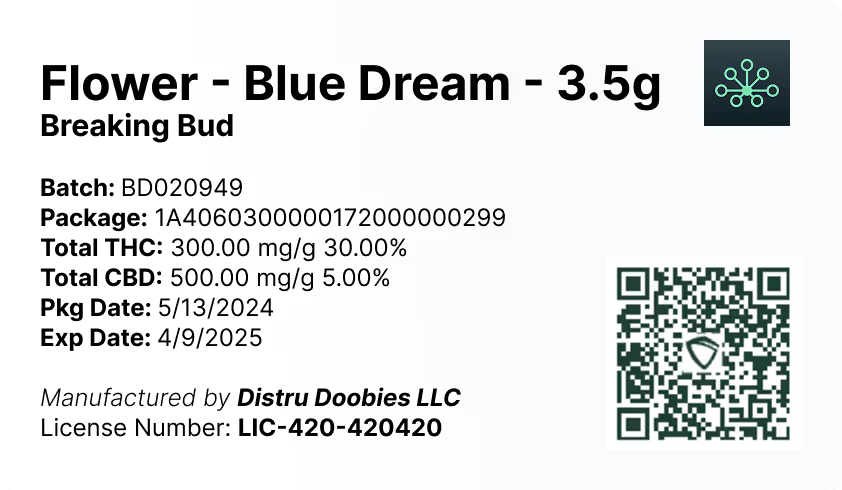
DistruLabels is a 100% free tool for creating compliant packaging and retail labels. It helps teams generate consistent labels and reduce errors that can occur when packaging changes (for example, adding more package sizes). For operators managing Metrc-connected workflows, DistruLabels can support Metrc Retail ID compliance by helping ensure the correct Retail ID and related package details are represented on the label used in day-to-day sales operations.
For larger, multi-department operations that need end-to-end visibility, DistruERP is Distru’s comprehensive Cannabis ERP platform designed for full supply chain management, including inventory, manufacturing, order management, and compliance-ready workflows that can scale with complex facilities.
Where to get help: Metrc Support and training resources
Metrc Support portal
Metrc Support can be accessed at https://support.metrc.com (or through the Support area inside the Metrc system, which redirects to the portal). First-time portal access typically requires your username, state, facility license number, and a valid email to set a password.
Metrc Learn training (LMS)
Metrc Learn provides interactive training on system functionality to improve accuracy and efficiency. You can access it from within Metrc by using the Support menu and selecting Sign up for Training, or by visiting https://learn.metrc.com and bookmarking the updated link.
Additional Metrc resources
Inside the Metrc system, use the Support dropdown to access additional educational guides, manuals, and resources relevant to Ohio workflows and the upcoming changes.
Compliance note for Ohio licensees
This bulletin is an operational heads-up, not a substitute for the underlying DCC guidance. Ensure your Responsible Party reviews the DCC communication in full, updates internal SOPs where needed, and trains staff ahead of March 24, 2026 to prevent category, limit, packaging, and labeling mismatches.


