

Metrc (Minnesota) Support Bulletin MN_IB_0060 announces new and clarified Metrc Location Types available starting 02/02/2026, and reinforces Minnesota’s requirement to record the specific in-facility location of regulated cannabis inventory using Metrc Locations. This article explains what changed, how Location Types work by license activity (cultivation, manufacturing, retail, testing), and what operators should update in day-to-day workflows to stay inspection-ready.
Bulletin summary: what’s changing in Metrc Minnesota
Metrc and the Minnesota Office of Cannabis Management (OCM) are adding additional Location Types in Metrc beginning 02/02/2026. Location Types are the category labels you assign to each Metrc Location to describe its function (for example, a drying room, a vault, a sales shelf, or quarantine).
Even though a facility may not need to use every Location Type, Minnesota expects license holders to use Metrc’s Location feature to keep inventory records accurate and to clearly indicate where plants and products are stored inside the facility.
Minnesota compliance requirement: accurate in-facility locations
Under Minnesota Rules part 9810.1302, subp. 2(e), cannabis license holders must maintain accurate inventory records for all regulated products and record their specific in-facility locations in Metrc using the Location feature.
Practically, this means your Metrc Locations should match real-world storage and processing areas, and the Location Name should be clear enough that staff and regulators can understand where inventory is without guesswork.
Why Location Types matter for daily operations
Location Types aren’t just “labels” in the system. They help create consistent inventory habits across teams and reduce compliance risk when inventory moves between rooms, storage areas, or functional zones.
Operational impacts you should plan for
- Faster, cleaner inventory moves: When Locations are set up by function (for example, Processing vs. Storage Vault), staff can select the right destination quickly and consistently.
- More reliable audits and investigations: Clear, function-based location records support internal audits, OCM inspections, holds, and recall workflows.
- Reduced “miscellaneous storage” problems: Overusing a catch-all “Default” location can create confusion and increase the likelihood of inventory not matching physical reality.
- Clear separation of restricted inventory: Dedicated Quarantine and Waste locations help prevent accidental sale, transfer, or production use of restricted materials.
Metrc Location naming: clarity first, then categorization
Minnesota’s emphasis is that location names must clearly describe where cannabis plants or products are stored, and each location must be categorized with the appropriate Location Type. A good rule is to name locations the way your staff speaks about them on the floor (for example, “Flower Vault,” “Dry Room 1,” “Sales Shelf A3”), then apply the Location Type that matches the function.
If you need help understanding how Minnesota distinguishes indoor, outdoor, and outdoor mixed-light cultivation, Metrc notes that operators should refer to the Minnesota Office of Cannabis Management’s cannabis business FAQs.
New and updated Metrc Location Types (Minnesota)
Below are the Location Types included in the bulletin, organized by Metrc Facility Type. Use the types that match your licensed activities and your actual facility layout.
Cultivation location types
- Indoor: A fully enclosed cultivation space using artificial lighting and environmental systems for consistent, year-round production.
- Outdoor: An open-air, fenced outdoor cultivation area where plants grow in natural sunlight and seasonal conditions.
- Greenhouse: An outdoor mixed-light facility (referenced in the bulletin as 9810.0200 subp. 43), such as a greenhouse or hoophouse with nonrigid walls, surrounded by fencing, that uses natural sunlight with or without supplemental lighting and climate systems.
- Processing (trimming, drying, curing): A post-harvest area where cannabis is trimmed, dried, and cured to prepare it for packaging, sale, or further manufacturing.
- Freezer: A temperature-controlled area or walk-in freezer where freshly harvested cannabis is immediately frozen.
- Storage Vault: An area where cannabis or cannabis products are stored after processing.
Manufacturing location types
- Input/Raw Material Storage: An area for storing incoming cannabis biomass, ingredients, and packaging materials prior to processing.
- Processing Room (concentration, extraction, combination): A designated production space where cannabis is extracted, concentrated, refined, or combined with other ingredients to create finished products.
- Final Product Storage: An area where completed cannabis products are held before packaging, testing, or distribution.
Cultivation and manufacturing location type
- Retention Sample: An area where retention samples are stored until 6 months after the expiration date or best-used-by date has passed. Operators should ensure retention inventory is physically segregated and consistently recorded to prevent accidental use, transfer, or sale.
Retail location types
- Inventory/Stockroom: An area where cannabis products and supplies are stored, organized, and tracked before being moved to the sales floor.
- Sales floor/Shelf: The customer-accessible area where cannabis products are displayed and made available for purchase.
- Retail Samples: An area where designated sample products are stored.
- Event - Virtual: A virtual room to hold products that are brought to licensed cannabis events.
Testing facility location types
- Sample Storage: An area to store lab test samples used for standard compliance testing.
- Stability Sample: An area to store lab test samples used for stability studies.
All Metrc facilities location types
- Waste: A designated area where cannabis waste (plant material, expired products, or unusable materials) is held, rendered unusable, or prepared for compliant disposal.
- Quarantine: A restricted storage area where cannabis or materials are held and prevented from use or sale during an administrative hold, recall, or until an issue is resolved.
- Default: A general-purpose classification used when an item does not yet fit into a specific category or has not been assigned to its proper area. Use this sparingly and transition inventory into the correct functional location as soon as practical.
How to apply this update in your facility
Starting 02/02/2026, Minnesota operators should review their current Metrc Locations and confirm that each physical area where regulated inventory can exist is represented by a clear Location Name and the most accurate Location Type. This is especially important for areas that often get overlooked operationally, such as freezers, retention sample storage, quarantine, and waste holding.
Where possible, align location structure with real workflows. For example, cultivation sites commonly move inventory through harvesting, drying/curing, vault storage, and then into transfer or manufacturing pathways. Manufacturing sites commonly need separation between raw material storage, active processing rooms, and final product holding areas.
Packaging, labeling, and Metrc retail ID alignment
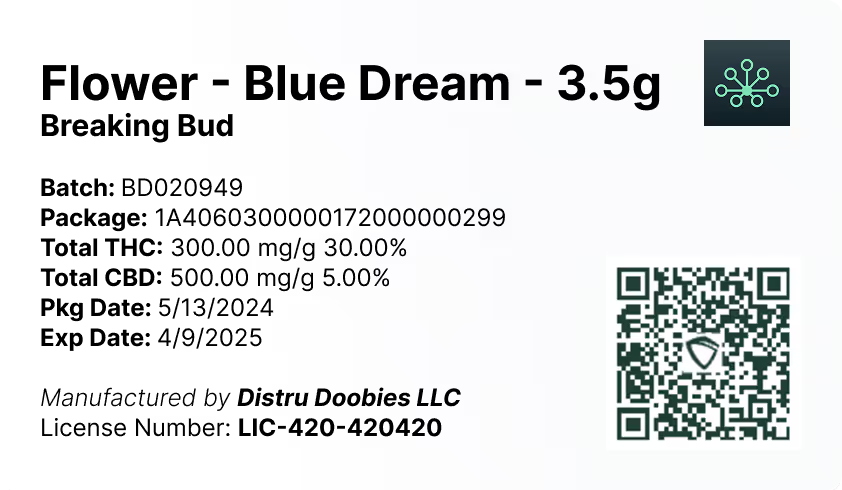
While this bulletin focuses on inventory location tracking, operators typically update Labels and SOPs at the same time they update Metrc workflows. DistruLabels is a 100% free tool for creating compliant packaging and retail labels, and it can help teams stay consistent with Metrc Retail ID requirements by producing clear, standardized labels for products moving through retail operations.
For larger, multi-department operators that need broader control over purchasing, production, inventory, sales, and compliance reporting, DistruERP is Distru’s comprehensive Cannabis ERP platform designed for end-to-end supply chain management.
Metrc support and training resources
Metrc includes several official support options referenced in the bulletin:
- Metrc Support Portal: https://support.metrc.com
- Metrc Learn training: https://learn.metrc.com (also accessible from the Metrc Support menu by selecting “Sign up for Training”)
- Metrc Expert knowledge base: Available inside the Metrc system via the widget icon in the lower right corner
If you are accessing the support portal for the first time, Metrc notes you will typically need a username (created when logging in), the correct state selection, your facility license number, and a valid email to set a password.
Key takeaways for Minnesota licensees
- Effective date: New Location Types are available in Metrc Minnesota starting 02/02/2026.
- Regulatory expectation: Minnesota Rules require accurate inventory records and specific in-facility location tracking in Metrc.
- Operational benefit: Clear Location Names and correct Location Types reduce errors, strengthen audit readiness, and support quarantine and waste controls.


