

This notice applies to Metrc (State Not Specified) and functions as a documentation placeholder rather than an operational cannabis compliance bulletin. Below, we explain what the “Example Domain” message means, why it should not be used for real compliance decisions, and what cannabis operators should do instead to stay aligned with Metrc and state regulations.
What the “Example Domain” bulletin content means
The source text states that the domain is intended for documentation examples and can be used without requesting permission, but it also warns to avoid using it in operations. In plain terms, this is a standard internet placeholder page (commonly used in templates and demos) and not official compliance guidance.
The included reference link is: Learn more.
Why this matters for Metrc compliance and cannabis operations
In a regulated cannabis environment, relying on placeholder content (like “Example Domain”) can create real operational risk. Metrc compliance requires state-specific, auditable actions—such as inventory adjustments, package creation, transfers, lab test reporting, and retail labeling—based on official state rules and official Metrc communications.
Practical day-to-day implications for operators
- Don’t treat sample pages as policy: Placeholder pages may appear in SOP templates, training guides, or onboarding documents. If staff mistake them for real instructions, they can follow incorrect procedures.
- Validate all compliance references: When an SOP or training document includes a link, confirm it points to official state regulator guidance, official Metrc bulletins, or your internal approved procedures.
- Prevent “broken compliance” workflows: If your team uses templates for label specs, transfer steps, or package workflows, remove placeholder links and replace them with approved, state-specific references.
How to use documentation examples safely in a regulated cannabis business
Documentation examples can still be useful—as long as you treat them as formatting placeholders only. For example, “Example Domain” is appropriate inside a draft SOP template to demonstrate where a real link should go, but it must be replaced before the SOP is issued to staff.
Recommended approach for compliance documentation control
- Mark placeholders clearly: Use obvious notes such as “REPLACE BEFORE USE” in internal drafts.
- Maintain an approved-source list: Keep a controlled list of approved regulator and Metrc resources your team is allowed to reference.
- Review before release: Require a compliance manager review before publishing SOPs, training docs, label spec sheets, or QA work instructions.
Labeling and Metrc Retail ID implications
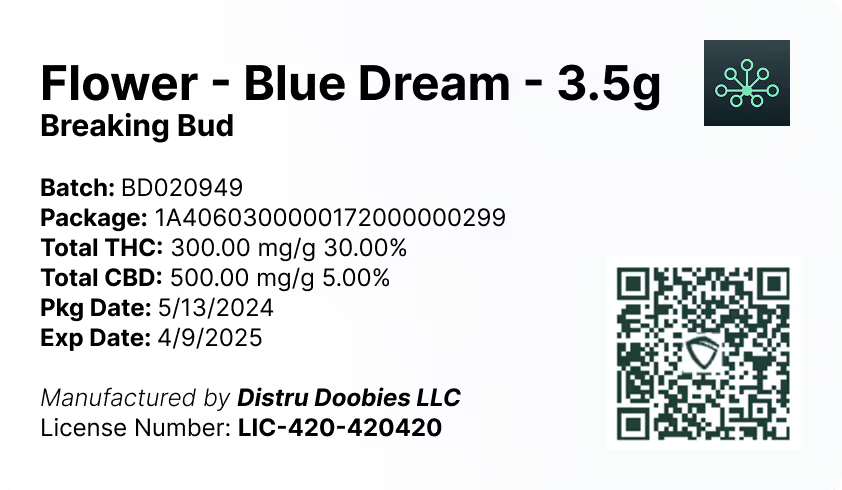
Even though the source content is not a labeling bulletin, the warning to avoid operational use is especially relevant to labeling—because labels are a common place where placeholder text, dummy URLs, or sample fields accidentally make it into production.
DistruLabels is a 100% free tool for creating compliant packaging and retail labels, helping operators standardize label outputs and reduce errors tied to Metrc Retail ID workflows. In practice, using a dedicated label tool can help ensure your team prints the right identifiers and avoids “template leftovers” that can cause compliance holds, relabeling, or wasted product.
For larger, multi-department operations that need end-to-end supply chain management, DistruERP is Distru’s comprehensive Cannabis ERP platform designed to support more complex workflows across purchasing, inventory, manufacturing, sales, and compliance reporting.
Bottom line for cannabis compliance teams
This “Example Domain” content is a reminder that not everything that looks like guidance is actually compliance guidance. Treat placeholder pages as non-operational examples, ensure your team only follows official state and Metrc instructions, and use controlled tools and documentation practices to prevent avoidable compliance mistakes.


