

This article summarizes Metrc (Maryland) bulletin MD_IB_0122 (distributed 04/06/2026; effective 04/14/2026) and explains how a Standard Dispensary and a Micro Dispensary should document an Adult-Use (AU) delivery partnership in Metrc, including who creates the delivery, how the transporter role works, and how each party completes their part of the workflow.
What the Maryland Metrc bulletin covers (MD_IB_0122)
Metrc, in conjunction with the Maryland Cannabis Administration (MCA), issued guidance for situations where a Micro Dispensary delivers an Adult-Use sales order on behalf of a Standard Dispensary. The core compliance point is that the Standard Dispensary creates the sales delivery in Metrc, but the Micro Dispensary is designated and documented as the transporter facility and performs the delivery actions in the Sales Delivery Hub.
Maryland delivery permissions: Standard vs. Micro Dispensary
The bulletin highlights a practical regulatory distinction that affects daily operations and Metrc workflow design:
- Standard Dispensaries may only conduct cannabis sales deliveries to medical patients and caregivers under Maryland regulations.
- Micro Dispensaries may conduct cannabis sales deliveries to medical patients, caregivers, and Adult-Use consumers.
Because of this, a Standard Dispensary that wants to support Adult-Use delivery may partner with a Micro Dispensary to execute the delivery, while still maintaining accurate Metrc documentation of the sale and delivery event.
How to document an Adult-Use delivery partnership in Metrc
1) Standard Dispensary creates the Sales Delivery and assigns the Micro
For an Adult-Use delivery performed by a Micro Dispensary on a Standard Dispensary’s order, the Standard Dispensary must create the Sales Delivery in Metrc and designate the Micro Dispensary as the transporter facility. This step is what routes the delivery to the Micro Dispensary’s Sales Delivery Hub and establishes the Micro’s role as the delivery/transporter party for the transaction.
Operational implication: Standard Dispensaries should ensure internal SOPs clearly define who is responsible for creating the delivery record in Metrc and for selecting the correct Micro Dispensary transporter facility to avoid misrouted deliveries or incomplete delivery chains.
2) Micro Dispensary reviews the delivery in the Sales Delivery Hub
After the Standard Dispensary creates the Sales Delivery with the Micro Dispensary set as transporter, the Micro Dispensary will see the delivery appear in the Sales Delivery Hub. The bulletin notes the Micro Dispensary may edit route and transporter details as needed before proceeding.
Operational implication: Micro Dispensaries should validate route details, driver/transporter information, and timing before accepting, since those details become part of the recorded delivery history and may be reviewed during audits.
3) Micro Dispensary accepts the delivery to start the delivery process
The Micro Dispensary clicks Accept to begin the delivery process. In Metrc, the accepted timestamp is recorded and the workflow advances to the next stage of the delivery.
Operational implication: Treat “Accept” as a controlled handoff moment. Teams should align on when the delivery is considered officially in the Micro’s delivery workflow and ensure supporting documentation and product handling procedures match that timing.
4) Micro Dispensary departs with the cannabis items
Once the cannabis items are picked up from the Standard Dispensary and loaded into the Micro Dispensary vehicle for transport, the Micro Dispensary selects Depart. Metrc records the ATD (Actual Time of Departure) and advances the workflow toward completion steps at the point of delivery.
Operational implication: The ATD is a time-based compliance data point. Staff should enter it at the real departure time to keep the Metrc record aligned with actual vehicle movement and chain-of-custody expectations.
5) Micro Dispensary verifies customer ID and payment type at delivery
Upon delivery, the Micro Dispensary selects Verify ID. Metrc prompts the driver/user to select the payment type and then complete Verify Customer ID. After verification, the bulletin indicates the Micro Dispensary’s role in the delivery is complete.
Operational implication: This step is where front-line delivery staff must be trained to consistently apply ID verification procedures and accurately record payment type, since errors here can create compliance risk and reconciliation issues between POS activity and Metrc delivery records.
6) Standard Dispensary completes the delivery in Metrc
After the Micro Dispensary completes verification, the Standard Dispensary marks the delivery as Complete in its Sales Deliveries grid.
Operational implication: Standard Dispensaries should monitor delivery status and complete deliveries promptly. Leaving deliveries open can cause reporting inconsistencies and complicate end-of-day reconciliation.
Day-to-day compliance impacts for Maryland dispensary teams
This bulletin is operationally significant because it clarifies how two license types can coordinate an Adult-Use delivery while maintaining an auditable Metrc record. In practice, it affects:
- Division of responsibilities: The Standard Dispensary initiates and finalizes the delivery record; the Micro Dispensary executes delivery actions (accept, depart, verify).
- Timing discipline: “Accept” and “Depart” create time-stamped events that should reflect reality, not later back-office entry.
- Data consistency: Route details, transporter information, payment type, and ID verification must be entered consistently to avoid exceptions during internal audits or regulator review.
- Training needs: Delivery personnel need clear instructions for Sales Delivery Hub actions and ID/payment documentation expectations.
Regulatory and training references from the bulletin
For questions about Adult-Use delivery rules or business arrangements between Micro Dispensaries and Standard Dispensaries, the bulletin directs operators to contact the Maryland Cannabis Administration at MCA.Compliance@maryland.gov.
For Metrc workflow training and step-by-step system instructions, the bulletin references:
- Metrc Learn: On-demand training at https://learn.metrc.com, including “Maryland Microdispensary Training” and “Maryland Advanced Dispensary Metrc Training.”
- Metrc Expert: The in-system knowledge base for step-by-step guidance and dispensary sales information in Maryland.
- Metrc Support: Support portal and phone support at 877-566-6506 (hours vary by day, as listed in the bulletin).
- Metrc.com: State partner pages for training links and additional resources.
Labeling and Retail ID accuracy: where Distru can help
DistruLabels (free) for compliant retail labeling
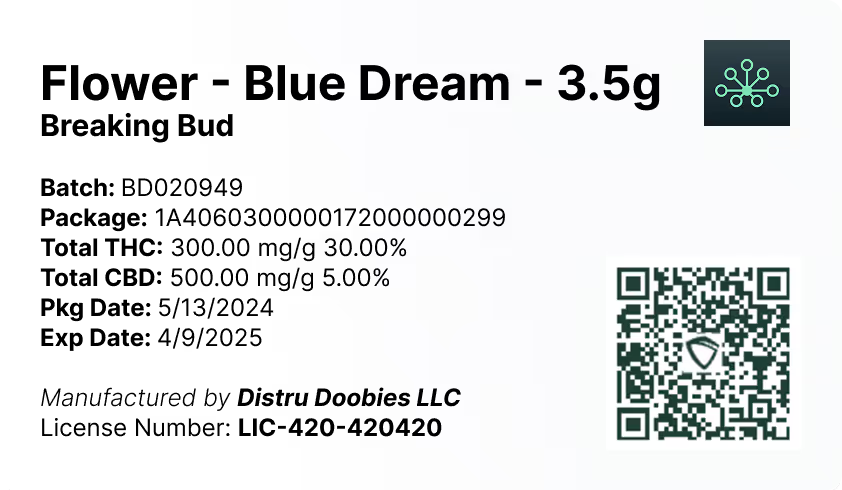
Accurate, compliant labels support clean execution of dispensary workflows, especially where Metrc Retail ID and product identity must match what is sold, delivered, and documented. DistruLabels is a 100% free tool for creating compliant packaging and retail labels, helping teams standardize label output and reduce errors that can lead to Metrc mismatches during sales and delivery activities.
DistruERP for full cannabis supply chain management
For larger, multi-department operations that need deeper operational controls beyond labeling, DistruERP is Distru’s comprehensive Cannabis ERP platform designed to support end-to-end supply chain management, including inventory, order workflows, and compliance-oriented operational visibility.


