Texas
Hemp Beverage Expo
Austin
HBE Hemp Beverage Expo (June 17–18, 2026, Austin) is the executive B2B show for D9 hemp drinks—sampling, distributors, and compliance insights.
HBE Hemp Beverage Expo
HBE Hemp Beverage Expo positions itself as the only executive-level B2B trade event focused exclusively on the hemp beverage industry, with a specific emphasis on delta-9 (D9) hemp beverages and “putting sips to lips” via infused sampling on the show floor (per the event website). In a market where beverages are one of the fastest-evolving form factors—and where legality, retail placement, and distribution routes are still being defined—this narrow focus is exactly what makes the event strategically important.
Below is a practical, operator-focused breakdown using both the scraped site content and the provided search results.
Event snapshot (from the website + search results)
- Positioning: Executive-level, business-first trade event exclusively for hemp beverages
- Core promise: Curated connections and real transactions—connecting brands with retailers, suppliers, and distributors they need (HBE site)
- Industry partner: Produced in partnership with the Hemp Beverage Alliance (HBA), which emphasizes education, advocacy, and self-regulation (HBE site)
- Programming themes highlighted on site (on-demand sessions):
- “From Gray to Green: The Evolving Legal Landscape of Hemp Beverages”
- “Bulking Up: The Challenges of Scaling a Beverage Brand”
- Upcoming location/date (per site): June 17–18, Austin, TX
- Market signal (from search results):
- Trade coverage indicates attendance growth and a “regulatory crossroads” narrative (SupplySide Food & Beverage Journal result referencing Atlanta with 1,000+ attendees and rapid growth).
- Event listings suggest multi-city momentum and future editions (e.g., Distru listing for 2026; 10Times listing for July 2025).
Why HBE Hemp Beverage Expo is important for cannabis business operators
1) It’s one of the clearest windows into the “hemp-derived THC” beverage economy
For licensed cannabis operators (dispensaries, brands, MSOs) and hemp operators alike, beverages sit at the intersection of:
- consumer packaged goods (CPG) expectations,
- alcohol distribution playbooks,
- and a fragmented hemp regulatory environment.
HBE’s focus on D9 hemp beverages matters because this segment has created new routes to market (and new competitors) that don’t always mirror state-licensed cannabis rules. If you’re a licensed operator, HBE helps you understand:
- how hemp beverage brands are pricing, dosing, and packaging,
- what retailers and distributors are demanding,
- and where regulators are focusing enforcement attention.
Business implication: Your beverage strategy (or competitive response) is increasingly a distribution and compliance strategy, not just a product strategy.
2) The event is engineered for distribution and wholesale deal-making
The HBE website repeatedly emphasizes “built for business,” “real transactions,” and connecting brands with wholesalers and distributors—and exhibitor testimonials specifically cite meeting “tons of wholesalers and distributors,” plus “relevant people… distributors and regulators.”
That’s significant because beverages are notoriously hard to scale without:
- the right distributor relationships,
- a compliant sampling/activation plan,
- and consistent supply (co-packing, emulsions, QC, shelf stability).
Business implication: HBE Hemp Beverage Expo is less about general cannabis networking and more about route-to-market execution—the exact bottleneck that stalls most beverage brands.
3) Regulatory intelligence is a central value (not an add-on)
The show’s “From Gray to Green” programming theme and trade coverage referencing a “regulatory crossroads” highlight a core reality: hemp beverages are expanding while rules remain inconsistent across states and channels.
Operators attend events like HBE to pressure-test:
- labeling and claims (serving size, cannabinoid statements, functional claims),
- age-gating and responsible marketing approaches,
- distribution boundaries (where product can be sold and how it can be sampled),
- and what “best practices” are emerging through Hemp Beverage Alliance-aligned self-regulation.
Business implication: The fastest-growing beverage brands will be the ones that can standardize compliance and keep product in-market through shifting guidance.
4) “Sips to lips” sampling is especially valuable in beverages (where purchase is taste-led)
Beverages are one of the most trial-driven categories in cannabis/hemp. HBE’s explicit emphasis on sampling matters because it creates:
- immediate buyer feedback on flavor, mouthfeel, onset expectations, and dosing comfort,
- stronger close rates with retail/distributor prospects,
- and clearer insight into what’s “winning” on sensory experience, not just branding.
Business implication: If your product tastes great but you’re struggling to convince buyers via sell sheets, HBE’s sampling-centric environment can shorten the sales cycle.
5) It’s a cross-functional meeting point for the real beverage supply chain
Unlike broader cannabis conferences, HBE’s narrower scope tends to pull in the specialized partners beverage operators need, including:
- ingredient and emulsion tech suppliers (solubility, onset, stability),
- co-packers and beverage manufacturing services,
- packaging (cans, child-resistant options where relevant, secondary packaging),
- quality/testing labs with beverage methods,
- retail buyers and distributors who understand beverage velocity.
Business implication: HBE Hemp Beverage Expo can function as a one-stop sprint to upgrade your beverage stack—formulation, manufacturing, packaging, compliance, and distribution—without wading through unrelated categories.
Who should attend (and what they should try to achieve)
Hemp beverage brands (D9 hemp)
Primary ROI drivers:
- Distributor and key retailer meetings
- Sampling-led product validation and iteration
- Co-packer/manufacturer relationships to scale
- Regulatory updates and defensible compliance positioning
Licensed cannabis brands considering “hemp channel” expansion
Primary ROI drivers:
- Understanding competitive dynamics and pricing in hemp beverages
- Identifying compliant pathways and partnership structures
- Meeting beverage-focused distributors outside dispensary systems
Retailers (liquor, convenience, grocery where permitted, specialty)
Primary ROI drivers:
- Curated discovery of brands “all in one place” (event’s core promise)
- Buyer education on dosing, effects expectations, and consumer trends
- Direct conversations with regulators/industry groups (risk management)
Distributors and brokers
Primary ROI drivers:
- Building a differentiated infused beverage portfolio
- Vetting operator maturity (compliance, supply reliability, QA)
- Meeting multiple brands efficiently in a curated environment
How to maximize ROI at HBE Hemp Beverage Expo (practical playbook)
- Pre-book meetings with: target distributors, 10–20 priority retailers, and 3–5 manufacturing partners.
- Arrive with a beverage-specific sell kit: wholesale tiers, case pack info, margin story, shelf-life data, COAs, and a compliance one-pager by state/channel.
- Use sampling strategically: capture structured feedback (taste, onset perception, serving size comfort, price expectations).
- Treat regulatory sessions as operating inputs: update labels/SOPs within 30 days post-show.
- Follow-up fast: beverage buying windows move quickly—aim for proposals and next steps within one week.
Bottom line: Why HBE matters now
HBE Hemp Beverage Expo is important because it concentrates the exact stakeholders shaping the hemp-derived THC beverage category—brands, distributors, buyers, suppliers, and regulators—and does so in a format designed for deal flow and practical execution. For cannabis business operators, it’s a high-signal environment to understand where infused beverages are heading, how distribution is evolving, and what compliance posture will keep products on shelves.
Let dispensaries order from your live menu
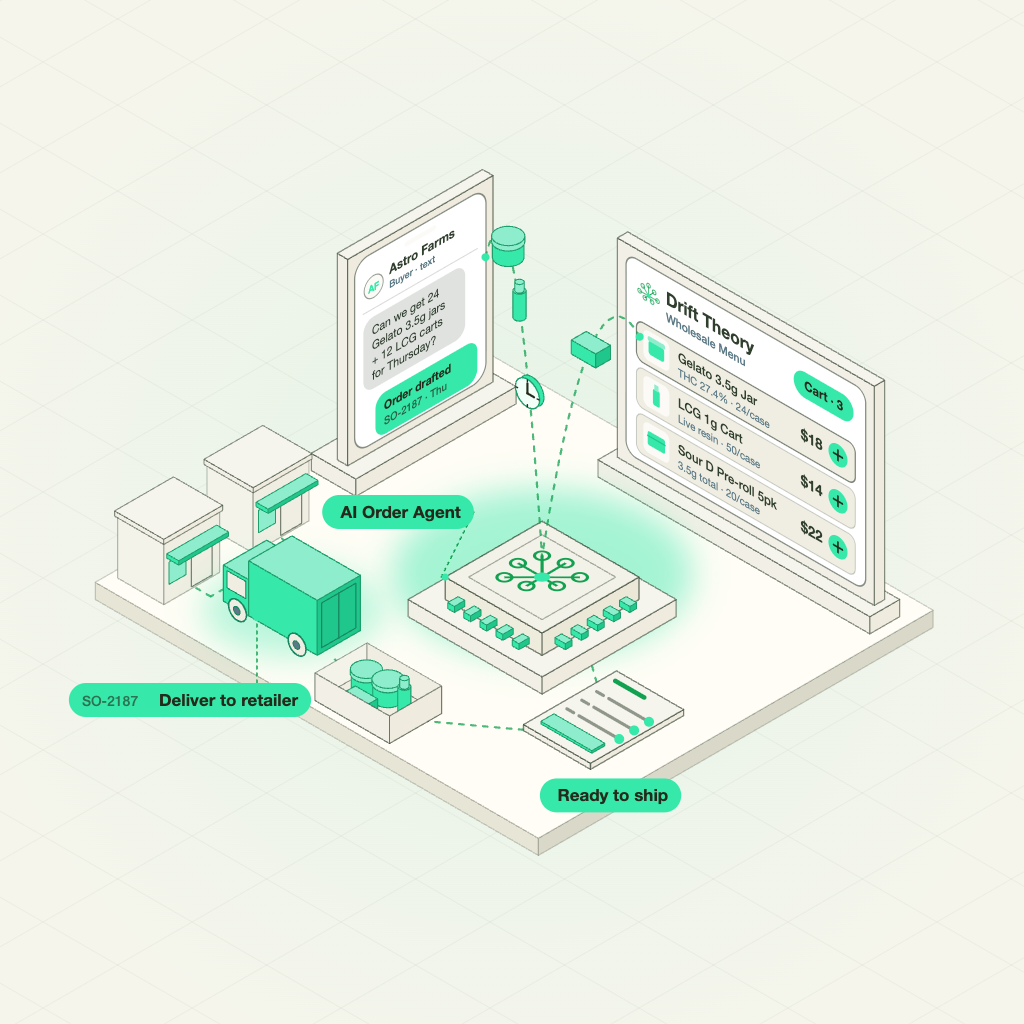
Your wholesale menu pulls from real inventory and real pricing. Buyers order what you have, not what you had last week.
Start with the ERP or Commerce, then add AI
DistruERP
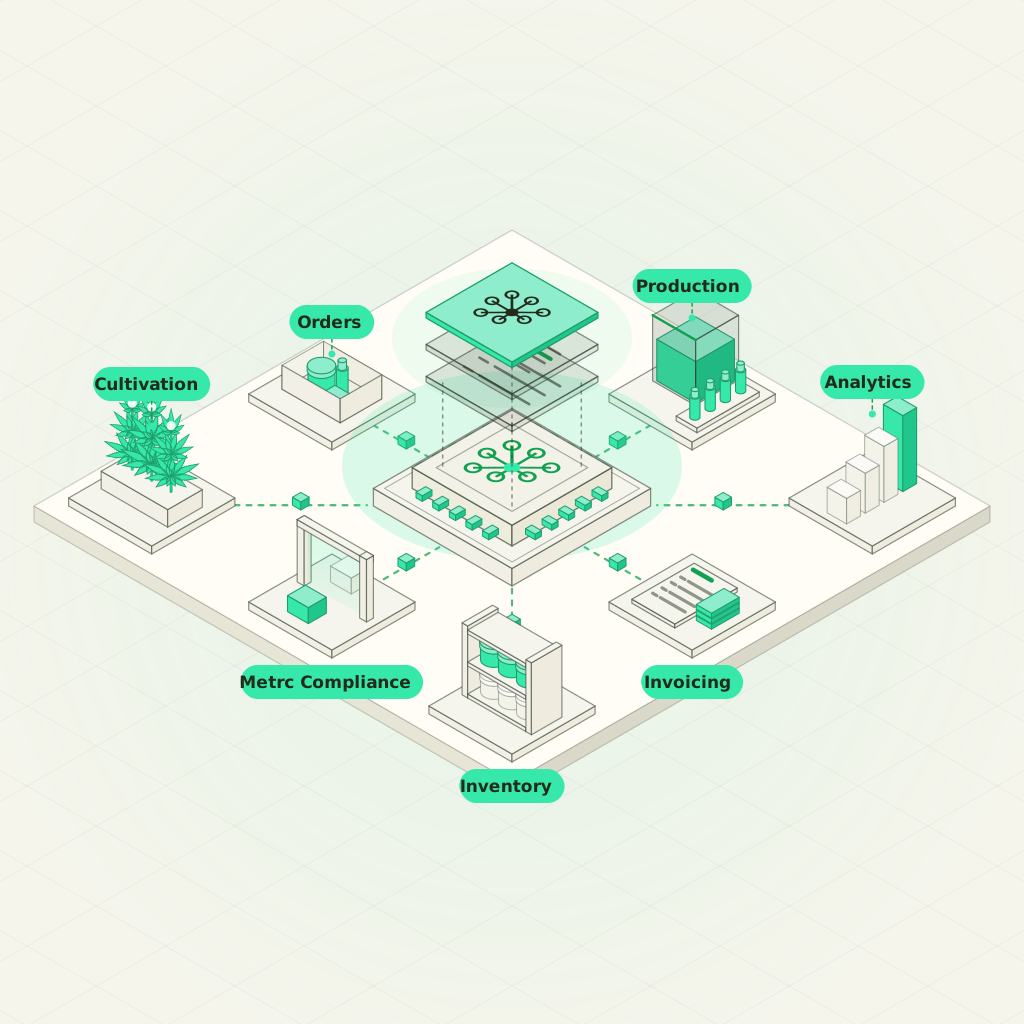
Inventory, production, purchase and sales orders, and Metrc compliance in one cannabis ERP. Built for brands and distributors.
DistruCommerce
Branded menus, marketplace listings, and pricing set per retailer. The AI Order Agent turns texts, photos, and napkin scribbles into real orders.
DistruMCP
Ask Claude or ChatGPT about the inventory, orders, and customers already in your Distru account.
Integrate with the Tools You Use
Distru connects your compliance, accounting, sales, and retail tools to keep data management streamlines and save you hundreds of hours double-entering data.






The AI cannabis library
Free skills to put AI to work on your inventory, compliance and costing, and guides on where it actually saves time.
Distru Expiring Inventory
See stock about to expire, who already buys it, and a promo email draft to review.
Cannabis Inspection Readiness
Turn an upcoming state inspection into a checklist, binder index and gap list.
Cannabis Transfer Manifest Precheck
Check a B2B transfer before the driver leaves and get GO or HOLD per line.
Cannabis Replenishment Planner
Turn sales and on-hand exports into a reorder plan and a draft PO by vendor.
Cannabis State Rules Lookup
Get a cited, dated answer to a state cannabis rule question.

Cannabis Staff Scheduling Planner
Build a shift schedule that matches demand and stays inside your labor budget.
Cannabis Harvest Yield Analysis
See which rooms and strains actually make money, from your own harvest data.
Cannabis Traceability Reconciliation
Find out why your physical count doesn't match Metrc or BioTrack.
Cannabis SOP Generator and Trainer
Turn process notes into an inspection-ready SOP and a staff training packet.
Cannabis Batch COGS Calculator
Find out what a batch really costs per finished unit, line by line.
Why the Harness Matters More Than the AI Model
Two products can use the exact same AI model and perform completely differently. Here's why the harness, not the model, usually explains why.
What Is an Agent Harness? A Plain-English Primer
An AI model alone can't do much. The 'harness' around it is what makes it useful. Here's what that actually means, no jargon required.
Why MSOs Need an AI Strategy Before More Software
Adding another point solution won't fix an MSO's AI readiness problem. Here's why the data foundation has to come first.
The Supply Chain Buyer's Guide to AI Agents and MCP
Evaluating AI agent features in supply chain software? Here's a practical buyer's checklist, including what MCP means for your evaluation.
AI in Supply Chain: What's Hype, What's Working
AI in supply chain gets a lot of hype. Here's an honest look at what's actually delivering results in 2026, and what still needs a person.
Where AI Agents Fit in Cannabis Compliance
Not every step of your compliance workflow is a fit for AI. Here's a clear map of where it helps, and where it should stay hands-off.
The Skills Ops Teams Will Need When AI Agents Arrive
AI agents are coming for repetitive ops tasks in cannabis. Here's what your team needs to get good at instead, starting now.
What Happens When AI Gets Access to Your ERP
Giving an AI tool access to your cannabis ERP isn't all-or-nothing. Here's what real, scoped access looks like, and what to watch for.
AI and 280E: Where Automation Actually Saves Money
280E just got more complicated for mixed medical and adult-use operators. Here's where automated cost tracking actually helps, and its limits.
Can AI Forecast Wholesale Demand Better Than Excel?
Your wholesale forecast spreadsheet has limits. Here's what AI-assisted forecasting can actually add, and where a spreadsheet still wins.
Should Your Cannabis Business Have an AI Strategy?
You don't need to be an AI company to have an AI strategy. Here's a practical starting point for cannabis operators, no hype required.
What Is Claude Cowork? Could It Kill Data Entry?
Claude Cowork lets AI work directly in your files and tools. Here's what that means for the data entry eating your cannabis team's week.


