

.avif)
There’s a new cannabinoid showing up on dispensary menus with premium price tags. Meet THCP, the compound that's creating buzz in cannabis circles and leaving researchers racing to understand its full potential.
This naturally occurring cannabinoid packs a punch that makes regular THC look mild by comparison. There’s a lot to unpack about this new cannabinoids competitor. Discovered in 2019 by Italian researchers, THCP represents a fascinating intersection of scientific discovery and market opportunity.
For cannabis operators and distributors, it's opening doors to premium product categories while raising important questions about dosing, safety, and regulation. So, what makes this little molecule so special? Well, it’s got a lot going for it. Let’s take a look.
THCP In A Nutshell
It’s like a gold rush out here. Dozens of new cannabinoids have been discovered, each with their own unique interaction and potency. But it’s not all fun and games.
For businesses, novel compounds represent new revenue streams, product differentiation, and opportunities to serve evolving consumer preferences. Delta-8 THC proved that consumers eagerly embrace alternatives to traditional cannabis products when they offer distinct experiences.
THCP takes this trend to the next level. Unlike many hemp-derived alternatives that require extensive processing, THCP occurs naturally in cannabis plants. But there’s one teeny, tiny catch. It exists in such tiny concentrations that commercial extraction isn't practical, leading most manufacturers to produce it through laboratory synthesis.
.png)
If you're a cannabis professional, this creates an interesting dynamic. You're working with a natural compound that requires artificial production methods, serving consumers who want potent effects but may have concerns about synthetic processes. Successfully navigating these nuances could define who succeeds in the emerging THCP market. However, to navigate the market, you need to know what this thing’s all about.
What Is THCP? (Tetrahydrocannabiphorol)
This cannabinoid burst onto the cannabis scene in 2019 when researchers discovered it while analyzing cannabis plants. What makes it interesting isn't the science behind it, but what it means for your business and customers.
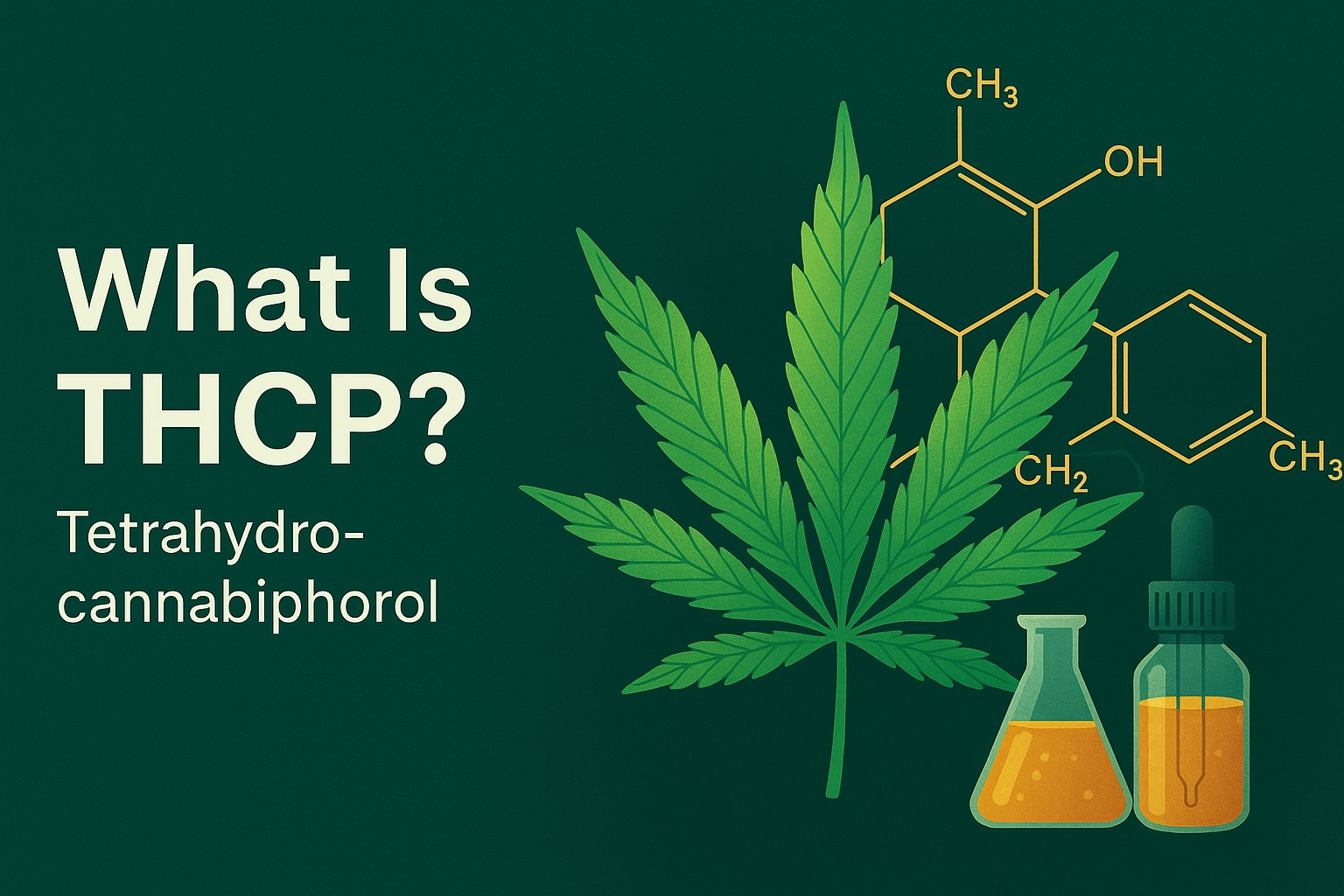
Think of tetrahydrocannabiphorol as THC's much stronger cousin. Things get pretty wild when you look at the amount of THC you need to mimic a very small amount of THCP. Studies suggest it’s as much as 33 times more potent than THC!
Here's what matters for cannabis operators: this compound occurs naturally in cannabis plants, but in amounts so tiny that you can't extract enough to make products commercially viable. That's why most products on the market are made in labs, starting with hemp-derived CBD and converting it through chemical processes.
You'll see different names for this compound on product labels and test results. Whether it's called tetrahydrocannabiphorol, Δ9-THCP, or THC-Heptyl, it's the same substance. Knowing these variations helps when you're reviewing certificates of analysis or managing inventory systems.
This compound represents a new category of high-potency cannabis products that consumers are actively seeking. For businesses, that translates to premium pricing opportunities and product differentiation in an increasingly competitive market.
THCP Potency and Effects
Thirty-three times potency might sound strange on paper, but here’s what it means in real-world reckoning. If you're used to taking 10mg of THC gummies, you might get the same effects from less than 1mg of tetrahydrocannabiphorol. That's a complete game-changer for dosing.
In the real world, users report experiences that blow traditional cannabis out of the water. We're talking about euphoria that feels almost psychedelic, relaxation that melts you into the couch, and sensory changes that make music sound incredible and colors look more vivid. Some people say the effects can last 12-24 hours, which is significantly longer than regular THC.
As the comics have taught us, with great potency comes great responsibility, and THCP effects can go sideways fast. We've seen reports of anxiety attacks, paranoia, racing hearts, and in some serious cases, people ending up in emergency rooms with psychotic episodes. One documented case involved someone having a complete break from reality after just 8mg.
As a responsible cannabis business owner, you want to offer something that’s great and intense, but not something that can lead to self-harm. Training your staff becomes absolutely crucial. They need to understand that someone who can handle 25mg of regular THC might be completely overwhelmed by 2mg of this stuff. THCP dosage guidelines become essential for any business carrying these products.
The honest truth is we don't know nearly enough about long-term safety yet. This compound has only been studied since 2019, so anyone working with it is essentially operating in uncharted territory.
THCP vs. THC: Key Differences for Operators
The biggest difference isn't just potency, though that's obviously huge. Regular THC has been around forever, studied extensively, and has predictable effects that most budtenders can explain in their sleep. THCP vs THC comparisons reveal a completely different beast altogether.
From a business perspective, traditional THC products have established dosing guidelines, well-understood side effects, and decades of consumer experience to draw from. You know that someone new to cannabis should start with 2.5-5mg of THC. With tetrahydrocannabiphorol, those guidelines go out the window. We're talking about starting doses measured in fractions of milligrams.

The consumer experience differs dramatically too. THC typically delivers a 2-4 hour experience with fairly predictable onset times. This cannabinoid can last 12-24 hours and hits people at completely different speeds. Some users report feeling nothing for hours, then suddenly being launched into an intense experience that lasts until the next day.
THC products can usually be tracked reliably with reordering at standard intervals. Software like Distru makes your inventory management a breeze. But when it comes to THCP, you’re not really sure how fast (or, more likely, how slow) the product will move. And that’s something that’s likely to affect your bottom line.
The market positioning is completely different too. THC competes on price, brand recognition, and convenience. Products containing this compound compete purely on potency and novelty, which means much higher margins but potentially smaller customer bases.
Legal Status of THCP
THCP legal status is in a strange judicial limbo, and no one’s sure what to make of it. Technically, it's not explicitly banned by federal law because it wasn't around when most drug scheduling happened. The 2018 Farm Bill legalized hemp and hemp-derived compounds, and since most commercial tetrahydrocannabiphorol comes from hemp-derived CBD, many argue it falls under that protection.
But don't get too comfortable. The DEA hasn't weighed in clearly, and state laws vary wildly. Some states that allow Delta-8 THC have specifically banned this compound. Others include it under broad "synthetic cannabinoid" prohibitions. A few states don't mention it at all, leaving operators guessing.

The compliance headaches are real. You need rock-solid certificates of analysis, careful inventory tracking, and the ability to pull products quickly if regulations change. As we know, compliance can be a headache, and most operators are taking a wait-and-see approach just to be safe.
All in all, you have to pay attention to how the industry’s evolving. Things are changing fast by legal standards, but slow if you’re trying to get the best product offerings to your clients.
Forms and Usage of THCP
The product landscape for this cannabinoid looks familiar but operates under completely different rules. THCP flower dominates the market, though it's almost always regular hemp flower sprayed or infused with synthesized concentrate. True high-tetrahydrocannabiphorol strains don't exist commercially because the natural concentrations are microscopic.
THCP vape cartridges represent the fastest-growing segment. Vaping delivers quick onset times, which helps users gauge effects before things get out of hand. Disposable vapes are particularly popular because customers often want to try this compound without committing to a full cartridge they might never finish.

Edibles present the biggest dosing challenges. While regular THC gummies come in 5-10mg doses, THCP potency typically maxes out at 1-2mg per piece. Some manufacturers are going even smaller, creating 0.5mg options for ultra-cautious consumers. The packaging costs almost as much as the active ingredient.
Tinctures and concentrates round out the product mix, though they require serious consumer education. A single drop too much can turn a pleasant evening into a 20-hour ordeal.
Pricing reflects the premium positioning. THCP flower typically runs $19-59 per eighth, significantly higher than regular cannabis. Vape cartridges command 2-3x the price of standard THC products. The margins are attractive, but the slower turnover means you're tying up more capital in inventory that moves unpredictably.
Potential Benefits and Risks of THCP
The benefits of using this compound are similar to THC, but with a lot more potency. Some users report that it induces sleep at a far faster rate than regular THC. Others say that it does wonders for pain relief. Since it only needs a little THCP to pack a punch, it’s good value for money for your consumers.
THCP benefits also include the economic advantages for businesses. Premium pricing, product differentiation, and satisfied customers who need less product to achieve desired effects create compelling business cases. Some operators report that customers become incredibly loyal once they find the right dosing sweet spot.
But the risks are substantial and well-documented. THCP side effects include emergency room visits, prolonged anxiety episodes, and concerning psychological reactions. The truth is that no one’s sure what this compound is capable of, since research only started in 2019. Business owners and operators should weigh potential risks against the benefits to figure out if it’s something they want to invest in longterm.
THCP Extraction and Production
Most commercial tetrahydrocannabiphorol starts life as hemp-derived CBD. THCP extraction from actual cannabis plants isn't economically viable because the natural concentrations are so low you'd need massive amounts of plant material to extract meaningful quantities.
The conversion process involves sophisticated chemistry that requires proper lab equipment and expertise. Many manufacturers are outsourcing production to specialized facilities rather than attempting in-house synthesis. This creates supply chain dependencies that can impact product availability and pricing.
Quality control becomes absolutely critical. Small variations in the conversion process can create inconsistent potency or introduce contaminants. Reliable testing protocols and reliable suppliers become essential for anyone serious about these products.
For distributors and manufacturers, the production realities mean longer lead times, higher minimum orders, and more complex supplier relationships compared to traditional cannabis products.
The Future of THCP in the Cannabis Industry
Consumer demand keeps growing despite the challenges. Dispensaries report steady interest from customers seeking more potent alternatives to traditional cannabis. The novelty factor remains strong, though repeat customers tend to be more cautious with their purchasing patterns.
Regulatory clarity will likely determine how this market develops. Federal scheduling decisions or state-level restrictions could dramatically reshape availability. Smart operators are keeping flexible inventory strategies that can adapt quickly to regulatory changes.
The compound represents a broader trend toward specialized cannabinoids targeting specific consumer preferences. Whether this becomes a mainstream category or remains a niche product depends largely on how well the industry manages safety and regulatory challenges.

Navigating the THCP Opportunity
THCP represents one of the most significant cannabinoid discoveries in recent years. Its extreme potency, natural origins, and premium market positioning create compelling opportunities for cannabis operators willing to navigate the complexities.
The key takeaways are clear: this compound delivers effects that traditional cannabis simply can't match, but it requires completely different approaches to dosing, consumer education, and risk management. The legal ambiguities won't last forever, but operators need reliable compliance systems to weather potential regulatory changes.
For businesses evaluating whether to add these products to their lineup, the decision comes down to risk tolerance and operational capabilities. Can you handle the additional training requirements, liability considerations, and inventory management challenges? Do you have the compliance infrastructure to adapt quickly if regulations shift?
Ready to simplify your cannabinoid operations and ensure compliance? Schedule a Demo with Distru today to see how our platform simplifies inventory and regulatory management for new cannabis businesses.


