


You're mid-transfer. Your driver is sitting in a parking lot. The transfer manifest needs to be submitted to Metrc right now, but Metrc's API is slow, the page won't load, and you're watching the clock. You've been here before.
This is the daily reality for thousands of licensed cannabis operators across the U.S. Compliance isn't just paperwork. It's your license, your revenue, and your entire operation on the line every single day.
Cannabis trace and report software is the category of tools built to solve exactly this problem. The right platform handles your seed-to-sale tracking, automates your Metrc or BioTrack reporting, and keeps your audit trail clean without requiring you to babysit a government portal all day.
Here's what you actually need to know about how these systems work, what to look for, and why the quality of your Metrc integration matters more than almost anything else you'll evaluate.
.avif)
What Is Cannabis Trace and Report Software?
Cannabis trace and report software tracks every movement of cannabis products from the point of cultivation through processing, distribution, and final retail sale. Every gram, every package, every transfer gets logged and reported to your state's regulatory system.
In most U.S. states, that means reporting to Metrc (Marijuana Enforcement Tracking Reporting Compliance). As of 2025, Metrc is the state-mandated track-and-trace system in more than 20 jurisdictions, including California, Michigan, Massachusetts, Colorado, Oregon, and Illinois. A smaller group of states use BioTrack, though Metrc and BioTrack announced a strategic partnership in August 2025 that signals further consolidation ahead.
The core function of trace and report software is deceptively simple: make sure what's in your physical facility matches what's in the state system. The execution is where it gets complicated.
Why This Is Harder Than It Sounds
Every licensed cannabis operator in a Metrc state has the same core compliance burden:
- Assign package tags to every unit of cannabis you create, receive, or process
- Submit accurate inventory adjustments whenever anything moves or changes
- Generate and attach transfer manifests to every outbound shipment
- Report sales daily (for retailers) or track every production batch (for manufacturers and cultivators)
- Keep an airtight audit trail so that if regulators walk in tomorrow, your numbers add up
Miss a tag. Forget to report an adjustment. Let a manifest go out with wrong quantities. Any of these can trigger a violation. In California, fines run from $1,000 to $50,000 per violation. License suspension and revocation are on the table for repeat or serious violations.
Most operators don't fail because they're doing something wrong. They fail because they're doing compliance manually, or because their software can't keep up with the pace of their operation.
How Metrc Integration Actually Works
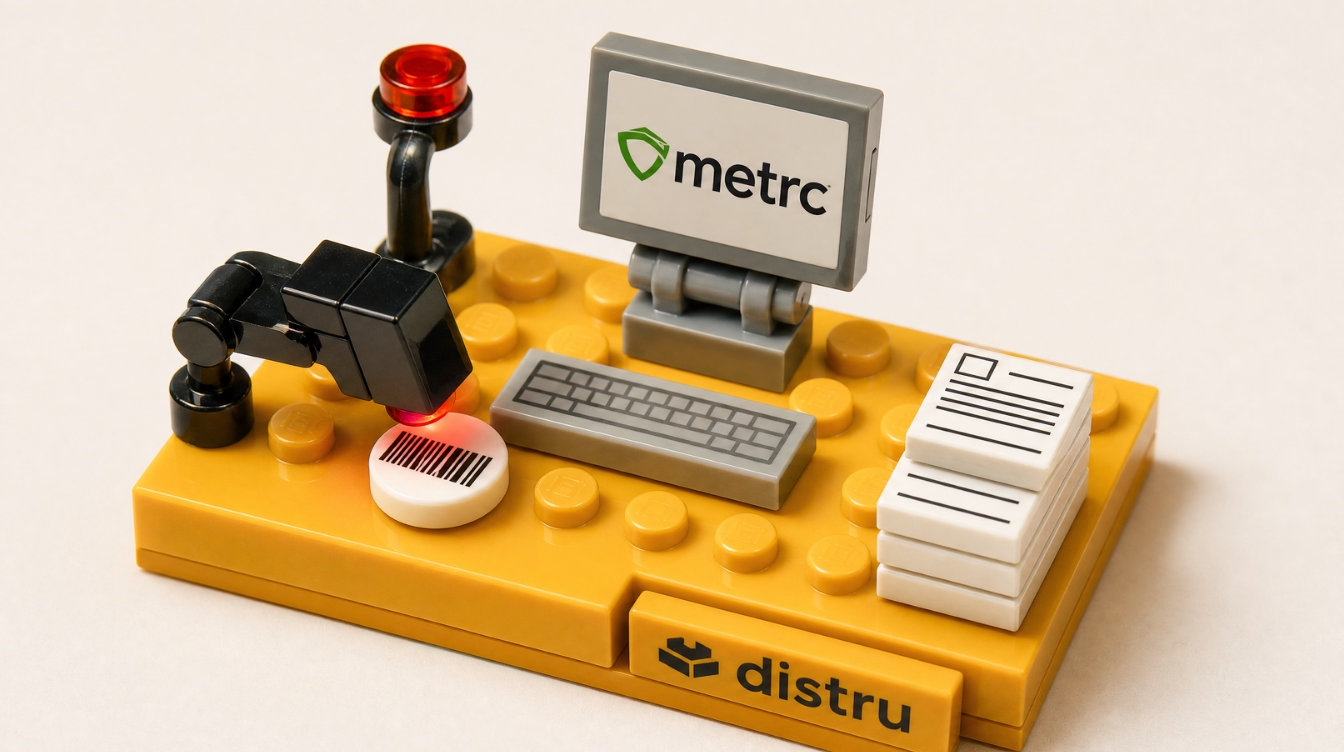
Metrc provides an open API that lets third-party software connect directly to the state system. Instead of logging into Metrc's web portal and manually entering data, your cannabis ERP or seed-to-sale software calls the Metrc API to push and pull data automatically.
In theory, this is clean. In practice, the quality of that integration varies dramatically between software providers.
A weak integration might sync data once an hour, in one direction, and stop working entirely when Metrc has downtime. A strong integration pings Metrc constantly, handles errors gracefully, and keeps your operation moving even when the state system is slow.
Metrc downtime is a real problem. Industry reporting from MJBizDaily documented outages in California lasting up to nine hours at a time, blocking operators from completing transfers and invoicing. That's a supply chain stoppage that costs real money.
What separates a serious Metrc integration from a basic one comes down to a few factors: sync frequency, two-way data flow, and what happens when Metrc goes down.
What to Look for in Cannabis Trace and Report Software
Real-Time, Two-Way Metrc Sync
Your software should be reading from Metrc and writing to Metrc constantly, not on a schedule. If an incoming package gets accepted in Metrc by your receiving team, your ERP should reflect that immediately without anyone manually updating two systems.
One-way sync creates drift. Drift creates discrepancies. Discrepancies create violations.
Offline Continuity During Metrc Outages
When Metrc slows down or goes offline, your software shouldn't stop working. The right platform queues your actions locally and syncs them back to Metrc the moment the system recovers. Your team keeps working. Nothing gets lost.
Full Audit Trail From Production to Sale
Every package adjustment, every transfer, every destruction record needs to be logged with a timestamp, user attribution, and the associated Metrc event. When a regulator audits you, you want to be able to pull the full chain of custody for any package in under two minutes.
Transfer Manifest Generation
Creating a transfer manifest by hand in Metrc is tedious and error-prone. Your software should generate the manifest from the existing order data, push it to Metrc automatically, and attach the RFID tag IDs to the outbound packages before your driver leaves.
Inventory Reconciliation Tools
At any point, you should be able to run a report that shows your on-hand inventory, what Metrc thinks you have, and flags any discrepancies. Catching a mismatch before a regulatory inspection is worth far more than catching it during one.

BioTrack Support (If Applicable)
If you operate in Arkansas, Connecticut, Delaware, Florida, Hawaii, New Mexico, or other BioTrack states, your software needs a solid BioTrack integration. The core concepts are similar but the data structures differ. Package IDs in Metrc are called Barcode IDs in BioTrack. The sync logic needs to be built for each system separately.
The Distru Approach to Metrc Compliance
Distru, a cannabis ERP platform built for licensed operators, has built what it considers the deepest Metrc integration in the market. The numbers back that up. Distru is the number one Metrc integration partner by API call volume, pinging Metrc between 3 and 40 times per second depending on activity.
That call volume isn't just a stat. It means Distru is checking in with Metrc constantly, catching state-side changes immediately and pushing your data in near-real time.
The practical result: most Distru operators only need to touch Metrc directly for three actions. Accept an incoming package. Transfer a package. Register a manifest. Everything else runs through Distru.
When Metrc has an outage, operators keep working in Distru. The platform queues every action and syncs automatically when Metrc comes back online. No manual backfill. No scrambling to remember what happened during the gap.
Across 440+ customers in 30+ states, Distru has documented an average of 2,000+ hours saved per operator annually from compliance automation alone. That's time your team is not spending inside Metrc.
How Distru Handles the Compliance Workflow
The compliance workflow in Distru follows the same logic as Metrc's requirements, but it's built into the operational flow rather than bolted on as a separate step.
When you receive an inbound transfer, Distru pulls the manifest data directly from Metrc and populates your receiving record. Your team confirms receipt. Distru closes the loop in Metrc.
When you create a production batch, Distru automatically assigns package tags from your RFID tag inventory and logs the creation event in Metrc. You don't navigate to a separate Metrc screen to do this.
When you ship an order, Distru generates the transfer manifest, creates the Metrc transfer, and associates every outbound package tag. Your driver gets a manifest. Metrc gets updated. Your inventory adjusts.
This isn't a workaround. It's what real Metrc integration looks like when it's built into the core of an ERP rather than added as a feature.
Seed-to-Sale Tracking by License Type
The specific compliance workflow looks different depending on your license type. Here's how trace and report requirements break down across the most common operator profiles.
Cultivators

For cultivators, seed-to-sale tracking starts at the plant level. You're tracking:
- Individual plants through the vegetative and flowering stages
- Harvest weights and batch yields
- Package creation from dried flower, trim, and biomass
- Lab sample submissions and test results before sale
Every plant tag and harvest batch needs a corresponding Metrc or BioTrack entry. If physical yield doesn't match expected yield by more than 2% in some states, that can trigger mandatory reporting and potential inspection.
Processors and Manufacturers

Processors deal with incoming raw material, production conversions, and outbound finished goods. The compliance challenge is tracking the transformation from raw cannabis into concentrates, edibles, or infused products.
This requires:
- Receiving and logging input packages from cultivators
- Recording production runs and the packages created
- Attaching Certificate of Analysis (COA) results to finished packages before transfer
- Generating outbound manifests for every distribution transfer
Distributors
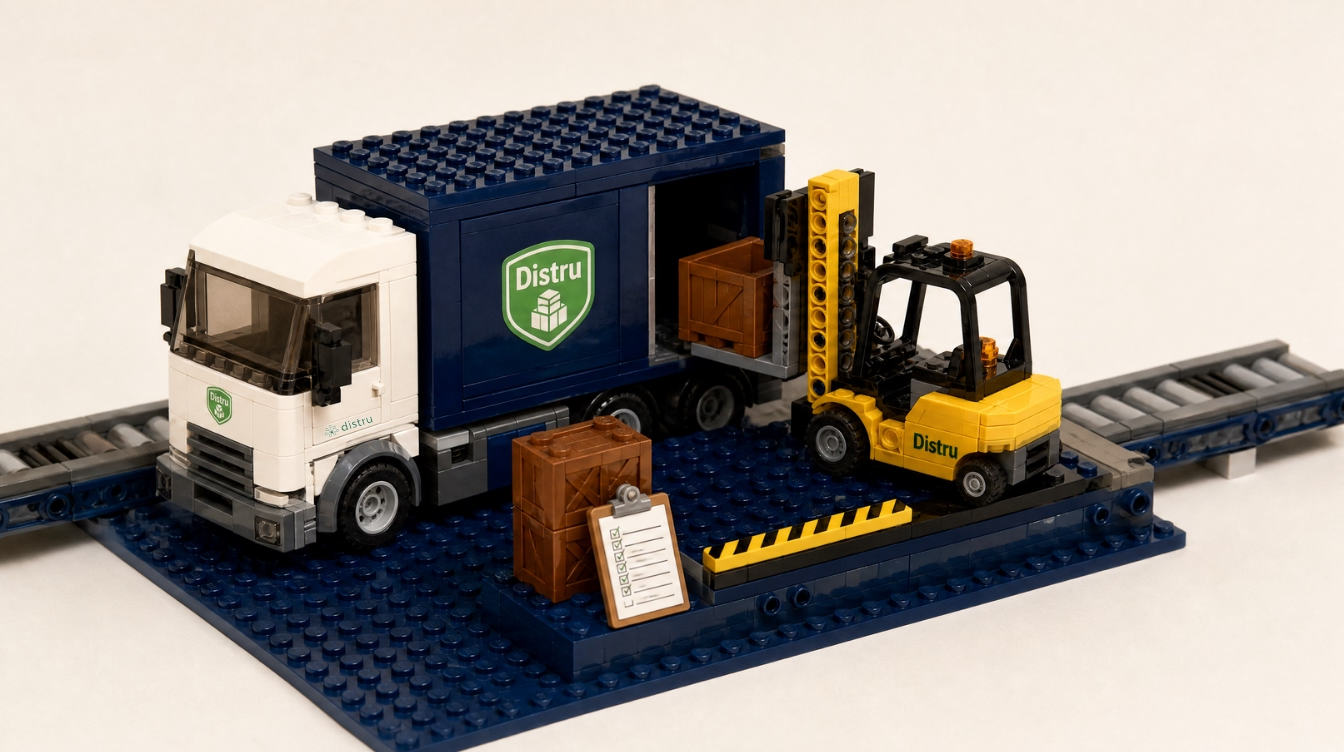
Distributors often have the highest transfer volume of any license type. A busy distributor might run dozens of transfers per day across multiple facilities and customers. Every one of those transfers needs a manifest, every package needs a tag, and every delivery needs to be closed out in Metrc once received by the destination.
At that volume, manual Metrc entry isn't a workflow. It's a full-time job.
Retailers

Retailers need to reconcile daily sales against Metrc inventory at the close of every business day. If your POS integration doesn't push sales data to Metrc automatically, someone is manually entering transaction data every night. That's both slow and error-prone.
Cannabis Recall Readiness
One capability that often gets overlooked in software evaluations is recall readiness. If a batch tests positive for pesticides or a product has a labeling issue, you need to know exactly which packages came from that batch and where they went.
With a complete audit trail in your trace and report software, a recall investigation that might take days manually can be completed in minutes. You can trace every package back to its source batch, identify every retailer that received affected product, and generate the documentation regulators require.
Without that trail, a recall becomes a crisis. With it, it's a manageable event.
Choosing Between State-Mandated Systems and Third-Party Software
A common point of confusion: Metrc and BioTrack are state systems, not operator software. Your state regulator contracts with Metrc or BioTrack to run the compliance database. You're required to report to it.
You can do that reporting one of two ways:
- Log directly into the Metrc or BioTrack web portal and enter data manually
- Use third-party cannabis software with a built-in integration that handles the reporting for you
Option one works for very small operators with low transaction volume. For anyone running a serious operation, manual portal entry doesn't scale. The error rate goes up with volume, and the time cost compounds.
Option two is the path most operators take. The quality of that integration is the key question. See the criteria above.
State-by-State Compliance Resources
Regulations vary by state. If you're operating in a Metrc state, Metrc's official portal is the authoritative source for state-specific requirements. State regulatory agencies publish their own compliance guides as well.
Some useful starting points:
- California Department of Cannabis Control
- Illinois Cannabis Regulation Oversight Office
- New York Office of Cannabis Management
- MJBizDaily compliance coverage for industry news on regulatory changes
Regulations change. New states adopt Metrc. Reporting requirements get updated. Your software provider should be tracking these changes and pushing updates without requiring you to reconfigure your integration every time something shifts.
What Good Compliance Software Actually Costs You
The honest answer: the cost of the software is almost never the issue. The cost of getting compliance wrong is the issue.
A single violation in most states runs $1,000 to $50,000. A failed inspection can mean a suspension that shuts down your facility for weeks. A recall without a clean audit trail can turn into a license revocation.
Against those numbers, the cost of a serious cannabis ERP with strong Metrc integration is a straightforward calculation. The 2,000 hours per year Distru operators save in compliance tasks alone represents tens of thousands of dollars in labor recovered.
The question isn't whether you can afford good trace and report software. It's whether you can afford to run without it.
Ready to Stop Living Inside Metrc?
If your team is spending hours every week manually entering data into Metrc, chasing down transfer discrepancies, or scrambling during Metrc outages, that's not a compliance problem. It's a software problem.
See how Distru's Metrc integration works and learn why 440+ customers across 30+ states have made it their compliance backbone. Or explore Distru's full ERP platform to see how inventory, manufacturing, distribution, and compliance connect in one system.
You shouldn't need to log into Metrc to run your business. With the right software, you rarely will.