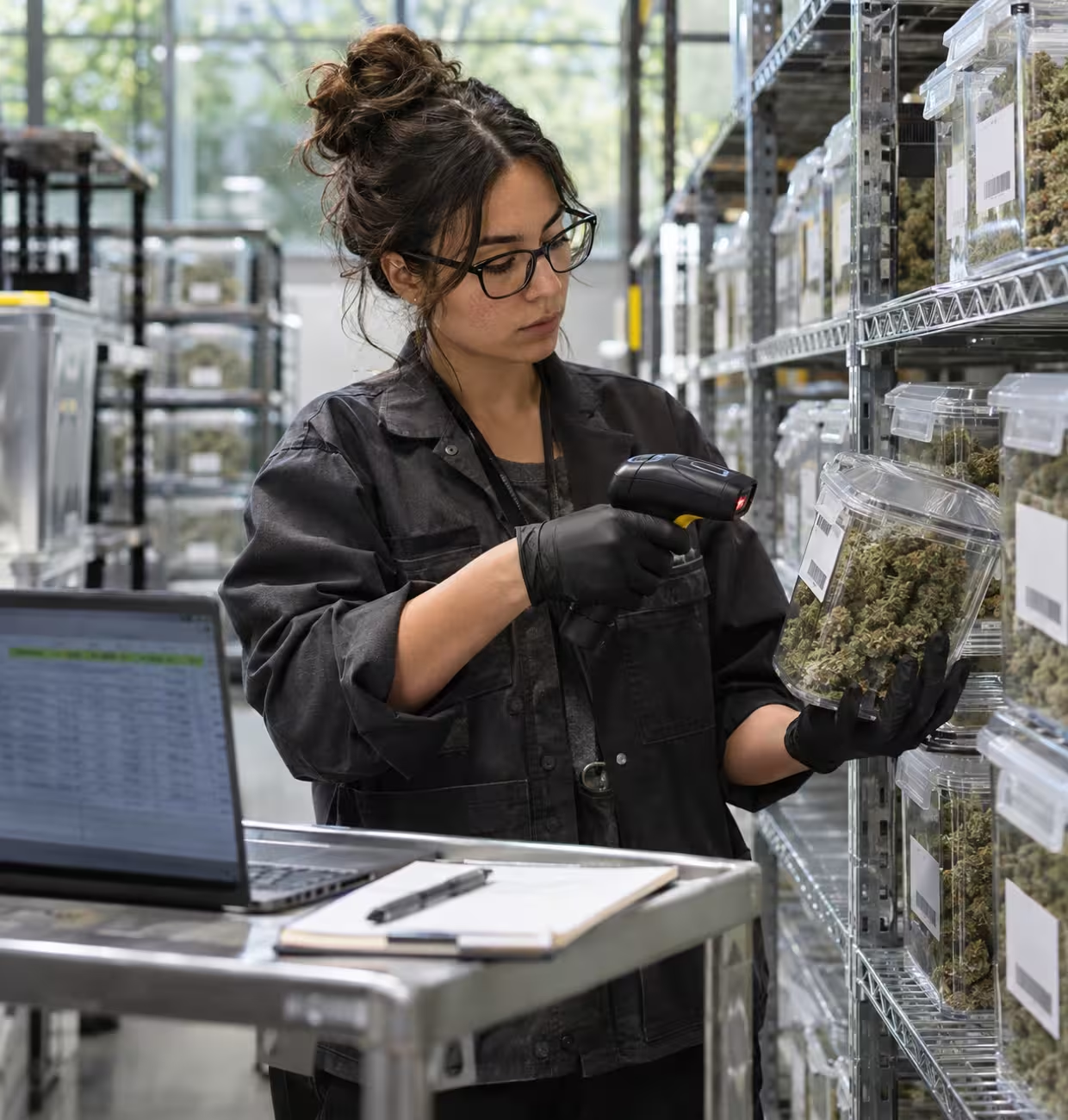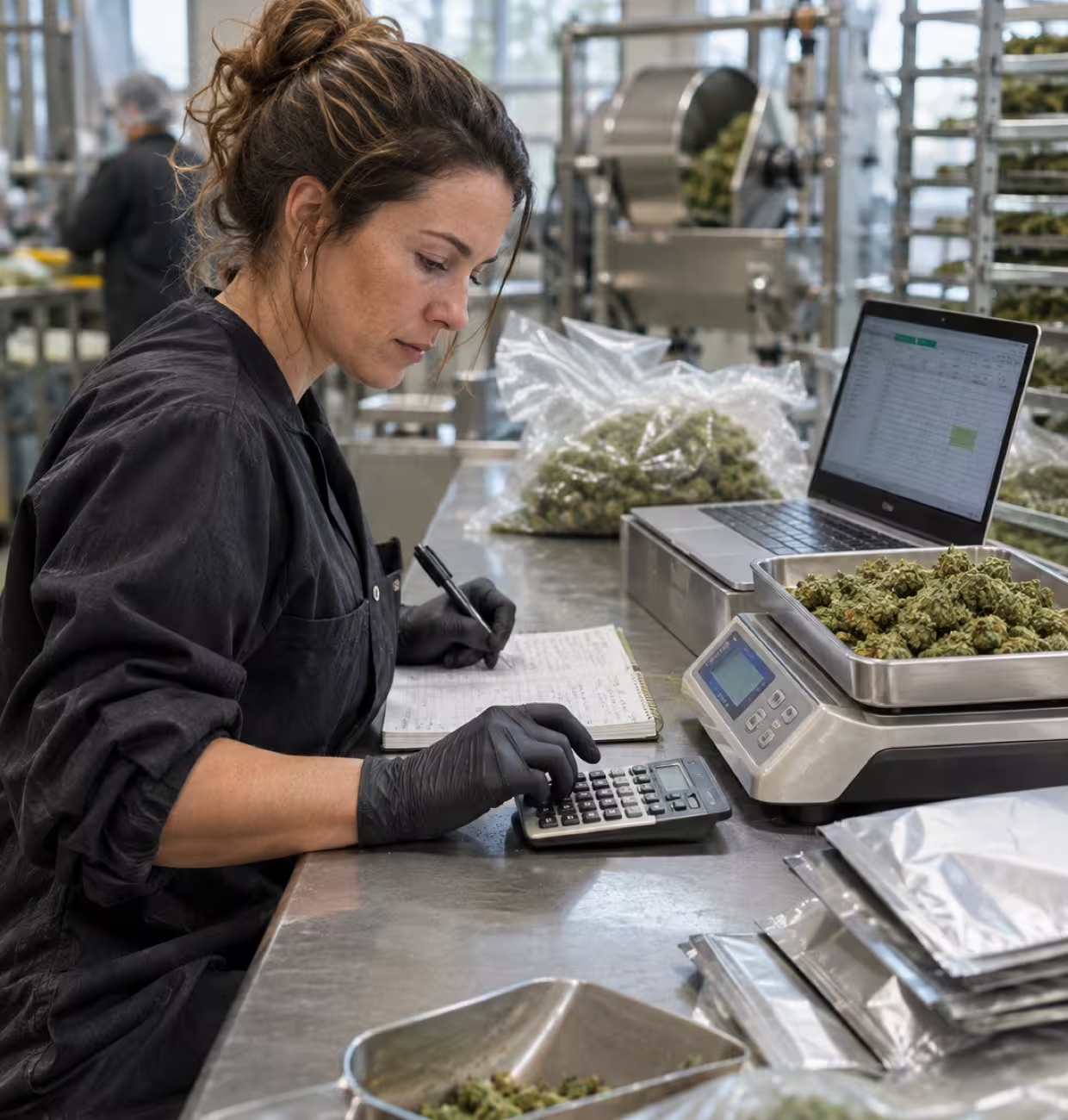

Ask your team what one case of half-gram pre-rolls costs to make. You'll get a pause, then a spreadsheet, then a number that changes depending on who built it.
If that sounds familiar, you're not alone. Most operators we talk to can recite their monthly rent from memory. Very few can put a dollar figure on a single unit. Labor is usually the reason.
Let's dig into what belongs in cannabis cost of goods sold, where labor actually fits, and how to get a per-unit number you'd bet a wholesale price on.
We wrote this one with our partners at Paragon Payroll, who've been cannabis-committed since 2016 and serve 650+ cannabis businesses. Paragon knows what your team costs. Distru knows what your team produces. Labor cost per unit lives right where those two meet.
Why Don't Most Operators Know What a Unit Costs?
Because a P&L tells you what the month cost, not what a product cost. And those are two very different questions.
Your P&L lumps everything into buckets: materials, wages, rent, utilities. It's accurate for the month and useless for pricing. It can't tell you whether your 1g carts make more money than your 3.5g jars, or whether last week's gummy run lost money because it took twice as long.
Here's where it usually breaks down. Somebody divides total monthly cost by total units shipped and calls it cost per unit. That average hides everything. Fast, simple SKUs subsidize slow, labor-heavy ones, and the P&L looks fine right up until margins don't.
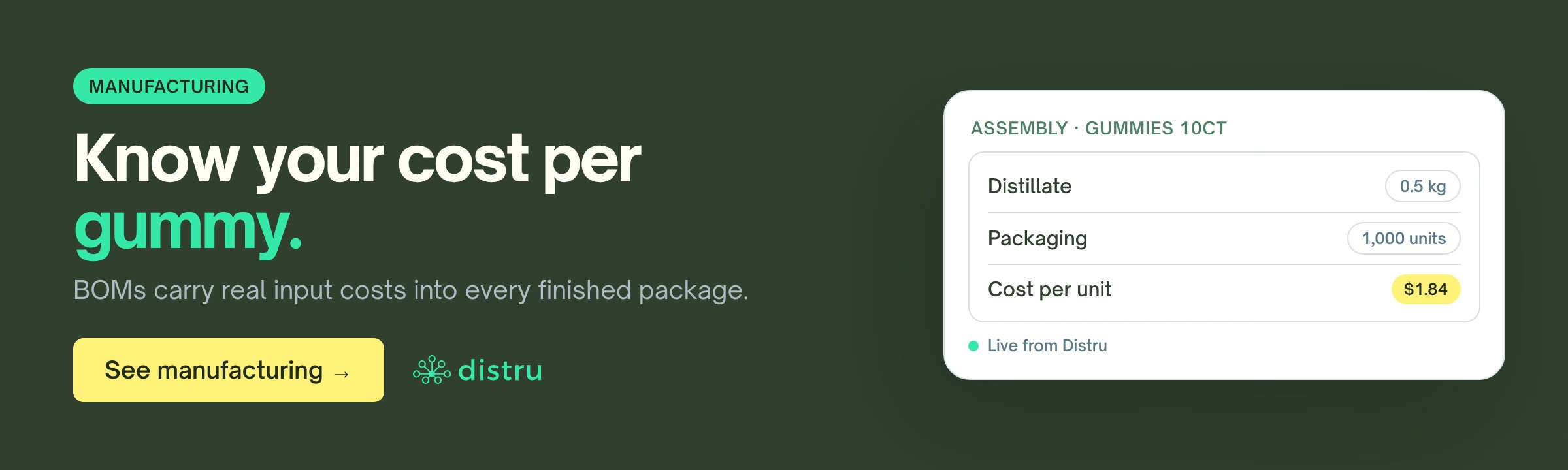
What Belongs in Cannabis COGS?
Cannabis cost of goods sold is everything it takes to turn inputs into a sellable unit, and nothing it takes to sell it. In operator terms, that's three groups:
- Materials. Flower, trim, biomass, distillate, terpenes, cones, jars, boxes and labels. Anything that ends up in or on the product.
- Direct labor. The hours your team spends making the product: trimming, extraction, infusion, filling, rolling, packaging and labeling.
- Production overhead. The costs of running the production space: utilities on the grow and production floors, equipment depreciation, lab testing and the supervisors who run the line.
What doesn't belong: sales commissions, marketing, delivery to retailers and front-office admin. Those are real costs, but they're selling and operating expenses.
Your CPA makes the final call on treatment, especially under 280E. But you can't hand them good numbers if you never captured them at the batch level. That's what cannabis COGS tracking really is: recording cost where the work happens, not reverse-engineering it at month end.
Why Is Your Bill of Materials Making Every Number Soft?
Your bill of materials (BOM) is the recipe your cost per unit is built on. If the recipe is loose, every number downstream is a guess.
A loose BOM looks like this: "pre-roll, 0.5g flower, 1 cone, 1 tube." No yield loss. No label. No lot-specific flower cost. No labor step. It's close enough to make product and nowhere near close enough to price it.
A usable BOM for BOM cost tracking has:
- Every input, down to the label and the child-resistant cap.
- Actual cost by lot, since flower from one harvest batch can cost twice what another did.
- Expected yield and loss, so a run that eats 8% more flower than planned shows up as a variance, not a mystery.
- The labor step, with the department and expected hours per run.
That fourth line is the one almost everyone skips. And it's the one that turns a materials cost into a real cost of goods sold.
How Do You Allocate Labor to a Batch, Not a Month?
You capture hours against the department and shift that did the work, then tie that shift to the batch it produced. Monthly payroll divided by monthly units doesn't count as allocation. It's an average.
Let's make this concrete. Your packaging crew of six runs an 8-hour shift on pre-rolls. That's 48 hours. At a loaded rate of $25 an hour, the shift cost $1,200. The run produced 2,400 pre-rolls, so direct labor COGS for that batch is $0.50 a unit. If Thursday's run only produced 1,600 because the roller jammed, labor on that batch was $0.75 a unit. Your P&L would never show you that.
Two systems have to agree for this to work. Distru, a cannabis ERP with a built-in wholesale marketplace, knows which batch consumed which materials and how long production ran. Paragon Payroll, which has been cannabis-committed since 2016, knows what the team on that shift was paid and which department those hours belong to. Put cannabis payroll and time tracking together with live production data, and labor stops being a monthly overhead number. It becomes a real line in your cost per unit.
Reading Margin by SKU Instead of by P&L
Once cost per unit is real, you stop asking "did we make money this month?" and start asking "which products make us money?" Those answers are rarely the same.
Say you sell a 1g cart wholesale for $12 and a 3.5g jar for $18. The jar brings in more per unit, so it feels like the winner. Then the real cost per unit comes in: $6.10 for the cart and $11.40 for the jar, once trim labor and packaging time land where they belong. The cart runs about a 49% margin. The jar runs about 37%.
That changes real decisions. Which SKUs your reps push to retailers. Which runs you schedule first. Whether that 3.5g jar needs a price increase or a faster packaging line.
This is where live costing earns its keep. With cannabis accounting software that tracks cost as inventory moves through production, you see projected COGS before a product goes to market, plus standard vs. actual variance on every run. You find out a SKU is underwater before you've sold a month of it, not after.
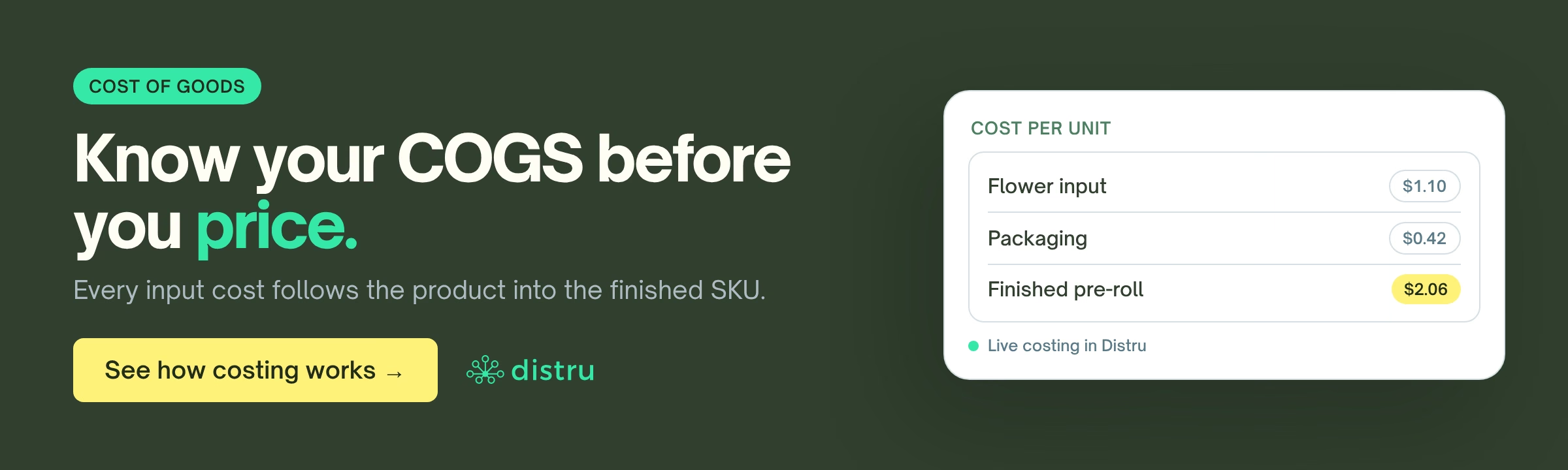
What Changes When COGS Is Accurate?
You price with confidence, negotiate wholesale deals with a floor you trust, and defend your tax position with records instead of estimates.
- Wholesale pricing. With a monthly average, it's cost plus a guess. With accurate per-unit COGS, you set price from a known floor per SKU.
- Volume discounts. With a monthly average, they're approved on gut feel. With accurate COGS, you approve them knowing exactly how much margin is left.
- Product mix. With a monthly average, you push whatever sells most. With accurate COGS, you push what earns the most per unit.
- Hiring. With a monthly average, you add people when everyone's busy. With accurate COGS, you add people where labor per unit is climbing.
- 280E position. With a monthly average, allocations get rebuilt at year end. With accurate COGS, batch-level records are captured as work happens.
That last point matters more than most teams realize. Federal rescheduling changed 280E treatment in 2026 for qualifying medical licensees, but adult-use activity is still subject to it, and the rules are still moving (Foley Hoag, September 2026). Where 280E applies, cost of goods sold is still the main thing standing between gross receipts and your tax bill. Labor you can tie to a batch is labor you can document. Ask your CPA how the current rules apply to each of your licenses.
Accurate COGS also turns hiring into a margin decision. Paragon Payroll covers the other half of that call in their guide to cannabis workforce management: scheduling around production, overtime exposure and what changes as your team grows. Put their workforce data next to your cost per unit, and you'll know whether the next hire belongs on the packaging line or in the office. That's the conversation your finance teams and ops leads should be having from the same numbers.
Build the Costing Layer Before You Need It
The worst time to figure out what a unit costs is the week a big retailer asks for a volume discount. The second worst is tax season. Build the costing layer while you're still small enough to set it up right.
Start with your three highest-volume SKUs. Tighten their BOMs, add the labor step, and track one month of runs against actual hours. You'll learn more about your margins in those four weeks than in a year of P&Ls.
If your payroll can't break hours out by department and shift, fix that first. Every labor cost per unit depends on it. Paragon Payroll sets up time tracking that way for cannabis employers, so the hours you allocate to a batch match what you actually paid.
When you're ready to run it for every SKU, a cannabis ERP with live costing is the backbone that holds materials, production and labor in one place. Distru's 440+ customers across 30+ states use it to see true COGS before product goes to market.

Want to see your own cost per unit, built from your real BOMs? Schedule a demo and we'll walk through your exact production workflow, not a canned one.