In This Article:

Ask AI about this article
OpenAI
Claude
Perplexity
Google Gemini

A Brief Guide on How to Harvest Your Cannabis Crop

Distru Team  |
Updated
November 4, 2026
TL;DR

• Cannabis harvesting involves four critical stages: harvesting, trimming, drying, and curing over several weeks.

• Proper drying requires 55-65°F and 40-50% humidity for one to two weeks with regular monitoring.

• Curing in airtight containers preserves terpenes and prevents moisture loss for retail-quality flower.

Finally, after months of hard work and labor, the time has arrived to harvest your plants. There are many different methodologies when it comes to growing cannabis flower, but regardless of what you prefer, there are 4 stages each cultivator has to go through:

  • Harvesting
  • Trimming
  • Drying
  • Curing

In this article we cover the basics of harvesting and what it entails.

When to Harvest Your Plants

About two weeks before you plan on harvesting, it's important to flush your plants of nutrients and fertilizer. Flushing is the process of slowly adding excess water to your soil and washing away the remaining nutrients. Make sure you're not adding any additional nutrients or fertilizer to your soil after this point.

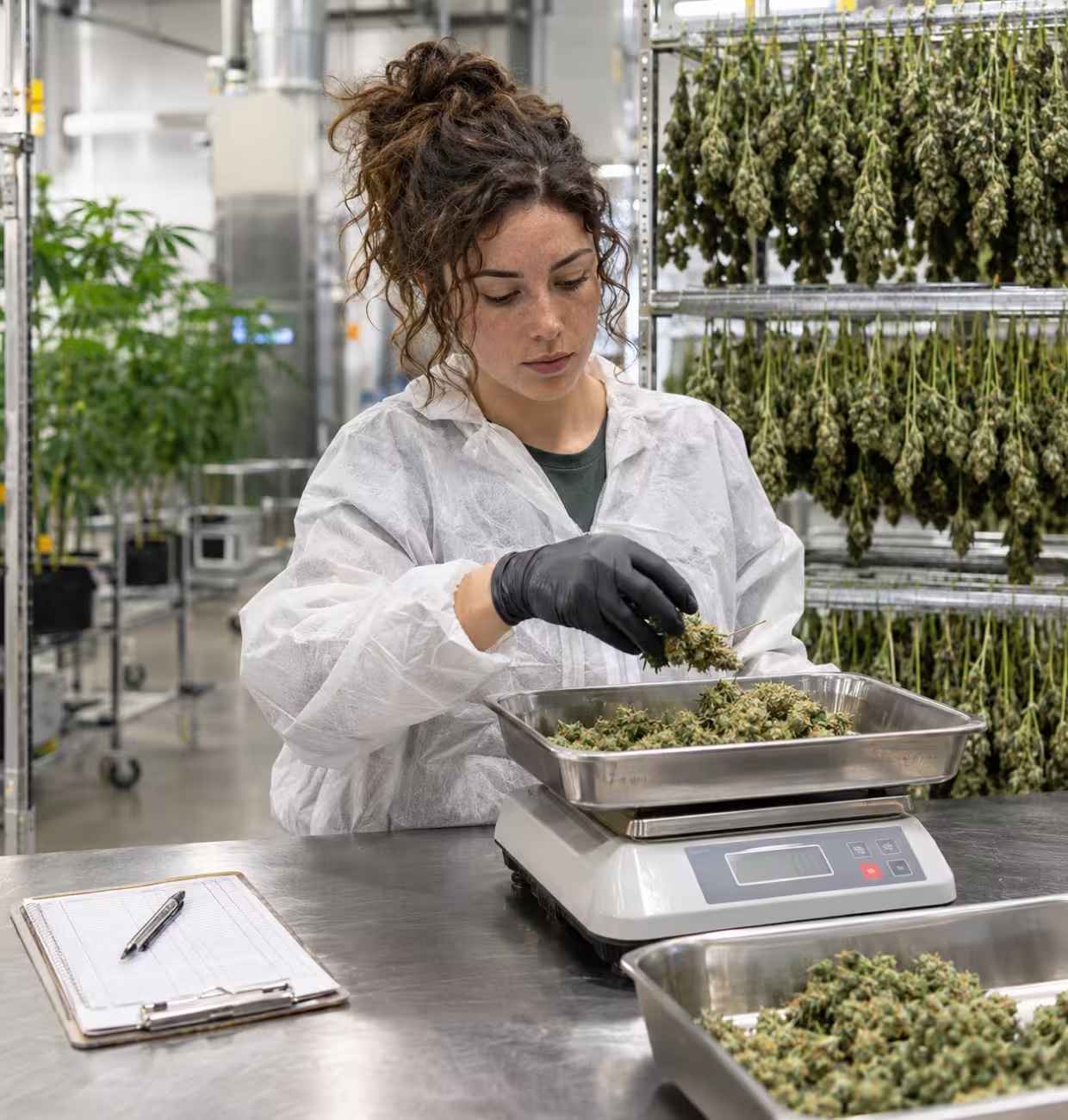
Once that time has passed and your cannabis trichomes have fully matured, it's time to cut down your plant! Start to remove leaves and trim individual branches off the main stem. After cutting, use a scale to determine the wet weight of your harvest. Weighing before and after curing allows you to track yields of your different strains. Make sure to inspect your plants for fungus and pests while cutting down your crop and immediately dispose of compromised materials.

‍

From harvest to wholesale price. Cultivation. Distru.

How to Dry & Trim

Now that your main stems have been cut and your branches are cleared of leaves, it's time to hang and dry them. The most common drying technique is to hang your branches upside down in a well ventilated room until they're sufficiently dry. Setting the proper temperature and humidity levels of your drying room is very important in the drying process. Most recommend a temperature of about 55° - 65° F and 40% - 50% humidity, with a drying time of about 1 - 2 weeks.

It's important to note that each strain dries differently and not everyone has the same dry room conditions, so regularly checking your branches for signs of proper drying is often the best approach.

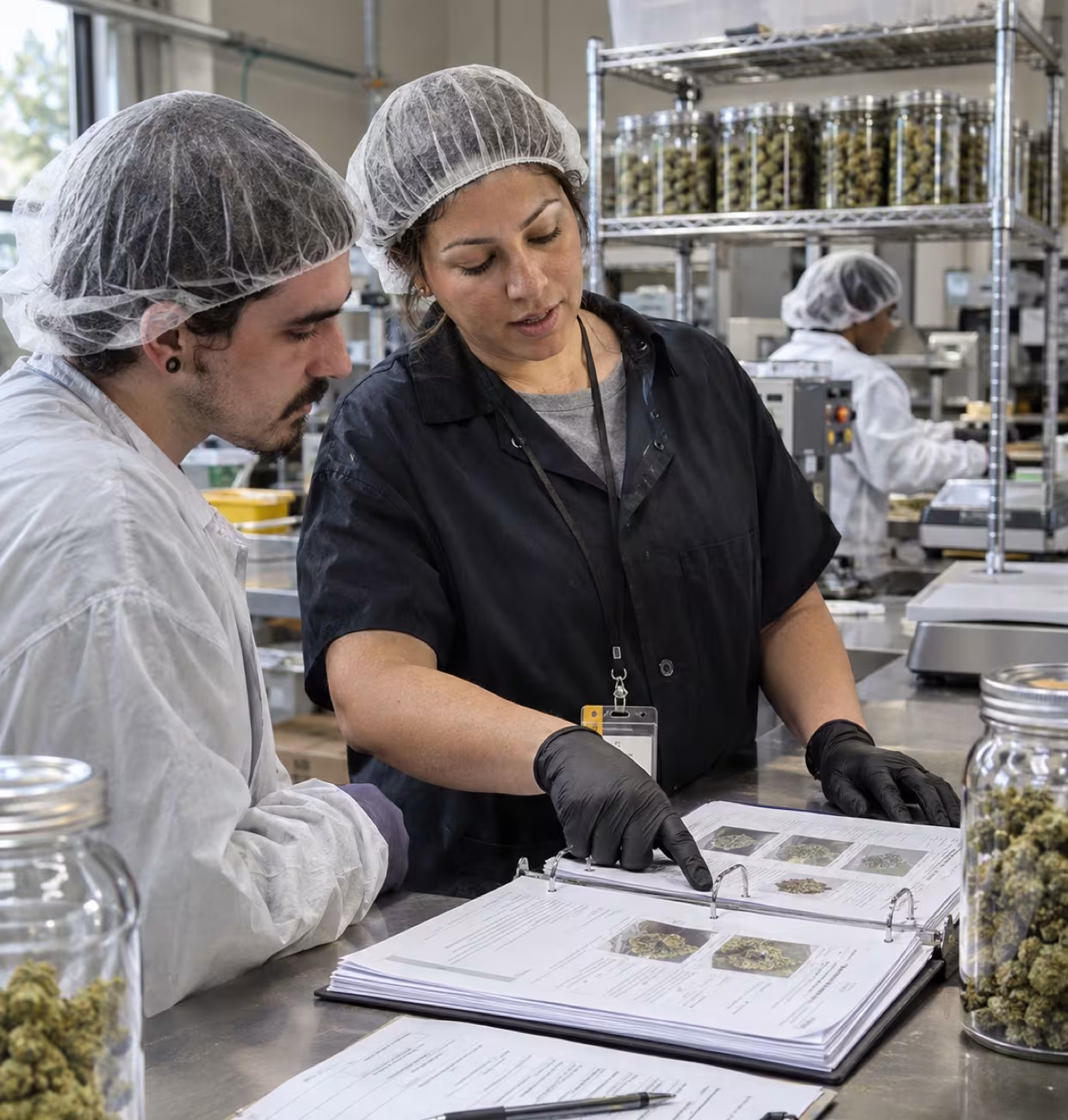
Use trimming scissors to remove foliage around your buds on each branch. Continue to break down your larger branches into smaller segments and clear out leaves so that only the flower buds and bare stem remain. Lastly, make sure to prune away larf and excess stems from your buds. Trimming can often be a long process, so it's important that you have a reliable pair of gloves, trimming scissors, and a trim bucket that can carry you through the process. Having 70% - 99% isopropyl alcohol will also help clean your trimming scissors once they start sticking together.

‍

Curing Your Buds

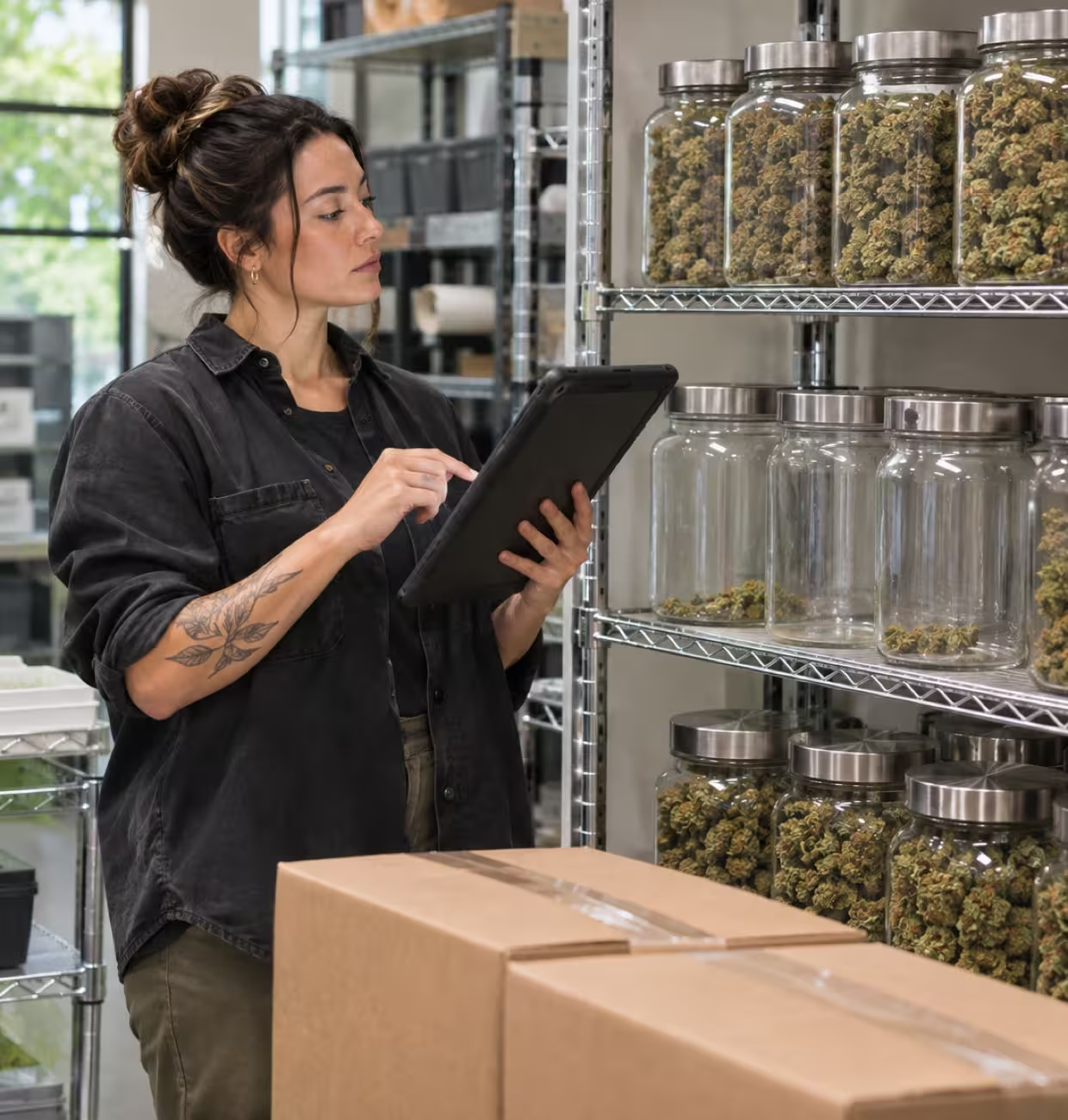
Curing is the last and arguably most important step of harvesting, especially if your bud will be displayed in retail locations. Properly curing your cannabis buds prevents further loss of moisture, as well as best preserving the terpenes for longer term storage. Flower is cured by placing buds in airtight sealed containers, while periodically burping the containers on a daily basis. The type of sealed container used (glass jars, turkey bags, etc.) will have a direct effect on the curing process, so it's important not to assume that your cure protocol for one container type works exactly on another.

The cure time of cannabis is highly variable, so it's hard to suggest exactly how long you should cure your flower; some strains take a few weeks while others take much longer. An easy way to tell if buds are fully cured is to press a small nugget between your fingers and examine the pressure used to press + how the bud reacts once you remove pressure. Ideally, it should take some pressure to press and will return close to form once you remove pressure. You do not want it to feel like the bud is wet and see it retain a squished-like shape after pressing.

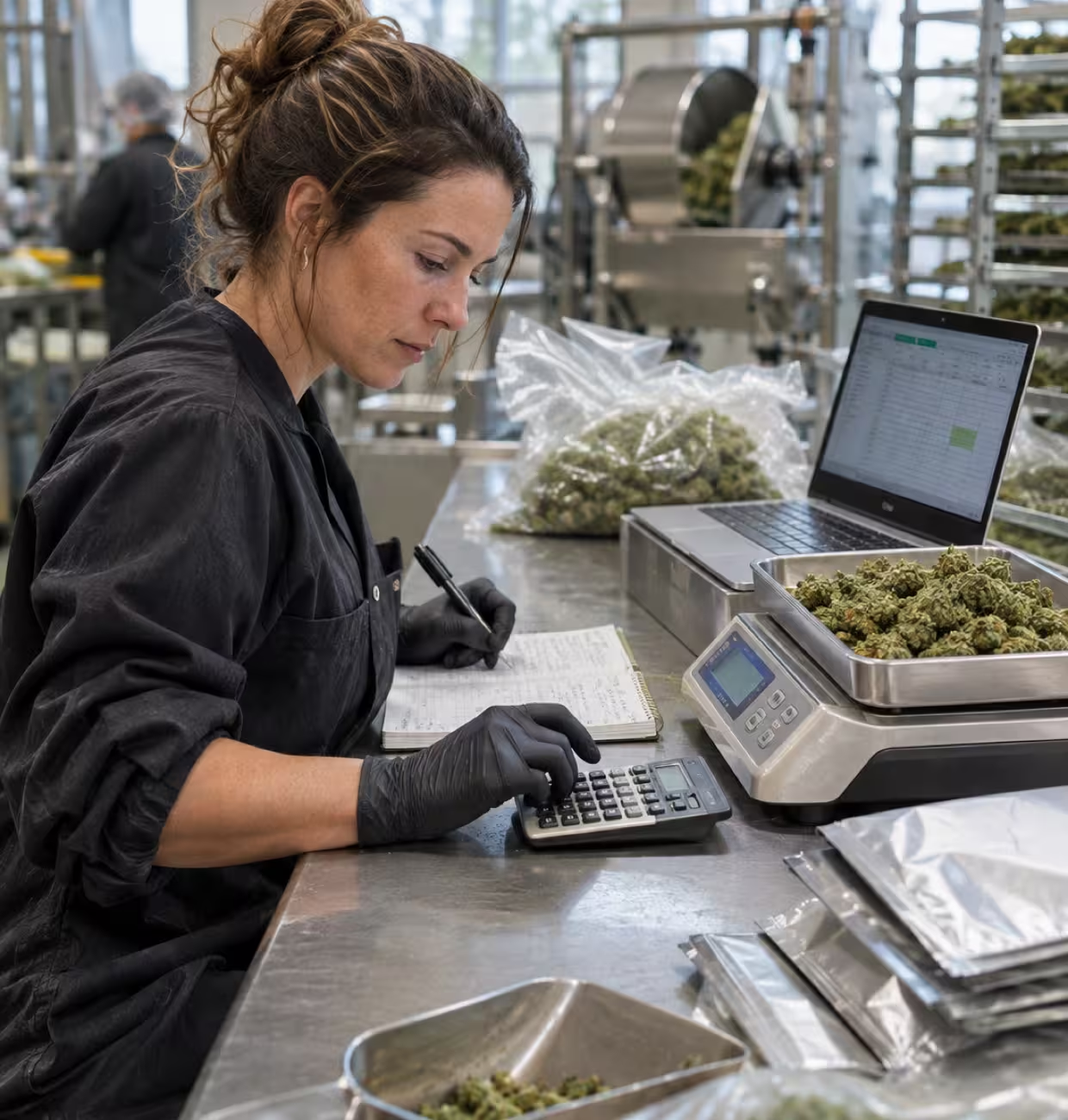
This is just a general overview of the cannabis harvesting process, as there are many more details to cover during each step. As any cultivator would know, harvesting isn't as simple as "just cutting down the plant." There's a lot of long term planning, labor, and data tracking that goes into a harvest. Distru's Harvesting Module helps by tracking and reporting your harvests to Metrc!

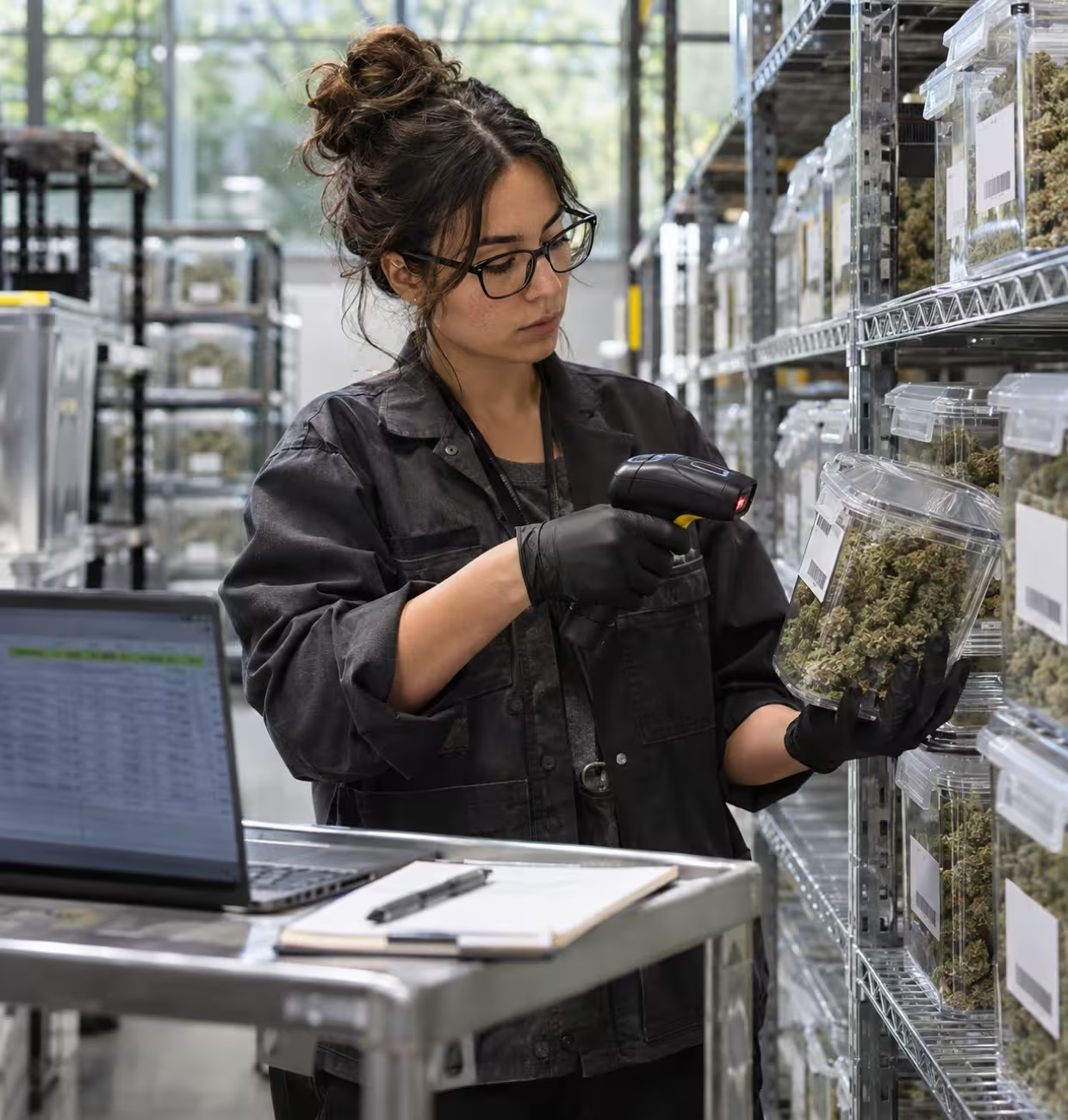
Use your phone as a portable scanner to scan multiple Metrc plant tags and record flower weights transmitted from Bluetooth-enabled scales with ease. Inventory from harvesting breakdowns are immediately reported to Metrc and available for you in Distru for further sales, distribution, or processing.
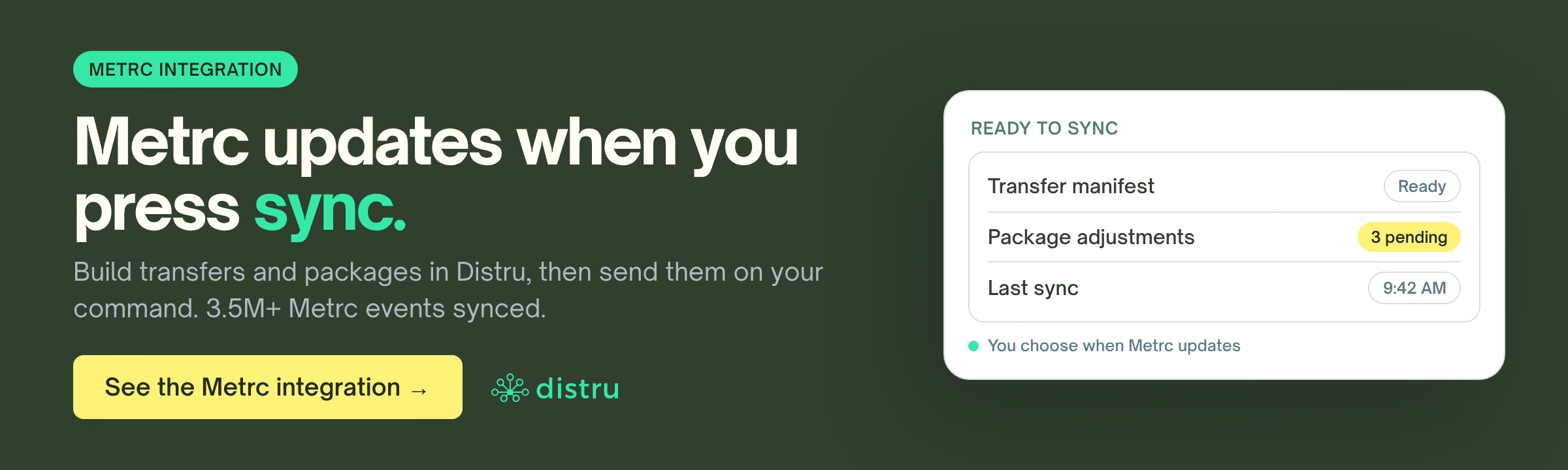
Metrc updates when you press sync. Metrc integration. Distru.

Imagine automatically having all that harvesting data formatted and reported to answer questions like, “Which of my cultivars yields the most?” and “What’s the average flowering time of my strains?” Distru’s Cultivation Analytics does this and more, giving you a birds-eye view of your cultivation operations. Reach out to us today and let's chat about how we can help you!

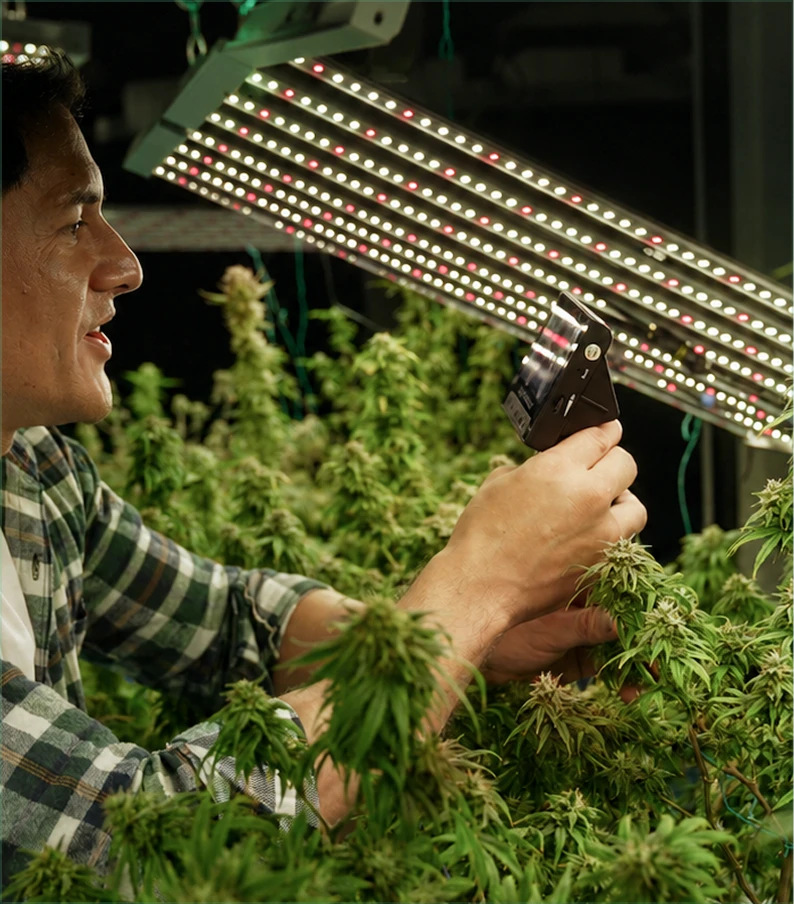
Use your phone as a portable scanner to scan multiple Metrc plant tags and record flower weights transmitted from Bluetooth-enabled scales with ease

FAQs

When should I start flushing cannabis before harvest?

Start flushing about two weeks before you plan to harvest. Use excess water to help wash out remaining nutrients and stop adding fertilizer during this period. This can help the final flower burn cleaner and taste better.

How do I know when cannabis trichomes are mature enough to harvest?

Harvest once trichomes look fully developed rather than rushing based on the calendar alone. Many growers use a loupe or microscope to check trichome maturity before cutting. If you are unsure, check daily as plants can change quickly near the finish.

How can Distru help me track harvest weights and report to Metrc?

Distru has a Harvesting Module that lets you scan Metrc plant tags with your phone and capture weights from Bluetooth enabled scales. It then reports harvest breakdown inventory to Metrc and keeps the data organized in Distru for sales, distribution, or processing. This makes it easier to compare wet and cured yields across cultivars.

What temperature and humidity should my drying room be for cannabis?

A common target is about 55 to 65 degrees Fahrenheit with 40 to 50 percent humidity, and drying often takes 1 to 2 weeks. Hang branches upside down in a well ventilated room and check them regularly since strains and room conditions vary. Adjust as needed to avoid overdrying or trapping moisture.

Can Distru help me understand which cultivars yield the most after harvest?

Yes, Distru Cultivation Analytics can use your harvest data to answer questions like which cultivars yield the most and what average flowering time looks like by strain. Because harvest weights and breakdowns are captured and stored in Distru, you can compare results across runs without rebuilding spreadsheets. This helps you make better decisions about what to grow next cycle.

How does Distru reduce mistakes when scanning plant tags and breaking down harvest lots?

Distru helps by turning your phone into a portable scanner for multiple Metrc plant tags and tying those scans to recorded flower weights. The system reports inventory from harvest breakdowns to Metrc and makes the resulting inventory immediately available in Distru ERP for seed to sale tracking. This reduces manual entry and helps prevent compliance and inventory mismatches.

The AI cannabis library

Free skills to put AI to work on your inventory, compliance and costing, and guides on where it actually saves time.

SKILL
Inventory Management

Distru Expiring Inventory

See stock about to expire, who already buys it, and a promo email draft to review.

SKILL
Compliance

Cannabis Inspection Readiness

Turn an upcoming state inspection into a checklist, binder index and gap list.

SKILL
Compliance

Cannabis Transfer Manifest Precheck

Check a B2B transfer before the driver leaves and get GO or HOLD per line.

SKILL
Purchasing

Cannabis Replenishment Planner

Turn sales and on-hand exports into a reorder plan and a draft PO by vendor.

SKILL
Compliance

Cannabis State Rules Lookup

Get a cited, dated answer to a state cannabis rule question.

SKILL
Operations

Cannabis Staff Scheduling Planner

Build a shift schedule that matches demand and stays inside your labor budget.

SKILL
Cultivation

Cannabis Harvest Yield Analysis

See which rooms and strains actually make money, from your own harvest data.

SKILL
Compliance

Cannabis Traceability Reconciliation

Find out why your physical count doesn't match Metrc or BioTrack.

SKILL
Compliance

Cannabis SOP Generator and Trainer

Turn process notes into an inspection-ready SOP and a staff training packet.

SKILL
Finance and COGS

Cannabis Batch COGS Calculator

Find out what a batch really costs per finished unit, line by line.

AI GUIDE
Blog

Why the Harness Matters More Than the AI Model

Two products can use the exact same AI model and perform completely differently. Here's why the harness, not the model, usually explains why.

AI GUIDE
Blog

What Is an Agent Harness? A Plain-English Primer

An AI model alone can't do much. The 'harness' around it is what makes it useful. Here's what that actually means, no jargon required.

AI GUIDE
Blog

Why MSOs Need an AI Strategy Before More Software

Adding another point solution won't fix an MSO's AI readiness problem. Here's why the data foundation has to come first.

AI GUIDE
Blog

The Supply Chain Buyer's Guide to AI Agents and MCP

Evaluating AI agent features in supply chain software? Here's a practical buyer's checklist, including what MCP means for your evaluation.

AI GUIDE
Blog

AI in Supply Chain: What's Hype, What's Working

AI in supply chain gets a lot of hype. Here's an honest look at what's actually delivering results in 2026, and what still needs a person.

AI GUIDE
Blog

Where AI Agents Fit in Cannabis Compliance

Not every step of your compliance workflow is a fit for AI. Here's a clear map of where it helps, and where it should stay hands-off.

AI GUIDE
Blog

The Skills Ops Teams Will Need When AI Agents Arrive

AI agents are coming for repetitive ops tasks in cannabis. Here's what your team needs to get good at instead, starting now.

AI GUIDE
Blog

What Happens When AI Gets Access to Your ERP

Giving an AI tool access to your cannabis ERP isn't all-or-nothing. Here's what real, scoped access looks like, and what to watch for.

AI GUIDE
Blog

AI and 280E: Where Automation Actually Saves Money

280E just got more complicated for mixed medical and adult-use operators. Here's where automated cost tracking actually helps, and its limits.

AI GUIDE
Blog

Can AI Forecast Wholesale Demand Better Than Excel?

Your wholesale forecast spreadsheet has limits. Here's what AI-assisted forecasting can actually add, and where a spreadsheet still wins.

AI GUIDE
Blog

Should Your Cannabis Business Have an AI Strategy?

You don't need to be an AI company to have an AI strategy. Here's a practical starting point for cannabis operators, no hype required.

AI GUIDE
Blog

What Is Claude Cowork? Could It Kill Data Entry?

Claude Cowork lets AI work directly in your files and tools. Here's what that means for the data entry eating your cannabis team's week.