

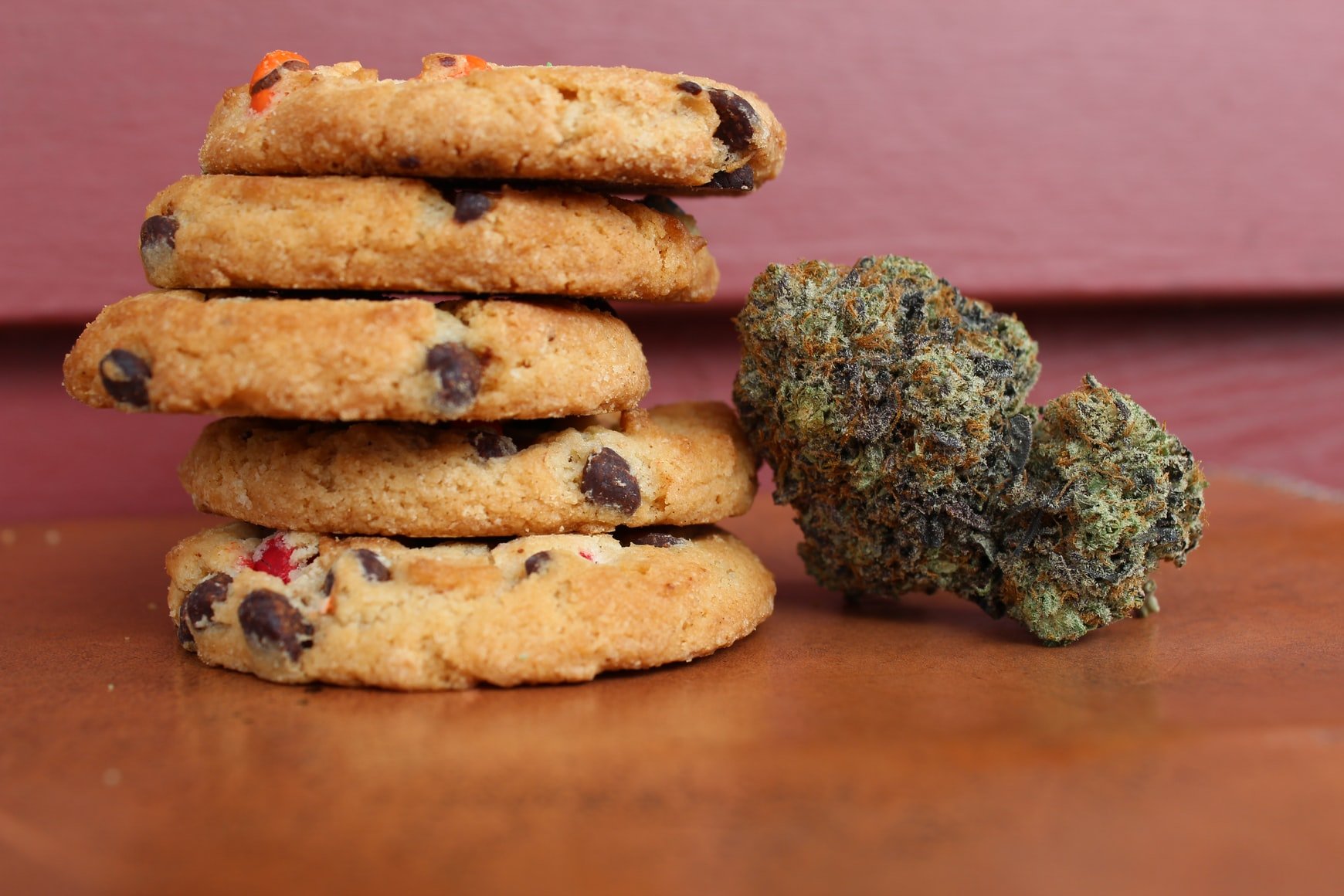
Your first production run of gummies is labeled 10 mg. The lab says the batch averages 12.4 mg, and two pieces tested at 15. That batch doesn't ship. You eat the ingredients, the packaging, the labor, and the week. Most new edibles founders learn about homogeneity this way.
So here's the short answer. To start an edible business, you pick a legal state and license type, get local approval, line up a licensed kitchen or a co-manufacturer, source tested cannabis inputs, lock in dosing and potency testing, design compliant packaging, set up distribution to dispensaries, and plan your cash and taxes around 280E. This guide walks through each step with real numbers, as checked in October 2026.
What Does It Take to Start an Edible Business?
Starting a cannabis edibles business takes a state manufacturing license (or a licensed partner), a compliant production space, tested inputs, a repeatable dosing process, and a path to dispensary shelves. Here are the 10 steps in order:
- Pick your state and license type
- Budget your real startup costs
- Find a location that passes zoning
- Build your kitchen or use a co-manufacturer
- Source tested cannabis inputs
- Lock in dosing, potency testing, and homogeneity
- Design compliant packaging and labels
- Set up distribution and sell to dispensaries
- Plan for 280E, cash, and banking
- Set up inventory, costing, and compliance tracking
Step 1: Pick Your State and Edibles License Type
You need a state license that covers infused product manufacturing, and most states want local city or county approval before they'll issue it. Cannabis can't cross state lines, so your license state is also your sales territory.
License names vary by state. A few examples:
- California: The Department of Cannabis Control issues a Type N license for infusions (edibles, tinctures, topicals), Type 6 for non-volatile extraction, Type 7 for volatile extraction, Type P for packaging and labeling only, and Type S for shared-use facilities.
- Colorado: A marijuana products manufacturer license from the Marijuana Enforcement Division.
- New York, Michigan, and many others: A processor license that covers infused products, with separate rules for adult-use and medical.
Check federal status before you write the business plan. As of October 2026, the DEA's April 2026 final order moved only FDA-approved products and state-licensed medical marijuana to Schedule III, per Foley's analysis of the order. Adult-use marijuana is still Schedule I, and the hearing on broader rescheduling was paused in late September 2026.
Thinking about a hemp-derived THC edible instead? That door is closing. A federal law signed in November 2025 limits finished hemp products to 0.4 mg of total THC per container starting December 11, 2026, after Congress pushed back the original November 12 date. That rules out most intoxicating hemp gummies (details on the law).
Step 2: How Much Does It Cost to Start an Edibles Company?
Expect anywhere from roughly $150,000 to launch a brand through a licensed co-manufacturer to $1 million or more to build and license your own production kitchen. Licensing, buildout, equipment, testing, and working capital drive the gap.
Here's how the line items stack up. State fees are from agency fee schedules. The other ranges are planning estimates, so get local quotes before you commit:
- License fees: In California, a Type N license costs a $1,000 application fee plus an annual fee from $2,000 (under $100,000 in revenue) up to $75,000 (over $10 million), per the DCC fee schedule. Add local permit fees on top.
- Facility and buildout: Food-grade finishes, HVAC, security cameras, alarm, and access control. This is usually the biggest check if you're building your own space.
- Equipment: Mixing kettles, a depositor and molds for gummies, tempering for chocolate, scales, curing racks, and packaging gear. A semi-automatic line costs far less than a fully automated one, and you can upgrade later.
- Inputs: Distillate, rosin, or other infusion oil, plus food ingredients. Your cannabis input is often the largest cost per unit.
- Testing: Every batch needs a full compliance panel before sale. Budget for retests too.
- Packaging and labels: Child-resistant packaging, printed labels, and state warning symbols.
- Staff, insurance, and legal: Production staff, a compliance lead, product liability coverage, and a cannabis attorney for applications.
- Software: Inventory, costing, and state tracking. Set this up before your first batch, not after your first audit.
- Working capital: Licensing often takes months, and dispensaries may pay on net terms. Plan 6 to 12 months of runway.
Banks rarely lend to plant-touching businesses, so most founders raise from private investors. Lay out these line items month by month in your business plan, because investors will ask for exactly that.
Step 3: Find a Location That Passes Zoning
Lock down zoning before you sign a lease. Most states and cities set buffers from schools, day care centers, and youth centers, and a bad address can sink your license application.
In California, the default under Business and Professions Code 26054 is a 600-foot radius from schools, day care centers, and youth centers, though the state or a local jurisdiction can set a different distance. Many cities also cap how many manufacturing licenses they'll approve, or limit them to industrial zones.
Beyond zoning, check that the space can handle food production: wash sinks, cold storage if your products need it, ventilation, and room to separate raw inputs from finished goods.
Step 4: Build Your Own Kitchen or Use a Co-Manufacturer?
Build your own kitchen if you want full control and plan to run high volume. Use a co-manufacturer or white-label partner if you want to launch faster with less capital and test demand first.
- Your own licensed kitchen: Most control over recipes, quality, and scheduling. Highest cost and the longest path to first sale.
- Shared-use or co-packing facility: Some states, including California with its Type S license, let you produce in a shared licensed space. Lower buildout cost, less scheduling control.
- White-label or co-manufacturing: A licensed manufacturer makes the product under your brand. Fastest launch, thinner margins, and you depend on their QA.
Our guide to cannabis white label services covers how to vet a partner and what to put in the contract.
Step 5: Source Tested Cannabis Inputs
Buy infusion inputs only from licensed suppliers in your state, and get a CoA for every lot before it enters production. Your edible can only be as consistent as the oil going into it.
Most edibles brands infuse with distillate because it's potent and nearly flavorless. Solventless brands use rosin, which costs more and tastes stronger. If you're weighing inputs, our breakdown of how cannabis distillate is made explains why potency and clarity vary between suppliers.
Lock in at least two suppliers. When one has a short month, you don't want your whole line to stop.
Step 6: Lock In Dosing, Potency Testing, and Homogeneity
Most adult-use states cap edibles at 10 mg THC per serving and 100 mg per package, and every batch has to pass a lab test for potency and contaminants before it sells. Homogeneity, meaning each piece carries the same dose, is where new brands most often fail.
California's limit is written into state regulations: 10 mg per serving and 100 mg per package for adult-use edibles. Colorado checks homogeneity by testing several servings from one batch and requiring a relative standard deviation under 10% for each labeled cannabinoid.
A few habits that keep batches passing:
- Dose by weight, not volume. Weigh distillate on a calibrated scale for every batch.
- Mix longer than feels necessary. Uneven mixing is one of the most common causes of hot pieces.
- Target the label, not the ceiling. Aim for the labeled dose, not right under the legal max, so normal variance doesn't push you over.
- Write it down. Batch records with input lots, weights, and mix times let you trace a failed test to its cause.
Step 7: Design Compliant Packaging and Labels
Edibles packaging generally has to be child-resistant, carry your state's universal THC symbol and warnings, and list potency per serving and per package. Many states also ban shapes, colors, or imagery that appeal to kids.
Rules vary a lot by state, so get your packaging reviewed before you order 50,000 units. If you're in a Metrc state, DistruLabels is a free tool that prints package labels and Retail ID labels with data pulled from Metrc.
Step 8: How to Sell Edibles to Dispensaries
You sell edibles to licensed dispensaries, either directly or through a licensed distributor. You can't sell to consumers yourself unless you also hold a retail license.
Start with a short list of dispensaries whose customers match your brand. Bring samples where your state allows it, and prove you can restock on time. Reorders are the whole game. A brand that runs out of stock twice gets replaced.
When you choose a distributor, ask how they store and transport product, which regions they cover, what other brands they carry, and what their cut is. Some states, like California, require a licensed distributor to move product between licensees, so read your state's rules before you plan self-distribution.
Once you have accounts, a B2B wholesale menu cuts down on back-and-forth. With DistruCommerce, buyers see live availability and CoAs and place orders that flow straight into fulfillment.
Step 9: Plan for 280E, Cash, and Banking
If you sell adult-use edibles, IRS Section 280E still blocks most business deductions, so your effective tax rate can run far higher than a normal food company's. Your best defense is clean cost of goods sold, since COGS is still deductible.
The IRS position is that 280E applies to Schedule I and II substances. The April 2026 order moved state-licensed medical marijuana to Schedule III, which may open relief for medical-only licensees. Adult-use and mixed operators should talk to a cannabis CPA. Checked October 2026.
Banking is still limited. The SAFE Banking Act was reintroduced in Congress in June 2026 but isn't law. Expect to work with a cannabis-friendly credit union or state bank, keep cash handling SOPs, and track every dollar back to an order.
Step 10: Set Up Inventory, Costing, and Compliance Tracking
Set up a system that tracks every input lot, production batch, and finished package from day one. That's how you prove potency, pass audits, and know your real cost per gummy.
Edibles are a multi-step build. Distillate, sugar, gelatin, flavor, and packaging go in, and finished packages come out, each one tied to a Metrc or BioTrack package. Doing that in spreadsheets works for about three batches.
Distru, a Cannabis AI ERP (Enterprise Resource Planning) with a built-in B2B wholesale marketplace, is set up for exactly this kind of production:
- Bills of materials: Build a gummy or chocolate BOM, see how many units you can make from what's on hand, and clone it for new flavors.
- Live COGS: Cost rolls from distillate and ingredients into each finished SKU, which gives your CPA clean numbers for 280E.
- Batch and CoA tracking: Attach lab results to each batch and package so you can answer a recall question in minutes.
- Two-way Metrc sync: Create packages and production batches in Distru, and the sync sends them to Metrc. Distru is the #1 Metrc integration partner by API call volume.
Distru works with 440+ customers across 30+ states, and onboarding usually takes 3 to 4 weeks, BOMs included. If you're building your first edibles line, schedule a demo and we'll walk through a gummy BOM with your real recipe.
Get the dose right. Get the paperwork right. Then go sell.


